Wire Processing
Should You Invest in Fully Automatic Stripping and Crimping Machines?
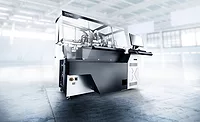
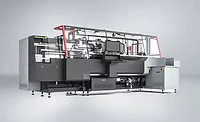
if you need to produce thousands of identical crimped wires in a shift, you need a fully automatic cutting, stripping and crimping system.
Semiautomatic benchtop stripping and crimping machines are a staple of every harness assembly shop. They’re great for high-mix, low-volume wire processing applications. But, if you need to produce thousands of identical crimped wires in a shift, you need a fully automatic cutting, stripping and crimping system.
Fully automatic machines are much faster and more consistent than semiautomatic equipment. They can combine multiple operations in one setup and automatically separate rejected leads.
Automatic equipment removes the human element from high-volume wire processing applications, while improving quality and reducing costs. For instance, state-of-the-art automatic crimping machines can process wires at rates above 4,000 pieces per hour with absolute precision and in-process inspections.
On the other hand, manual crimping is susceptible to variations by the operator, such as prematurely positioning a wire into a terminal before crimping, resulting in mistakes and poor quality. Automatic machines eliminate this variation.
“Fully automatic machines need fewer operators to perform the same tasks,” says Erich Moeri, manager of applications engineering at Komax Corp. “Therefore, they are more efficient. Generally, you will save on floor space. There’s less equipment and you can eliminate some intermediate storage, such as the need to store precut wires.
“Fully automatic machines will also provide a better quality product, because of the integrated quality checks,” adds Moeri. “In addition, they provide a much higher output.”
“Wire harness shops can do more using the same amount of human resources,” notes Rich Schwartz, vice president of engineering at Schaefer Megomat USA Inc. “Fully automatic machines also allow shops to go after more and larger jobs. In some cases, a machine could pay for itself within a year.”
That’s important, because going from semi- to fully automatic equipment requires a big investment. While semiautomatic wire processing equipment can run $15,000 to $30,000, fully automated machines average $50,000 to $75,000. Engineers have to avoid falling in the trap between machine capability and actual use on the plant floor.
Since today’s machines are engineered with quick change-overs in mind, most experts believe there is a place for fully automatic equipment in high-mix, low-volume wire processing applications.
For instance, Komax offers a machine especially for that. “The Zeta 633 crimping machine has a wire sequencer option where you can have 36 different wires ready at the machine at all times,” Moeri points out. “Changing wire is done by the click of a mouse.”
Engineers at many equipment suppliers have designed a number of quick-change features into their machines to significantly lower set-up time. Artos Engineering Co. recently unveiled the Cr.22, which can tackle a wide range of applications, such as weather sealing, crimping, twisting and tinning. While the machine can handle low-volume runs requiring multiple change outs during production, it also can accommodate high-volume runs.
“Diversity in production is important,” says John Olsen, president of Artos Engineering. “Today, customers want options and flexibility.
“The key to justifying an investment in an automatic system is to keep the machine producing parts as efficiently as possible with minimal downtime,” explains Olsen. “Older automatic machines could take up to 20 minutes to set up and change from one job to another.
“This was acceptable if the machine could process thousands of wire at a time and run for hours from the initial set-up,” adds Olsen. “However, if a customer would like to run a few hundred pieces and change to another job, that amount of change-over time negates productivity.”
With quick-change carts, sensors that track wire core size, and all servo-driven technology, fully automatic machines can be set up in a matter of seconds vs. minutes. Most new-generation machines also provide built-in quality checking features, which is important for wire harness shops doing automotive-related applications.
“These types of customers are looking for machines that offer the highest number of fully integrated quality checks,” says Moeri. “We offer equipment where operators start by downloading ‘jobs’ from an enterprise resource planning system and check material at the machine using a bar code scanner for process verification.
“Product quality concerns can be addressed by automatic crimp height measurements, crimp height adjustments, pull-force monitors and seal position analyzers,” Moeri points out. “Afterwards, they can look for feedback on the product produced by automatically uploading critical information back to the ERP system. That addresses traceability issues.”
User-friendly controls and software help make all that possible. For instance, Schleuniger Inc.’s new CrimpCenter 36 S boasts efficient motor programming and internal Ethernet communication coupled with a maximum feed rate of 8 meters per second. It also features a touch-screen monitor and intuitive operating software.
“The combination makes programming simple enough so that even novice operators quickly feel comfortable,” says Gustavo Garcia-Cota, crimping product manager. “Standard TCP/IP protocol allows for easy machine networking. The optional EASY ProductionServer software helps optimize order processing and allows engineers to monitor and gather valuable production data from practically anywhere in the world.”
As wire gets smaller and smaller, it becomes more difficult to handle. That will undoubtedly spur more investment in fully automatic equipment that can easily grip thin wire.
“Machines equipped with powerful servo motors and optimized programming of the process axes provide for precise and fast motion sequences,” says Schwartz.
His company recently unveiled a machine that that can process wire as small as 0.08 millimeter squared.
“The Megomat 1000 has an unusually large range of wire cross sections that can be processed,” claims Schwartz. “It can handle up to AWG 8 wire. And, the arrangement of the cutting blades allow for very short wire overhangs.”
A software-controlled, adjustable wire guide system eliminates the use of tubes at the gripper. The programmable gripper jaw openings are automatically adjusted. “A large, two-side enabled swing radius of both gripper arms provides flexibility in realizing different applications,” says Schwartz.
However, no matter how much they embrace fully automatic equipment, most wire harness shops will need to keep a few manual and semiautomatic machines on hand. Applications involving cables, large-gauge wire, twisted-pair leads and shielded wires continue to demand some of those tools.
Looking for quick answers on assembly and manufacturing topics? Try Ask ASM, our new smart AI search tool. Ask ASM
Looking for a reprint of this article?
From high-res PDFs to custom plaques, order your copy today!