Assembly Magazine logo
search
Ask ASSEMBLY AI
cart
facebook twitter linkedin youtube
  • Sign In
  • Create Account
  • Sign Out
  • My Account
Assembly Magazine logo
  • TRENDS
    • Ask ASSEMBLY AI
    • Trends
    • News
    • New Products
  • INDUSTRIES
    • Aerospace
    • Appliance
    • DFMA Assembly
    • Medical Devices
    • Green Manufacturing
    • Lean Manufacturing
    • Machinery Assembly
    • Electronics Assembly
    • Automotive
  • TECHNOLOGIES
    • Adhesives & Dispensing
    • Assembly Presses
    • Automated Assembly Systems
    • Manufacturing Management
    • Manufacturing Software
    • Motion Control
    • Screwdriving & Riveting
    • Robotics
    • Test & Inspection
    • Plastics & Metal Welding
    • Wire Processing
    • Workstations
  • AUTONOMOUS & ELECTRIC MOBILITY
    • AEM Magazine Archives
    • Autonomy
    • Electrification
    • Mobility Services
    • Assembly & Testing
    • AV/EM News
  • MEDIA
    • Ask ASSEMBLY AI
    • Podcasts
    • Assembly News Now
    • Assembly TV
    • Webinars
    • eBooks
  • EVENTS
    • Calendar
    • The ASSEMBLY Show
  • MORE
    • Exclusives >
      • Plant of the Year
      • Capital Spending
    • Buyers Guide >
      • Supplier Insights
    • Classifieds
    • Featured Products
    • Newsletters
    • Store
    • White Papers
    • Columns
    • Sponsor Insights
  • INFOCENTER
    • Assembly & Test Solutions
  • EMAGAZINE
    • eMagazine
    • Archive Issues
    • Advertise
    • Contact Us
    • Sign Up
ColumnsAutomotive AssemblyElectronics Assembly

Automotive Assembly: The Future Looks Bright for Smart Headlights

By Austin Weber
January 5, 2015

The first low-beam headlights appeared on automobiles 100 years ago. Today, engineers are scrambling to develop a new generation of smart headlights that will soon make traditional products as obsolete as kerosene lanterns.

The goal is to create lights that react to the road environment and enhance driver safety. Smart headlights will better illuminate the road; spotlight obstacles, signs and lanes; project directions on the road; reduce glare; and increase visibility in fog, rain and snowstorms.

Headlights equipped with LEDs have been slowly creeping their way into the auto industry over the last decade. LEDs are smaller than typical headlamps and are easier to package. They first appeared on luxury vehicles and high-end sports cars several years ago.

But, the new Ford F-150 pickup truck will be one of the first mass-produced vehicles equipped with state-of-the-art headlights. An innovative design that uses semiconductor chips to control light allows engineers to use a single LED per lamp.

According to Strategy Analytics Inc., by the end of this decade, 12 percent of light vehicles will feature LED headlights. “As with many other electronic features, intensifying competition among automakers is forcing the growth of LED headlights,” says Kevin Mak, an analyst who specializes in automotive electronics.

“Challenges facing [engineers] include brightness levels from current LED chips, thermal issues, complexity of controlling LED headlights and their increased functionality, and ultimately, the higher assembly costs when compared to competing halogen- and xenon-based systems,” Mak points out.

“The next step in front lighting is adaptive driving beam technology,” says Mike Godwin, director of LED products at Osram Opto Semiconductors Inc., which provides components for lighting suppliers such as Hella and ZKW.

Looking for quick answers on assembly and manufacturing topics? Try Ask ASM, our new smart AI search tool. Ask ASM →

Osram has pioneered several advanced lighting systems, such as a hybrid headlight that’s used in the Audi A4 sedan. The LEDriving Xenarc headlight boasts a combination of xenon and LED technologies.

Osram engineers also recently developed an LED light source that can emit 256 pixels. Each separate beam of light can be individually controlled thanks to advanced semiconductors.

Another recent Osram innovation is laser headlights, which debuted last year on the BMW i8 sports car. Laser light modules are extremely compact, opening up a wide range of design options. Benefits of laser light include its long range and high system efficiency.

Automotive engineers are eager to adopt LED technology, because it offers new opportunities, especially when it comes to packaging. “LEDs are extremely thin, so you can reduce the package size tremendously,” says Godwin. “Because LEDs are point emitters, you can package and optically guide them in a much thinner space. Traditional halogen, on the other hand, needs a lot of depth, due to focal lengths.”

Engineers at Carnegie Mellon University’s Robotic Institute are also developing next-generation automotive lighting technology. They recently unveiled a programmable headlight that may be commercially available by the end of this decade. The system uses a digital light processing projector instead of a standard headlight or a cluster of LEDs. This allows the light to be divided into a million tiny beams, each of which can be independently controlled by an onboard computer.

A camera senses oncoming cars, falling precipitation and other objects of interest, such as road signs. The light beams can then be adjusted accordingly, some dimmed to spare the eyes of oncoming drivers, while others might be brightened to highlight street signs or the traffic lane. However, the changes in overall illumination are minor and generally not noticeable by the driver.

 “Standard vehicle headlights illuminate everything in their pathway, which is necessary for nighttime driving,” says Robert Tamburo, lead engineer on the Carnegie Mellon project. “Recently, headlights that adapt to the environment have made their way to the road. However, they tend to be one-off solutions that can perform only one task.

"[Our] programmable headlight has one hardware configuration—with no mechanical parts—that can be programmed to perform many tasks,” explains Tamburo. "The prototype that we built has unprecedented spatio-temporal resolution, permitting reaction to objects of all shapes and sizes."

KEYWORDS: automotive innovation lighting manufacturing

Share This Story

Looking for a reprint of this article?
From high-res PDFs to custom plaques, order your copy today!

Austinweber headshot
Austin has been senior editor for ASSEMBLY Magazine since September 1999. He has more than 21 years of b-to-b publishing experience and has written about a wide variety of manufacturing and engineering topics. Austin is a graduate of the University of Michigan.

Recommended Content

JOIN TODAY
To unlock your recommendations.

Already have an account? Sign In

  • Made in the U.S.A.

    Consumer Products Manufacturing: Made in the USA

    Supply chain lessons learned during the coronavirus...
    Automated Assembly Systems
    By: Austin Weber
  • Best Practices for Press-Fit Assembly

    Best Practices for Press-Fit Assembly

    In manufacturing, ironclad formulas for success are hard...
    Assembly Presses
    By: Jim Camillo
  • aem0523leader-tesla1.jpg

    Tesla Rethinks the Assembly Line

    Engineers at Tesla Inc. have developed a new process that...
    Automotive Assembly
    By: Austin Weber
Manage My Account
  • eMagazine Subscription
  • Assembly Newsletters
  • Online Registration
  • Subscription Customer Service
  • Manage My Preferences

More Videos

Sponsored Content

Sponsored Content is a special paid section where industry companies provide high quality, objective, non-commercial content around topics of interest to the ASSEMBLY audience. All Sponsored Content is supplied by the advertising company and any opinions expressed in this article are those of the author and not necessarily reflect the views of ASSEMBLY or its parent company, BNP Media. Interested in participating in our Sponsored Content section? Contact your local rep!

close
  • ultrasonic welding
    Sponsored bySonobond Ultrasonics

    Engineering Efficiency in High-Performance Assembly: How Ultrasonic Welding Enhances Throughput, Reliability and Quality

  • UV curing system
    Sponsored byDymax

    Why UV Intensity Alone Doesn’t Define Curing Performance

  • wooden pallets
    Sponsored byLEAN Manufacturing Products

    Eliminating Waste on the Shop Floor: Applying Lean Principles to Improve Manufacturing Efficiency

Popular Stories

ASSEMBLY News Now, episode-30: Volvo Redesigns EV Manufacturing

Volvo Redesigns EV Manufacturing

Boeing CEO Kelly Ortberg announces 1 billion investment

Boeing Plans $1 Billion Wichita Investment, Workforce Training Center

GE Appliances Worker on Line

GE Appliances Expands Factory AI With 800 Gemini Enterprise Agents

Watch the latest episode of ANN now!

Events

July 24, 2025

From Shop Floor to CFO: How Manufacturers Are Closing the Loop Between Operations and Finance

On Demand Learn how manufacturers are bridging the gap between the shop floor and ERP systems to gain real-time visibility, streamline operations, and kick-start digital transformation—without waiting years.

Sponsored by:

PicoStratusGreen
July 30, 2025

Buffer Analysis and Design Fundamentals for Manufacturing Excellence

On Demand In this presentation, Dr. Herman Tang shares practical insights from his industry experience and research on buffer management in manufacturing operations.

View All Submit An Event

Poll

Difficult Assembly Processes

Which assembly process gives you the most difficulty?
View Results Poll Archive

Products

Manufacturing Cost Policy Deployment (MCPD) Profitability Scenarios: Systematic and Systemic Improvement of Manufacturing Costs

Manufacturing Cost Policy Deployment (MCPD) Profitability Scenarios: Systematic and Systemic Improvement of Manufacturing Costs

See More Products
Register for webinar - Modernizing Automotive Assembly: Why Upgrading Legacy MES is a Business Imperative

Related Articles

  • The Future Is Bright for Manufacturing

    See More
  • Automotive Assembly: The Race to Automate

    See More

Related Products

See More Products
  • smart.jpg

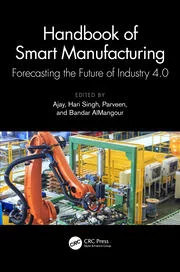
    Handbook of Smart Manufacturing Forecasting the Future of Industry 4.0

  • foreman.jpg

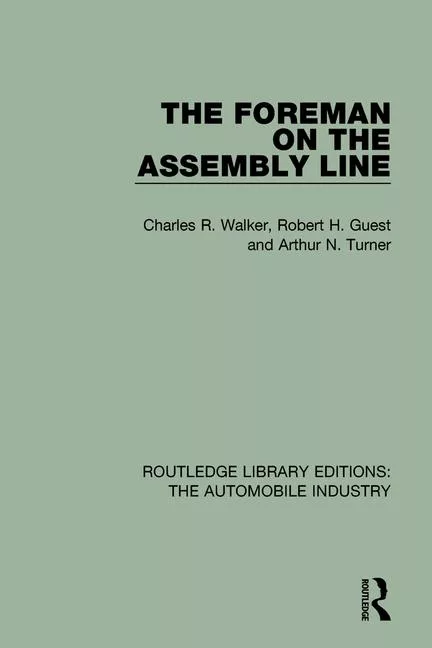
    The Foreman on the Assembly Line

  • The Automotive Body Manufacturing Systems and Processes

See More Products

Related Directories

  • Future Technologies Inc.

×

Never miss the latest news and trends driving the manufacturing industry

Stay in the know on the latest assembly trends.

JOIN TODAY!
  • RESOURCES
    • Advertise
    • Contact Us
    • Directories
    • Manufacturing Division
    • Store
    • Want More?
  • SIGN UP TODAY
    • Create Account
    • eMagazine
    • Newsletters
    • Customer Service
    • Manage Preferences
  • SERVICES
    • Marketing Services
    • Reprints
    • Market Research
    • List Rental
    • Survey/Respondent Access
  • STAY CONNECTED
    • LinkedIn
    • Facebook
    • Instagram
    • YouTube
    • X (Twitter)
  • PRIVACY
    • PRIVACY POLICY
    • TERMS & CONDITIONS
    • DO NOT SELL MY PERSONAL INFORMATION
    • PRIVACY REQUEST
    • ACCESSIBILITY

Copyright ©2026. All Rights Reserved BNP Media, Inc. and BNP Media II, LLC.

Design, CMS, Hosting & Web Development :: ePublishing