Assembly Magazine logo
search
Ask ASSEMBLY AI
cart
facebook twitter linkedin youtube
  • Sign In
  • Create Account
  • Sign Out
  • My Account
Assembly Magazine logo
  • TRENDS
    • Ask ASSEMBLY AI
    • Trends
    • News
    • New Products
  • INDUSTRIES
    • Aerospace
    • Appliance
    • DFMA Assembly
    • Medical Devices
    • Green Manufacturing
    • Lean Manufacturing
    • Machinery Assembly
    • Electronics Assembly
    • Automotive
  • TECHNOLOGIES
    • Adhesives & Dispensing
    • Assembly Presses
    • Automated Assembly Systems
    • Manufacturing Management
    • Manufacturing Software
    • Motion Control
    • Screwdriving & Riveting
    • Robotics
    • Test & Inspection
    • Plastics & Metal Welding
    • Wire Processing
    • Workstations
  • AUTONOMOUS & ELECTRIC MOBILITY
    • AEM Magazine Archives
    • Autonomy
    • Electrification
    • Mobility Services
    • Assembly & Testing
    • AV/EM News
  • MEDIA
    • Ask ASSEMBLY AI
    • Podcasts
    • Assembly News Now
    • Assembly TV
    • Webinars
    • eBooks
  • EVENTS
    • Calendar
    • The ASSEMBLY Show
  • MORE
    • Exclusives >
      • Plant of the Year
      • Capital Spending
    • Buyers Guide >
      • Supplier Insights
    • Classifieds
    • Featured Products
    • Newsletters
    • Store
    • White Papers
    • Columns
    • Sponsor Insights
  • INFOCENTER
    • Assembly & Test Solutions
  • EMAGAZINE
    • eMagazine
    • Archive Issues
    • Advertise
    • Contact Us
    • Sign Up
Industries

Tariffs: The Business Storm You Can’t Ignore
By Kurt Ranka, Chris Dias
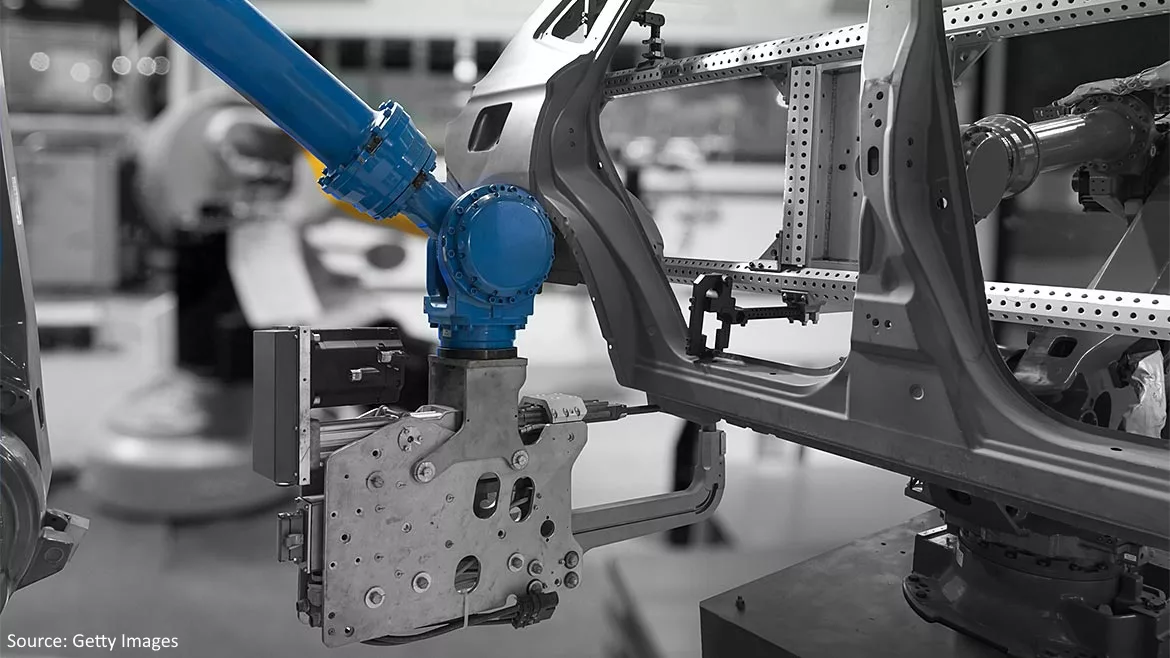
Factory robot arm in automobile manufacturing smart factory.

Image Source: Zapp2Photo / iStock / Getty Images Plus

April 3, 2025

Reciprocal. Retaliatory. Uncertainty. Ring a bell? These words have become daily companions in business meetings, earnings calls, business news, woven into nearly every conversation about one pressing topic: tariffs.

What was once a distant policy discussion more suited to a World Trade Organization summit, has now escalated into the topic du jour, or more accurately, the topic ‘du quotidien’ (French for ‘every single day’) impacting the business world and everyday life.

Companies from every industry, regardless of their exposure to trade, are scrambling to understand the implication of tariffs and develop action plans. The big question on everyone’s mind? How do we protect margins and stay competitive in a tariff-driven economy?

The 2025 tariff landscape, while continuing to be a moving target, is reconfiguring global trade patterns and forcing businesses across industries like industrials, autos, construction, and manufacturing to rethink their strategies. As tension escalates and tariffs rise, companies must grapple with higher input costs, supply chain disruption, and changed demand patterns. Early movers who shift price strategies and cut costs will be more likely to better navigate this uncertain terrain.


The Current Tariff Landscape: A Moving Target

As of March 13th 2025, the following tariff policies are either imposed or on the horizon:

  • 25% tariff on imports from Canada and Mexico (except USMCA-compliant trade, exempt until April 2)
  • 10% tariff on Canadian energy resources and critical minerals
  • Increase in tariffs on all Chinese imports from 10% to 20%
  • Global reciprocal tariffs set to take effect April 2, alongside a 25% tariff on lumber

While tariff discussions are still ongoing, these measures are already sending shockwaves through the overall economy disrupting supply chains, production costs, and consumer prices. Companies must take proactive steps to assess their exposure and adapt their pricing strategies accordingly.


Key Pricing Strategies to Mitigate Tariff Impacts

  1. Understand your cost exposure and price sensitivity
    The first step in managing tariff-related challenges is understanding their impact on your cost structure and overall customer demand. Businesses should:
    • Map tariff-affected materials and parts – Flag which inputs are subject to increased costs
    • Evaluate cost pass-through feasibility – Not all price increases can be absorbed by customers without affecting demand. Conduct price elasticity of demand analysis to determine price sensitivity by customer segments
    • Segment customers by willingness to pay – Adjust pricing for less price-sensitive customers while creating alternative value propositions for price sensitive buyers
  2. Competitor Benchmarking: Stay Ahead of the Pricing Curve
    Understanding how competitors react to tariffs gives companies a crucial pricing edge. They should:
    • Track real-time market price shifts – Stay in step with demand changes and competitor price action to stay competitive
    • Research supply chain workarounds – Identify alternative sourcing patterns competitors are applying to reduce tariff effect
    • Evaluate margin impact across the industry – Understanding how tariffs affect competitor cost structures can inform pricing decisions
  3. Implement Dynamic Pricing Adaptations
    With fluctuating tariff costs, companies must adopt dynamic pricing frameworks that reflect real-time cost changes. Key tactics include:
    • Surcharge strategies – Temporary surcharges help hedge cost increases while maintaining transparency with customers
    • Bundling tariff-impacted products with higher margin items – This approach absorbs the impact of price increases without undermining profitability
    • Incentivizing early purchases – Encouraging customers to buy before price increases go into effect can help manage inventory and normalize revenue
  4. Alternative Sourcing and Cost Containment
    Proactively managing procurement reduces reliance on tariff-affected suppliers. Consider:
    • Nearshoring or reshoring options – Shifting production closer to end markets can mitigate risk and improve supply chain resilience
    • Tariff exclusions – Many tariffs come with exemption possibilities, which businesses should aggressively pursue
    • Supplier Collaboration – Renegotiating contracts and securing alternative materials can help offset cost increase


Case Study: Tariff Minimization by a Tier 1 Supplier

A U.S.-based industrial manufacturer was struck by a 10% cost increase on essential parts due to the new China tariffs. Instead of simply passing on the cost to customers, they:

  1. Transferred 40% of their component buying to a non-tariffed supplier
  2. Implemented a 5% surcharge on selected high-demand products
  3. Introduced bundled pricing, pairing tariff-affected products with higher-margin offerings
  4. Negotiated price-lock agreements with key customers to guarantee volume and revenue stability

These initiatives allowed the company to maintain profitability without imposing abrupt price hikes that could have led to customer and revenue losses.


Conclusion: Turning Tariff Challenges into Opportunities

Adapting to tariffs demands a dynamic pricing and supply chain strategy. Businesses that quantify cost exposure, track competitor responses, implement dynamic pricing, and explore alternative sourcing can protect margins and stay competitive in an evolving trade landscape.

Looking for quick answers on assembly and manufacturing topics? Try Ask ASM, our new smart AI search tool. Ask ASM →

Yet, amid the uncertainty lies opportunity. Companies that proactively adjust pricing strategies and optimize costs won’t just defend margins; they may unlock new profit pools and even gain market share as competitors struggle to keep up. Tariff-driven volatility can open doors for strategic pricing moves, supplier renegotiations, and differentiated customer value propositions that strengthen competitive positioning.

As Ayrton Senna, the legendary three-time Formula 1 world champion, once said:

“You cannot overtake fifteen cars when it’s sunny weather, but you can when it is raining.”

And right now, tariffs have brought one serious downpour.

This article was originally posted on www.qualitymag.com.
KEYWORDS: tariffs

Share This Story

Looking for a reprint of this article?
From high-res PDFs to custom plaques, order your copy today!

Kurt Ranka is a managing principal in Ducker Carlisle’s – Automotive and Industrial Equipment Pricing Practice and has over 20 years of consulting experience within the Automotive, Truck, Industrial and Recreational Equipment verticals. Kurt is based in Detroit.

Chris Dias leads the Private Equity pricing practice at Ducker Carlisle, advising portfolio companies on navigating market dynamics and driving value through pricing optimization. Chris is based in New Jersey.

Recommended Content

JOIN TODAY
To unlock your recommendations.

Already have an account? Sign In

  • Made in the U.S.A.

    Consumer Products Manufacturing: Made in the USA

    Supply chain lessons learned during the coronavirus...
    Automated Assembly Systems
    By: Austin Weber
  • Best Practices for Press-Fit Assembly

    Best Practices for Press-Fit Assembly

    In manufacturing, ironclad formulas for success are hard...
    Assembly Presses
    By: Jim Camillo
  • aem0523leader-tesla1.jpg

    Tesla Rethinks the Assembly Line

    Engineers at Tesla Inc. have developed a new process that...
    Industries
    By: Austin Weber
Manage My Account
  • eMagazine Subscription
  • Assembly Newsletters
  • Online Registration
  • Subscription Customer Service
  • Manage My Preferences

More Videos

Sponsored Content

Sponsored Content is a special paid section where industry companies provide high quality, objective, non-commercial content around topics of interest to the ASSEMBLY audience. All Sponsored Content is supplied by the advertising company and any opinions expressed in this article are those of the author and not necessarily reflect the views of ASSEMBLY or its parent company, BNP Media. Interested in participating in our Sponsored Content section? Contact your local rep!

close
  • ultrasonic welding
    Sponsored bySonobond Ultrasonics

    Engineering Efficiency in High-Performance Assembly: How Ultrasonic Welding Enhances Throughput, Reliability and Quality

  • UV curing system
    Sponsored byDymax

    Why UV Intensity Alone Doesn’t Define Curing Performance

  • wooden pallets
    Sponsored byLEAN Manufacturing Products

    Eliminating Waste on the Shop Floor: Applying Lean Principles to Improve Manufacturing Efficiency

Popular Stories

ASSEMBLY News Now, episode-30: Volvo Redesigns EV Manufacturing

Volvo Redesigns EV Manufacturing

Boeing CEO Kelly Ortberg announces 1 billion investment

Boeing Plans $1 Billion Wichita Investment, Workforce Training Center

GE Appliances Worker on Line

GE Appliances Expands Factory AI With 800 Gemini Enterprise Agents

Watch the latest episode of ANN now!

Events

July 24, 2025

From Shop Floor to CFO: How Manufacturers Are Closing the Loop Between Operations and Finance

On Demand Learn how manufacturers are bridging the gap between the shop floor and ERP systems to gain real-time visibility, streamline operations, and kick-start digital transformation—without waiting years.

Sponsored by:

PicoStratusGreen
July 30, 2025

Buffer Analysis and Design Fundamentals for Manufacturing Excellence

On Demand In this presentation, Dr. Herman Tang shares practical insights from his industry experience and research on buffer management in manufacturing operations.

View All Submit An Event

Poll

Difficult Assembly Processes

Which assembly process gives you the most difficulty?
View Results Poll Archive

Products

Manufacturing Cost Policy Deployment (MCPD) Profitability Scenarios: Systematic and Systemic Improvement of Manufacturing Costs

Manufacturing Cost Policy Deployment (MCPD) Profitability Scenarios: Systematic and Systemic Improvement of Manufacturing Costs

See More Products
Register for webinar - Modernizing Automotive Assembly: Why Upgrading Legacy MES is a Business Imperative

Related Articles

  • Toyota Production System

    Why We Can't Afford to Ignore the Toyota Production System

    See More
  • You Can’t Beat a Good Old Mockup

    See More

Related Products

See More Products
  • lean.jpg

    Lean Manufacturing: Business Bottom-Line Based

  • Kaizen Assembly: Designing, Constructing, and Managing a Lean Assembly Line

  • digitalization.jpg

    The Digitalization of the 21st Century Supply Chain

See More Products

Related Directories

  • Mentor, a Siemens Business

×

Never miss the latest news and trends driving the manufacturing industry

Stay in the know on the latest assembly trends.

JOIN TODAY!
  • RESOURCES
    • Advertise
    • Contact Us
    • Directories
    • Manufacturing Division
    • Store
    • Want More?
  • SIGN UP TODAY
    • Create Account
    • eMagazine
    • Newsletters
    • Customer Service
    • Manage Preferences
  • SERVICES
    • Marketing Services
    • Reprints
    • Market Research
    • List Rental
    • Survey/Respondent Access
  • STAY CONNECTED
    • LinkedIn
    • Facebook
    • Instagram
    • YouTube
    • X (Twitter)
  • PRIVACY
    • PRIVACY POLICY
    • TERMS & CONDITIONS
    • DO NOT SELL MY PERSONAL INFORMATION
    • PRIVACY REQUEST
    • ACCESSIBILITY

Copyright ©2026. All Rights Reserved BNP Media, Inc. and BNP Media II, LLC.

Design, CMS, Hosting & Web Development :: ePublishing