Aerospace
Balancing Cost and Quality in Aerospace Manufacturing with AI
By leveraging AI tools, manufacturers can achieve the critical balance between efficiency and the aerospace industry’s strict regulatory and safety standards.

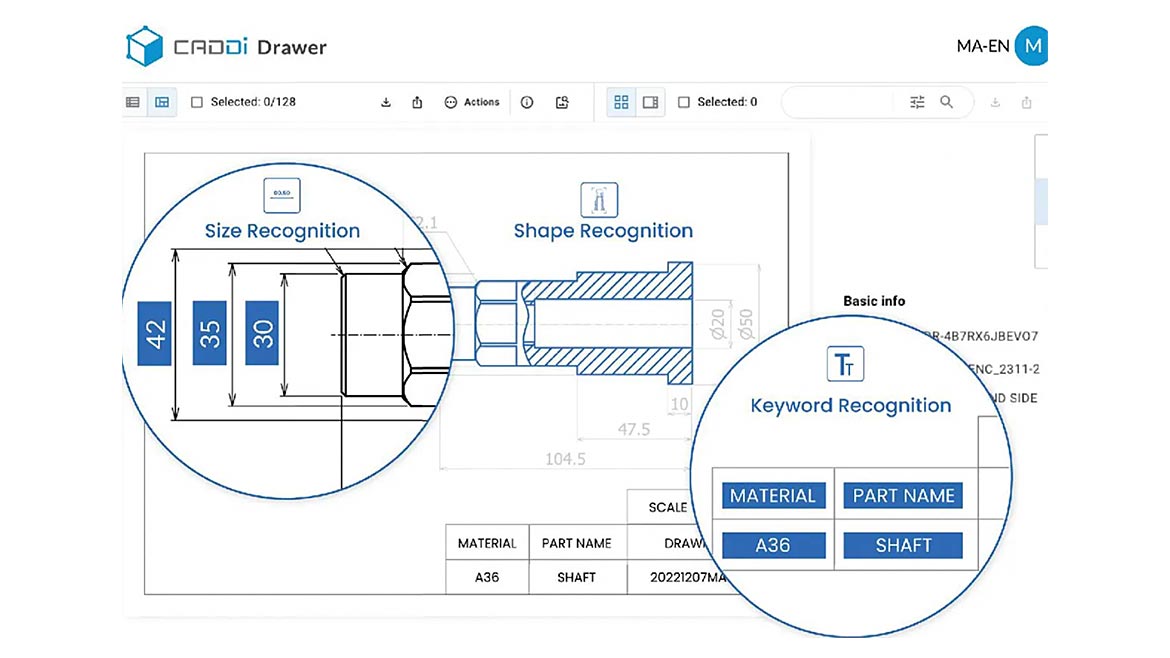
Image Source: CADDi
Maintaining a delicate balance between cost reduction and rigorous quality standards has become an increasingly pressing challenge in the aerospace industry. The emergence of artificial intelligence (AI) as a transformative tool has opened new avenues for tackling these dual objectives, particularly in manufacturing and metrology. AI-powered solutions are strategic allies for identifying cost-saving opportunities in aerospace manufacturing, offering innovative ways to optimize production without compromising quality or safety.
By leveraging AI tools, manufacturers can achieve the critical balance between efficiency and the aerospace industry’s strict regulatory and safety standards––essential for staying competitive in a demanding market. AI-driven solutions help analyze historical designs, procurement data and manufacturing processes, revealing inefficiencies, uncovering cost savings opportunities, and ensuring compliance while maintaining high-quality standards.
Analyzing Historical Designs and Procurement Data
AI solutions can analyze historical designs and procurement data, enabling manufacturers to refine production processes. By examining past production cycles, procurement patterns, and component performance, AI identifies recurring inefficiencies or areas for improvement. This helps manufacturers make data-driven decisions to optimize supply chain logistics, reduce unnecessary inventory, and prevent costly mistakes. It also allows for more accurate demand forecasting, ensuring that the right materials are available at the right time, further supporting cost control and production efficiency.
The Role of Non-Critical Components in Aerospace
Non-critical components comprise approximately 80% of an aircraft’s structure. These parts, including metal fabrication components like bent sheet metal and machined elements, play a supporting role in the aircraft’s overall performance. However, their sheer volume and complexity make them ideal targets for cost-reduction strategies without compromising safety or quality.
A large part of an aircraft’s shell depends on these specialized components, which must be made efficiently and accurately. Since these parts don’t significantly impact the aircraft’s performance, improving how they’re produced is a strategic way for aerospace manufacturers to navigate the dual pressures of cost management and quality assurance.
Implementing methods like Value Analysis and Value Engineering (VAVE) can help manufacturers focus on optimizing those non-critical components. This approach streamlines manufacturing processes, minimizes material waste, and reduces the need for custom fabrication.
Challenges of Cost Management
Traditionally, cost reduction in aerospace manufacturing has focused on streamlining production processes and sourcing materials more efficiently. Yet, these methods often reach their limits without technological intervention. Given the complex regulations and high-stakes performance requirements in the aerospace industry, the diminishing returns of these traditional methods will quickly be overwhelmed by competitive pressures. Fortunately, AI-driven tools are revolutionizing this landscape by offering new optimization possibilities through advanced manufacturing analytics and metrology integration.
Looking for quick answers on assembly and manufacturing topics? Try Ask ASM, our new smart AI search tool. Ask ASM
Through advanced manufacturing analytics, AI can uncover inefficiencies that previously went undetected, while metrology integration ensures precision and consistency in production. These technologies enable manufacturers to make smarter decisions, automate repetitive tasks, and reduce waste without compromising quality.
Streamlining the Production Process
One key area where AI makes a measurable impact is standardizing similar parts. Because aerospace manufacturing often involves a high degree of customization, costs can quickly escalate. AI tools can identify commonalities among parts, enabling manufacturers to consolidate designs and reduce variability. This streamlining lowers cost production by reducing the need for unique tooling and materials for each part. Standardization also simplifies inventory management, as fewer distinct parts need to be tracked and stored, reducing the risk of overstocking or shortages.
Furthermore, a more uniform set of components improves supply chain efficiency by allowing manufacturers to order larger quantities of standardized parts, often at a lower cost, and simplifying coordination with suppliers. AI-powered standardization addresses these challenges and enhances operational efficiency across the entire manufacturing ecosystem, from production to delivery.
AI’s Impact on Aerospace Supply Chains
Beyond optimizing non-critical components, AI can potentially transform aerospace supply chains. From predictive analytics for demand forecasting to real-time tracking of materials, AI offers tools that can improve transparency and coordination across the supply chain. These improvements reduce waste, enhance supplier relationships, and ensure timely delivery of critical components.
Additionally, AI enables manufacturers to respond more effectively to disruptions. The growing adoption of AI tools for supply chain optimization, manufacturing efficiency, and metrology reflects a broader shift in aerospace manufacturing. This evolution is not merely a response to operational challenges but a proactive strategy to ensure resiliency and adaptability during unforeseen events.
In an industry where delays can have cascading effects, predicting and mitigating risks is invaluable. By integrating AI into their supply chain strategies, aerospace companies can build resilience and adaptability into their operations. As AI continues to mature, its cost reduction and quality assurance applications will expand, offering even greater value to manufacturers.
New solutions are paving the way for a new era of aerospace manufacturing, where cost efficiency and top-notch quality go hand in hand. With AI-driven tools, manufacturers can unlock practical strategies for navigating the industry's complexities, ensuring they remain at the forefront of innovation while meeting the highest standards of excellence.
Enhancing Accuracy in Metrology
Metrology is critical to ensuring the quality and reliability of aerospace components, and AI-driven metrology tools are redefining precision in manufacturing. These tools can analyze measurement data in real-time, identifying discrepancies and enabling rapid adjustments to maintain specifications. Integrating AI into metrology processes allows manufacturers to achieve higher levels of precision while reducing the need for corrections and redoing work.
AI-powered metrology also facilitates predictive quality control. By analyzing historical data and identifying patterns, AI tools can forecast potential quality issues before they occur. This proactive approach minimizes downtime and enhances overall manufacturing efficiency.
Value Analysis and Value Engineering
As previously mentioned, VAVE is another powerful approach facilitated by AI. These methodologies involve scrutinizing each component’s function and cost to determine opportunities for redesign or material substitution. AI solutions enable manufacturers to rapidly conduct detailed analyses, uncovering insights that would be difficult or impossible to achieve manually. By prioritizing non-critical components for these strategies, manufacturers can achieve cost reductions without compromising the performance or reliability of their aircraft.
For example, by evaluating the material composition of non-critical parts, AI tools can suggest alternative materials with similar properties but at a lower cost, helping manufacturers make informed decisions that align with their cost and quality objectives.
Ensuring Quality in a Regulated Environment
In addition to high-quality standards, aerospace manufacturing is one of the world's most regulated industries, with stringent standards governing every aspect of production. Any cost-reduction strategy must adhere to these standards to ensure safety and compliance. This leaves AI solutions uniquely positioned to support specific requirements by offering precision and consistency in their analyses.
For instance, AI can simulate the performance of redesigned components under various conditions, ensuring that any cost-saving measures do not compromise the aircraft’s integrity or safety. This capability gives manufacturers confidence that their efforts to reduce costs align with the highest standards of quality and reliability.
AI tools can also assist in predictive maintenance by analyzing data from non-critical components. By identifying potential points of failure before they occur, manufacturers can reduce downtime and avoid costly repairs, further enhancing overall efficiency.
Shaping the Future of Aerospace Manufacturing
As the aerospace industry tackles the challenges of reducing costs while ensuring quality, AI-driven solutions are proving to be key allies. Innovations driving digital transformation enable manufacturers to achieve meaningful cost savings without compromising safety or performance by focusing on optimizing non-critical components and integrating advanced metrology techniques. This strategic approach marks a turning point for aerospace manufacturing, offering a clear path forward in an increasingly complex and competitive landscape.
In a world where accuracy and efficiency are crucial, AI integration sets the stage for a new era in aerospace manufacturing. Addressing short-term hurdles and long-term objectives, AI is proving to be a transformative force shaping the future of the industry.
Looking for a reprint of this article?
From high-res PDFs to custom plaques, order your copy today!