Automotive Wiring Harness Market Continues to Grow
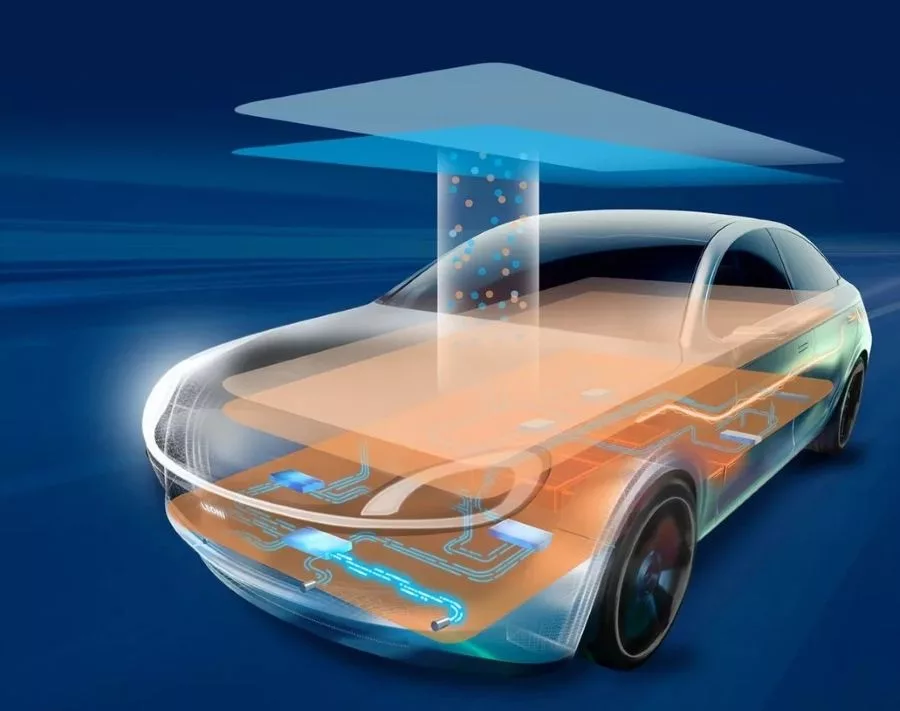
Leoni is expanding its manufacturing activity in the Middle East and Africa. Illustration courtesy Leoni AG
CHICAGO—According to a new study conducted by Astute Analytica, the global automotive wiring harness market will grow 6 percent annually from $70 billion today to more than $118 billion by 2033. Demand will be driven by ADAS applications, component miniaturization, lightweighting, wiring complexity and zonal architectures.
The sheer physical scale of wiring harnesses is a primary indicator of the explosive growth in vehicle electronic content. The total length of wires in a single high-end passenger vehicle reaches up to more than three miles long, due to an ever-increasing number of features and functions. This complexity directly impacts vehicle weight and assembly. The total weight of the wiring harness assembly in some 2024 luxury SUVs can exceed 132 pounds.
The report claims that a typical vehicle today has more than 4,000 individual connection points within its electrical system, creating immense design and manufacturing challenges. The number of separate circuits within a single wiring harness can surpass 2,000, with each one requiring precise routing and protection. Electric vehicles require up to 2,000 additional wiring connections compared to a similar gas-powered vehicle.
While high-voltage harnesses in current EV models are already being designed to handle continuous currents exceeding 300 amps, next-generation 800-volt platforms are beginning to emerge, requiring harnesses that are capable of handling up to 1,000 volts.
The parallel trend of increasing vehicle intelligence is also placing immense pressure on automotive wiring harness suppliers. Advanced driver assistance systems (ADAS) and the pursuit of autonomy will require a massive increase in sensor suites and processing power, all interconnected by the harness. A 2024 vehicle equipped with Level 2+ ADAS requires at least 15 additional dedicated sensor harnesses compared to a base model. At the heart of this system, the central ADAS control module in a 2025 vehicle will require a harness with more than 200 input and output pins.
The requirements for higher levels of autonomy are even more stringent. A single forward-facing LiDAR sensor, which is mandatory for certain Level 3 autonomy systems in 2025, requires a harness with at least eight dedicated wires for power and high-speed data. Today, the total number of ultrasonic sensors requiring dedicated harnesses on a 2024 premium vehicle is already 12. Even established technologies such as a surround-view camera system adds more than 20 meters of shielded coaxial cable to wire harnesses.
As the number of wires grows, the space to accommodate them does not. This has ignited a race for miniaturization in connector technology in the automotive wiring harness market. The pitch, or distance between pins, in a standard 2024 automotive connector has been successfully reduced to just 0.5 millimeter, enabling much denser connections. This trend is accelerating, claims the Astute Analytica report. New miniature connectors will reduce the footprint by an additional 0.2 millimeters.
Looking for quick answers on assembly and manufacturing topics? Try Ask ASM, our new smart AI search tool. Ask ASM
A single electronic control unit connector can now house more than 120 individual terminals in a space smaller than 5 square centimeters. Durability is also a key focus, with advanced wire-to-board connectors being designed to withstand more than 3,000 mating cycles. In addition, the insertion force required to connect a 100-pin harness connector has been reduced to under 75 newtons, improving ergonomics and reducing the risk of damage.
Despite these advancements, complexity affects production timelines. According to Astute Analytics, the average lead time for a complex, custom vehicle harness is 12 weeks. However, quality control is becoming highly automated, with quality control systems now able to optically inspect more than 500 connector pin positions in under 60 seconds.
Looking for a reprint of this article?
From high-res PDFs to custom plaques, order your copy today!