From CAD to Clarity: Why Automated Work Instructions Are the Critical Step in Reindustrializing the West
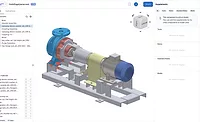
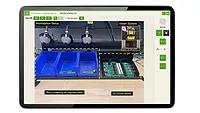
At the ASSEMBLY Show in October, we were joined by a handful of our exhibitors to discuss pertinent issues and the products they brought to showcase. Ben Brakenwagen, account executive with Dirac, sat down with ASSEMBLY Audible to discuss Dirac’s automated work instruction platform, BuildOS, and its role in model-based manufacturing.
Q: What is model-based manufacturing, and how are companies leveraging it to improve their manufacturing processes and enable their digital transformation?
Brakenwagen: Model-based manufacturing essentially uses a 3D model as your single source of truth throughout your manufacturing process. What that really means is pointing all your data throughout the manufacturing process back to this 3D model.
So, you're making assembly instructions point to the model. You're making your chassis point back to the model, your documentation, MRO—all these things are pointing back to the model. And you're creating this digital thread of information, throughout the process.
Q: What does BuildOS do?
Brakenwagen: BuildOS is a tool dedicated to manufacturing engineers to be able to manipulate the model, re-sequence things, and make these instructions in an intuitive manner.
Q: Tell us about a moment when a team went from ‘three days of documentation’ to ‘a few hours.
Brakenwagen: We've seen this a lot. People come in, they have spent three to four days making one work instruction, and then they use BuildOS and it takes two to three hours. One of our earlier customers, Ancra Aircraft, was the first example of that days-to-hours transition. They brought us in at the start of a new contract, just to see how it works and try to get their product out the door faster. And within six weeks, they decided to implement BuildOS throughout the entire organization. They were spending significantly less time making work instructions.
They now have revision control of their work instructions, which they didn't have previously. I think the metrics that we have on them was 95 percent reduction on time spent on work instructions. And as they needed more revisions, they could do them quicker.
Q: Where exactly does the CAD-to-workstation translation typically fail, and why hasn’t traditional software closed that gap?
Brakenwagen: There's a multifaceted answer to it. So, I'll break it down into three different buckets. There's the simple adoption from CAD to the workstation. Then there's the feedback loop from the workstation and CAD. And then there's also the information transfer from design to manufacturing.
Looking for quick answers on assembly and manufacturing topics? Try Ask ASM, our new smart AI search tool. Ask ASM
- So, the simple adoption, some people use CAD on the line, but there's no really good way to consume it in an intuitive assembly manner. So that's where that one struggles.
- Then you have to be so intentional about getting feedback to the designers from the line. It'll require either the operators redlining the assembly instructions, bringing them to the engineers, or the engineers going out of their way to the line to see how the operators are doing it, and trying to work it that way. But what we see a lot is that operators start iterating their process, and it doesn't get implemented. So now the process that's happening on the line doesn't reflect what the instruction shows. And that obviously leads to issues.
- And then the third thing is the information transfer throughout design and manufacturing. Right now, work instructions are like a rogue path off the normal data line. And it's just like this random point where the work instructions live. With BuildOS, work instructions serve as a stepping stone between your design and your manufacturing. So, if you have data in your PLM and need to translate it into the ERP, BuildOS is that process. It's linear with the rest of the process.
Sometimes, especially if it's a high mix, low-volume situation, it doesn't even make sense, from an investment-of-time standpoint, to create work instructions. But if you are translating your data from design and manufacturing at the same time, then it's a lot more justifiable. And then there are obviously a lot of benefits to having work instructions vs. not having them.
Q: What makes a work instruction truly repeatable across shifts, products and plants?
Brakenwagen: That's a good question. I would say highly educational and rigid are the two things that make an instruction actually scalable. Like I was saying earlier, operators will start developing their own flair as they start building from what we've seen. So, the first X amount of builds is so critical to getting them into a process flow that works.
Because once you do it 10 times, you may still be flipping through the instructions, but you're not really thinking about the instructions. Making sure those first ones are educational and clear-cut, that they learn in a way that's effective, is incredibly important. And then rigidity is important because it prevents quality issues.
I think rigidity is important for the instructions, but I think adaptability is very important for the process of making the work instructions because products change. New SKUs come out. You need to be ready to move.
And the only way to do that is to have an infrastructure in place that can adapt quickly. So, although the instructions are rigid, the way you make them needs to be flexible.
Q: When people say “reindustrialization,” they jump to capital investment and supply chains. Why do you argue the humble work instruction is the linchpin?
Brakenwagen: Reindustrialization is a quite complex concept. There's a lot going on in there. Jumping to capital investments and supply chain, those are very important factors. But reindustrialization, as a whole, is hardening the entire industrial base.
You need to rethink and reform pretty much all aspects of it. And so although capital investment is a big part of that, consolidating and rethinking supply chains is very important. We are focusing on the humble work instruction, because it's the blueprint of the modern day. And blueprints are what drive design and manufacturing.
It allows for agility throughout the industrial base. So, if you have really good work instructions, you can plop that work instruction into a new facility quite easily. Or if you have very poor documentation, it's almost impossible to just do an agile flip, open a new facility, spin that up quickly. The work instruction is the backbone of agility throughout the industrial base.
Learn more about Dirac’s work instruction platform, BuildOS. Join us for our next event, MAX.
Looking for a reprint of this article?
From high-res PDFs to custom plaques, order your copy today!