ASSEMBLY Audible
Bill Good on Automation, Digitization and Building the No. 1 U.S. Appliance Manufacturer
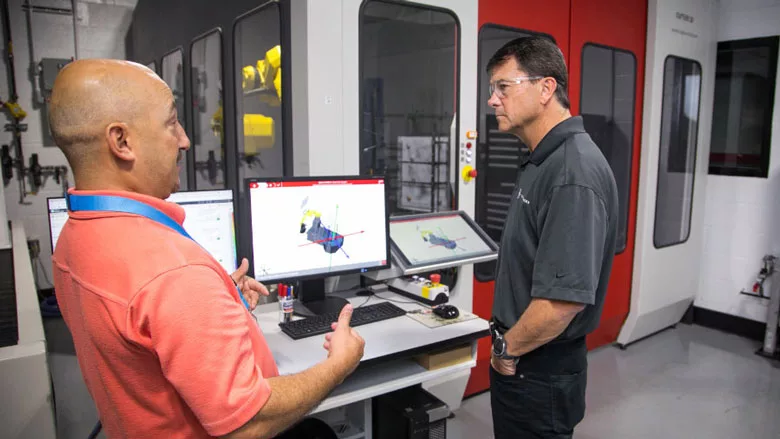
GE Appliances has taken the number one spot in U.S. appliance manufacturing—a position earned not just through scale, but through innovation in automation, digitization, and reshoring. By investing in advanced robotics, virtual production planning, and real-time data visibility, the company is redefining what it means to make appliances in America.
We here at ASSEMBLY Audible are again joined by Bill Good, Vice President of Manufacturing and Supply Chain at GE Appliances. In today’s episode, we explore how the company leverages automation and digitization to optimize efficiency, accelerate production, and reduce reliance on overseas supply chains. From piloting new processes in virtual factories to launching its first in-house water filter line at Appliance Park, GE’s approach shows how smart automation and a skilled workforce can drive onshoring while maintaining world-class output.
ASSEMBLY:
You’ve told me speed wins… So how are you using automation and digital tools to increase speed? Tell us a little bit about GE’s strategy to take the number one spot in appliance manufacturing right here in the USA.
BILL:
One of the areas we’ve focused on since 2016 is our digitization strategy. You have to eliminate problems within your supply chain, and the way you do that is through data and data visualization. Visualization allows us to illuminate the problems we’re having.
We started this journey with what we call our “brilliant factory” initiative. It focused on developing a digitization strategy within the four walls of the plant—giving us visibility into data on every process in a facility, whether it’s an assembly line, a stamping press or an injection press. We wanted performance visibility everywhere.
Why does that matter? Because disruptions happen. A press fails. An assembly line doesn’t operate the way you expect. By pulling data off PLCs in real time, we can see what’s happening and respond immediately.
We extended that work beyond the plant—giving us visibility into freight, shipments to consumers, and upstream suppliers. That end-to-end visibility is critical to advanced manufacturing.
Looking for quick answers on assembly and manufacturing topics? Try Ask ASM, our new smart AI search tool. Ask ASM
Automation is another key piece. Automation neutralizes many global labor advantages. It takes a fraction of the workers it once did to manufacture an appliance. At the same time, we’ve grown—we’ve created more than 4,000 jobs during this journey—but we’ve become far more efficient in how we do it.
Workforce transformation is equally critical. I can buy the most advanced equipment in the world, but without a skilled workforce, it falls apart. So we developed what we call our employee value proposition, focused on development and creating different kinds of work.
In the past, much of the work was manual and physically demanding. Today, an associate may serve as a controls technician interfacing with PLCs or computer systems rather than performing the manual task the machine now handles.
We’ve also redesigned our factories for flexibility—parts coming in one side, finished goods out the other, and the conversion process in between engineered to be as efficient as possible. That’s what we’re focused on.
ASSEMBLY:
Efficiency, speed… all very important. But so is capital. When you talk about automation and modernization, we’re talking about serious monetary investment. GE is investing $3 billion in US manufacturing over the next few years. What does that level of investment actually look like? Paint a picture for me.
BILL:
In many of our manufacturing plants, more than 50 percent of the footprint is equipment. It’s not uncommon for a highly automated piece of equipment to cost $3 million. Some processes require investments of up to $10 million.
Many of our plants were built in the 1950s, so there’s infrastructure work required just to prepare a facility to receive that equipment. Then you have the purchase, installation, and commissioning.
We also invest heavily in product innovation. We want our products to be the best consumers can buy, and we’re constantly focused on delivering solutions that make households more efficient.
Beyond equipment and product, there’s engineering effort—the cost of designing, preparing facilities, installing and integrating everything. Those are really the three main areas of investment: facilities and equipment, product, and engineering.
We’ve proven through automation, digitization and what we call our zero-distance philosophy that you can compete successfully in the United States. I believe we’re at an inflection point. More companies are investing back into U.S. manufacturing and reducing reliance on other countries.
If you automate, digitize and build a flexible, nimble supply chain, you can win.
If you automate, digitize and build a flexible, nimble supply chain, you can win. We didn’t become number one by accident. We built a deliberate roadmap around product solutions, resilient supply chains and operational agility.
Through COVID, supply chain disruptions, construction booms and slowdowns, and shifting consumer demand, we’ve been able to respond.
As confidence builds, supplier clusters follow. Components that once moved offshore begin to return. As infrastructure strengthens, everyone benefits.
Manufacturing is critical to the United States. There was a period where we believed we could function primarily as a service economy. Many of us now recognize how important domestic manufacturing is.
These are good jobs. Manufacturing has a powerful multiplier effect—every dollar spent returns two to three dollars to the economy, sometimes more. We’re in a resurgence of American manufacturing, and I believe others can follow the model.
ASSEMBLY:
The new water filter operation at Appliance Park is obviously a big win for American manufacturing, and I understand that was made possible through the use of digital twins.
BILL:
We piloted this new approach with our water filter line. We built the entire line in the virtual world before cutting the first piece of steel.
That allowed us to interact with the system and design something more efficient than anything we had built before. In a fully simulated 3D environment, our design engineers could work alongside process engineers and simulate operations.
We even had an engineer using VR glasses positioned virtually underneath the equipment, relocating sensors, motors and cylinders to improve serviceability. If we had an unplanned outage, maintenance personnel would be able to access and repair equipment quickly.
No operation runs perfectly all the time—disruptions happen. So we designed the equipment, simulated human interaction, validated ergonomics, and optimized part flow entirely in the virtual world before physical build.
The results were extraordinary.
Historically, ramping a new piece of equipment to full output takes 12 to 16 weeks. With this line, we reached full output in one week. Within days, you would think we had been running it for years.
We’re now applying 3D simulation to additional processes, and given our success with the water filter line, we like our chances.
ASSEMBLY:
We’re going to take listeners inside the water filter operation at Appliance Park on the upcoming episode of ASSEMBLY News Now. I’m very excited. But to round out today’s conversation… Looking at the bigger picture, what excites you most about GE’s automation and digitization strategy, and how does it position the company as a benchmark for advanced manufacturing in the U.S.?
BILL:
What I love about working here is that innovation is part of our fabric—it dates all the way back to Thomas Edison. We seek solutions.
Today, digitization and automation are central to that. We want the most advanced manufacturing plants in our industry.
The automation we pursue focuses on non-value-added tasks—anything that doesn’t directly convert a part into a finished good. Those are the processes we target first.
Our water filter operation, installed just weeks ago, is the most advanced and automated approach we’ve ever implemented.
From modernizing our Roper facility to advancing dishwasher production and now the water filter line, we’ve built tremendous confidence. We know we can execute high-level automation, make our plants highly efficient, and set the benchmark for our industry.
ASSEMBLY:
Thank you, Bill, so much for joining us on ASSEMBLY Audible. We’ll see you at the Manufacturing and Automation Exchange taking place March 24-26 in Nashville, Tennessee. And you, our listeners, are all invited to attend, and hear Bill in our panel discussion on reshoring Wednesday afternoon. Thank you for being here today. I hope you’ll join us again soon.
Looking for a reprint of this article?
From high-res PDFs to custom plaques, order your copy today!