Assembly Lines
Six Years Without a Lost-Time Incident: How Magna Improved Safety and Assembly Performance
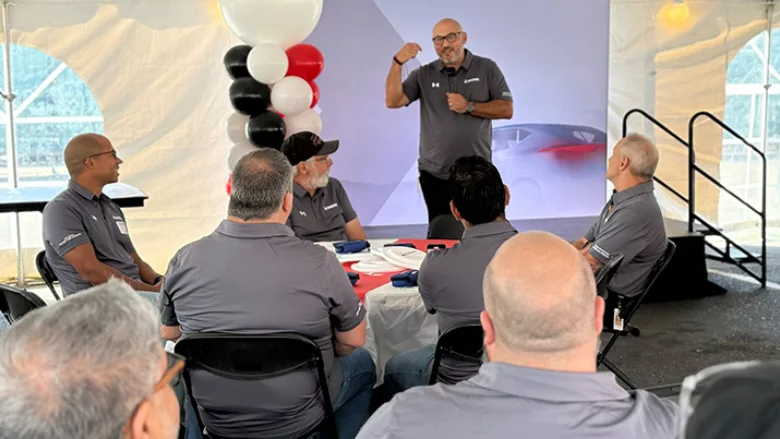
BIRMINGHAM, Mich. — Six years without a lost-time incident in a plant running stamping, machining and final assembly sounds improbable. At Magna’s Sterling Heights, MI, division, it’s the result of a deliberate focus on people, daily engagement and a few unconventional ideas.
“It’s unbelievable,” said Patrick Topey, senior EHS coordinator. “There’s no other way to describe it for the type of work we do.”
The facility’s 149 employees produced 10.5 million oil pans in 2024 for customers including Ford and General Motors. But inside the plant, safety performance is not treated as a separate initiative; it is built into how work gets done and how problems are solved.
“The biggest lesson we’ve learned is making sure our workers are involved in helping us solve problems,” Topey said.
That philosophy plays out through daily Gemba Walks, where leadership leaves the office and heads to the shop floor to observe operations, ask questions and gather input directly from operators. The goal is not just oversight, but collaboration.
“That’s how we gain ideas for continuous improvement and a lot of trust from the people on the floor,” said Mustafa Albaldawi, a manufacturing-process engineer.
Those conversations often translate into practical changes on the line. At one workstation, operators load a five-pound part every five seconds onto a conveyor feeding a stamping press, a repetitive task where small inefficiencies can quickly become safety risks.
Looking for quick answers on assembly and manufacturing topics? Try Ask ASM, our new smart AI search tool. Ask ASM
To address that, the plant invested $26,000 in adjustable, tilting tables and extended the conveyor length to improve reach and reduce strain. The result is a station that is easier to work at and more consistent in how parts move through the process.
“Reserve funds in your budget for ergonomics,” Albaldawi said. “It supports continuous improvement.”
Ergonomics is a constant focus, not just for safety, but for retention and production stability. Reducing strain helps operators maintain pace and precision, which directly supports assembly performance in high-volume environments.
Beyond physical improvements, the plant reinforces safety through daily engagement. One of the most visible examples is Safety Bingo, played in the cafeteria with all hourly employees. The jackpot grows with each day of safe operation and resets if there is an incident or violation, creating shared accountability across the workforce.
The plant also emphasizes direct communication with leadership. Monthly meetings are supplemented by smaller, informal sessions known as “Huddle with Hector,” where employees can raise concerns or share ideas directly with the general manager, Hector Gonzalez.
Celebrations are equally intentional. When the plant reaches milestones, such as another year without a lost-time incident, both shifts are recognized with catered events, reinforcing that safety is a collective achievement.
Even smaller gestures play a role. Employees are invited to meet with leadership during their birthday month, creating additional opportunities for connection beyond production targets.
For manufacturers, the takeaway is not a single program, but a system. Daily shop-floor engagement, targeted ergonomic investment and consistent communication create an environment where safety and production reinforce each other.
At Sterling Heights, that alignment has delivered more than six years without a lost-time incident. For a plant running high-volume stamping and assembly, it’s proof that focusing on people can drive measurable results on the line.
Looking for a reprint of this article?
From high-res PDFs to custom plaques, order your copy today!