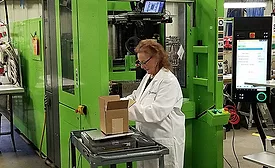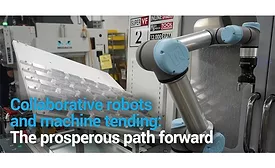
This white paper from Universal Robots takes an in-depth look at machine tending operations within today's factories, and how collaborative robots help machine shops free up valuable personnel, increase capacity while improving quality, and breathe new life into idle equipment.
While economic fluctuations have had negative impacts on the business landscape through the years, the outbreak of the COVID-19 virus led to a level of disruption never seen before.
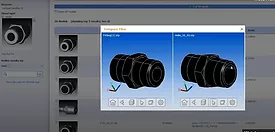
WEST LAFAYETTE, IN—A team of Purdue University mechanical engineers has created the first comprehensive open-source annotated database of 3D mechanical parts to help researchers apply machine learning to those parts in actual machines.
The twin technologies of big data and machine technology will have to work together in order to propel autonomous vehicle development forward, and industry players from automakers to chipmakers are gearing up for a long and winding road.
September 10, 2020
Artificial intelligence (AI) and machine learning have become vital tools for the production of next-generation automated vehicles, particularly because of the need to recognize and react to the nearly infinite number of scenarios encountered on real-world roads.
Let's not sugarcoat this. The world's manufacturing base is at war with COVID-19 and its destructive, disruptive effects on everything from supply chains to daily production levels and, ultimately, the health of everyone. Getting ahead of this curve will require a much more aggressive approach to using data.
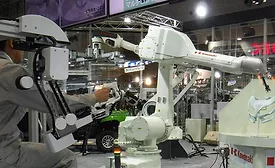
Robots and other automation technologies have greatly increased productivity in today's factories. However, they still have one major limitation: They require people to tell them what to do.
ROCHESTER HILLS, MI—Fanuc, one of the world’s largest makers of industrial robots, is working with Nvidia, a Silicon Valley chipmaker that specializes in artificial intelligence, to add learning capabilities to its products.