BIRMINGHAM, Mich. — As National Robotics Week highlights advances in automation, one trend is becoming clear: robotics is no longer confined to pilot projects or isolated applications. It is being deployed across production lines to solve specific manufacturing challenges. In many cases, the shift is happening at the process level.
BIRMINGHAM, Mich. —
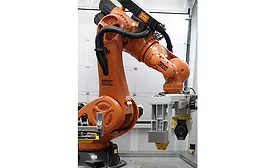
Manufacturers handling large, complex components are increasingly turning to hybrid automation systems that combine robotics with human expertise. At Scania, a new gripping system is helping address that challenge by enabling safe, precise handling of heavy engine components in a human-robot collaborative environment.
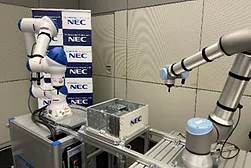
BIRMINGHAM, Mich. — As National Robotics Week highlights the rapid evolution of automation, manufacturers are beginning to deploy a new generation of intelligent robotic systems capable of adapting to real-world production environments.
Robotics is no longer defined by motion alone. The next phase of automation is being driven by intelligence — systems that can perceive, decide and adapt in real time on the factory floor.
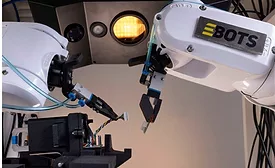
FREMONT, Calif. — Manufacturers have long automated repetitive, high-volume production tasks, but many assembly operations that require dexterity and adaptability have remained difficult to automate. eBots Robotics, a Silicon Valley-based company, is among those focusing on these applications. The company has developed dual-arm robotic systems designed to perform assembly work that traditionally required skilled human operators, particularly in industries such as electronics, semiconductors, medical devices and electric vehicles.
BUDAPEST, Hungary — Allonic, a robotics manufacturing startup founded in Hungary with a joint U.S. headquarters, has raised $7.2 million in pre-seed funding to develop an automated production platform aimed at speeding the manufacture of advanced robotic hardware.
CAMBRIDGE, Mass. — Harvard researchers have developed a 3D-printing method that could make it easier to build soft robots designed to bend, deform and grip in predictable ways.
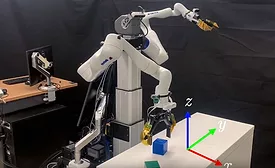
CAMBRIDGE, MA—Engineers at the Massachusetts Institute of Technology and Nvidia Research have developed an algorithm that enables robots to consider thousands of potential motion plans simultaneously.
GOTHENBURG, Sweden—The energy consumption of industrial robots could be cut by up to 40 percent thanks to new motion optimization techniques developed by researchers from Chalmers University of Technology in Sweden.