Test and Inspection
A3 Releases GigE Vision 3.0, Opening New Possibilities in Machine Vision
The new interface standard will make data transfer faster than ever by freeing system resources for real-time processing and decision-making

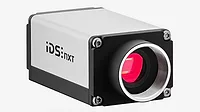
Image courtesy A3
ANN ARBOR, MI—The Association for Advancing Automation (A3) has released GigE Vision 3.0, the newest version of its interface standard for high-performance industrial cameras.
Introduced in 2006, the GigE Vision standard provides a framework for transmitting high-speed video and related control data over Ethernet networks. The standard was initiated by a group of 12 companies, including CyberOptics, Teledyne DALSA, JAI, Matrox, National Instruments, and Pleora Technologies. The A3 oversees the ongoing development and administration of the standard.
During the spring International Vision Standards Meeting, held April 13–17 in Prague, the GigE Vision Technical Committee officially approved the specification. The update integrates remote direct memory access (RDMA) over converged Ethernet version 2 (RoCEv2), which enables direct memory access from a device, such as a camera to a computer, without involving the operating system. The committee also introduced the GigE Vision RDMA streaming protocol (GVRSP).
“GigE Vision 3.0 will make data transfer faster than ever by freeing system resources for real-time processing and decision-making, which is critical in today’s machine vision landscape,” said Bob McCurrach, A3’s director of vision and imaging standards. “With continued increases in camera speeds, combined with multi camera aggregation, GigE Vision 3.0 will allow today’s systems to reach bandwidths of 400G and above with readily available and reasonably priced RoCEv2 network interface cards (NICs), opening entirely new machine vision and imaging solutions.”
This update enables “zero-copy image transfer,” as opposed to image data being copied from the source to operating system memory and then again to the user buffer. This means that system memory can be leveraged for image processing instead of image acquisition.
RoCE was initially developed to accelerate data transfer in high-performance computing environments, such as data centers. RoCEv2 improves upon the first iteration, sitting atop the UDP/IP protocol, which ensures seamless integration and compatibility within Ethernet networks.
Machine vision benefits of RoCEv2 in GigE Vision 3.0 include low CPU utilization, low latency, scalability, reliable and high-throughput image capture, and, as with all other GigE Vision iterations, compatibility and interoperability. End users looking to leverage GVRSP to enable efficient image streaming for 25 GigE and beyond will need an NIC that supports RoCEv2. An additional update is the expansion of the control channel, allowing for more data per packet, ensuring more efficient transfer.Looking for quick answers on assembly and manufacturing topics? Try Ask ASM, our new smart AI search tool. Ask ASM
Looking for a reprint of this article?
From high-res PDFs to custom plaques, order your copy today!