Consumers Question Autonomous Vehicle Safety
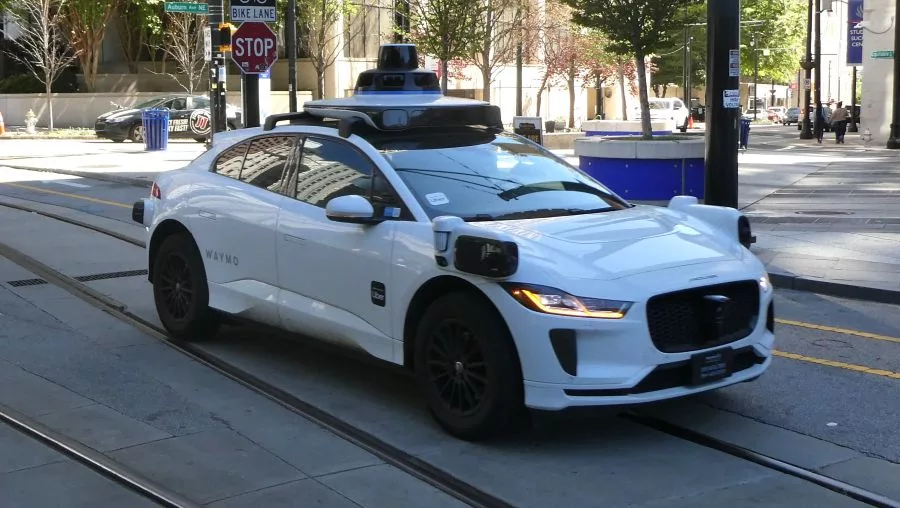
Despite growing adoption of self-driving vehicle technology on American roads, consumers remain skeptical of the technology. Photo by Austin Weber
TROY, MI—Despite growing adoption of self-driving vehicle technology on American roads, consumers remain skeptical of the technology. According to a new study by JD Power, there’s a persistent gap between growing awareness of automation and rising expectations for safety.
The company’s 2026 U.S. Mobility Confidence Index Study claims that “fundamental concerns around safety, performance and trust continue to slow adoption—and in some cases, deepen hesitation.”
Even as people become more informed, their expectations are rising faster than their comfort. Today, fewer than 25 percent of respondents say they are comfortable riding in a fully self-driving vehicle, highlighting a persistent gap between awareness and readiness.
Trust in self-driving vehicles remains highly situational. For instance, consumer have greater confidence in lower-risk, predictable scenarios, with 54 percent indicating high trust for activities such as food pickup vs. just 31 percent for transporting children, highlighting how trust declines as perceived risk increases.
“Consumer awareness of automated vehicle technology is improving, but confidence still depends on proven safety, real-world performance and clear consumer value,” says Lisa Boor, director of auto benchmarking and mobility development at JD Power. “Consumers need to see that these systems can respond to unexpected situations, perform reliably in real-world conditions and clearly communicate what they are doing. Without that, broader adoption will remain limited.”
According to Boor, personal safety is the leading concern, cited by 60 percent of respondents, followed by emergency handling (58 percent) and performance in challenging conditions such as bad weather or heavy traffic (51 percent). Only 16 percent are comfortable sharing the road with self-driving semi-trucks and 43 percent believe they are less safe than human-driven commercial vehicles.
While consumer expectations continue to evolve, the path forward increasingly depends on how the autonomous vehicle ecosystem earns and sustains public trust over time.
Looking for quick answers on assembly and manufacturing topics? Try Ask ASM, our new smart AI search tool. Ask ASM
“Consumers are learning more about fully automated vehicles, but they are not yet becoming more confident in them,” notes Bryan Reimer, Ph.D., a research scientist in the AgeLab at the MIT Center for Transportation and Logistics. “That should concern anyone hoping to scale this technology.
“Automated vehicles need more than engineering progress, larger pilots or public education,” warns Reimer. “They need a trusted ecosystem built on transparent performance data, governance guardrails and clear accountability. This is where AI governance becomes real: on public roads, in everyday mobility and in systems where trust must be earned over time.
“As cities and states consider deployment [of self-driving vehicles], moving deliberately, setting clear conditions and scaling only where evidence supports confidence may be the best path to durable public acceptance, political support and responsible growth,” says Reimer.
Looking for a reprint of this article?
From high-res PDFs to custom plaques, order your copy today!