Assembly Magazine logo
search
Ask ASSEMBLY AI
cart
facebook twitter linkedin youtube
  • Sign In
  • Create Account
  • Sign Out
  • My Account
Assembly Magazine logo
  • TRENDS
    • Ask ASSEMBLY AI
    • Trends
    • News
    • New Products
  • INDUSTRIES
    • Aerospace
    • Appliance
    • DFMA Assembly
    • Medical Devices
    • Green Manufacturing
    • Lean Manufacturing
    • Machinery Assembly
    • Electronics Assembly
    • Automotive
  • TECHNOLOGIES
    • Adhesives & Dispensing
    • Assembly Presses
    • Automated Assembly Systems
    • Manufacturing Management
    • Manufacturing Software
    • Motion Control
    • Screwdriving & Riveting
    • Robotics
    • Test & Inspection
    • Plastics & Metal Welding
    • Wire Processing
    • Workstations
  • AUTONOMOUS & ELECTRIC MOBILITY
    • AEM Magazine Archives
    • Autonomy
    • Electrification
    • Mobility Services
    • Assembly & Testing
    • AV/EM News
  • MEDIA
    • Ask ASSEMBLY AI
    • Podcasts
    • Assembly News Now
    • Assembly TV
    • Webinars
    • eBooks
  • EVENTS
    • Calendar
    • The ASSEMBLY Show
  • MORE
    • Exclusives >
      • Plant of the Year
      • Capital Spending
    • Buyers Guide >
      • Supplier Insights
    • Classifieds
    • Featured Products
    • Newsletters
    • Store
    • White Papers
    • Columns
    • Sponsor Insights
  • INFOCENTER
    • Assembly & Test Solutions
  • EMAGAZINE
    • eMagazine
    • Archive Issues
    • Advertise
    • Contact Us
    • Sign Up
Autonomous & Electric MobilityAutomotive AssemblyElectronics AssemblyAdhesives & Dispensing Assembly

Adhesives and Dispensing

Sealants Protect Pins and Busbars in EVs

The newest formulations protect against water, chemicals and temperature extremes.
By Matthias Stollberg
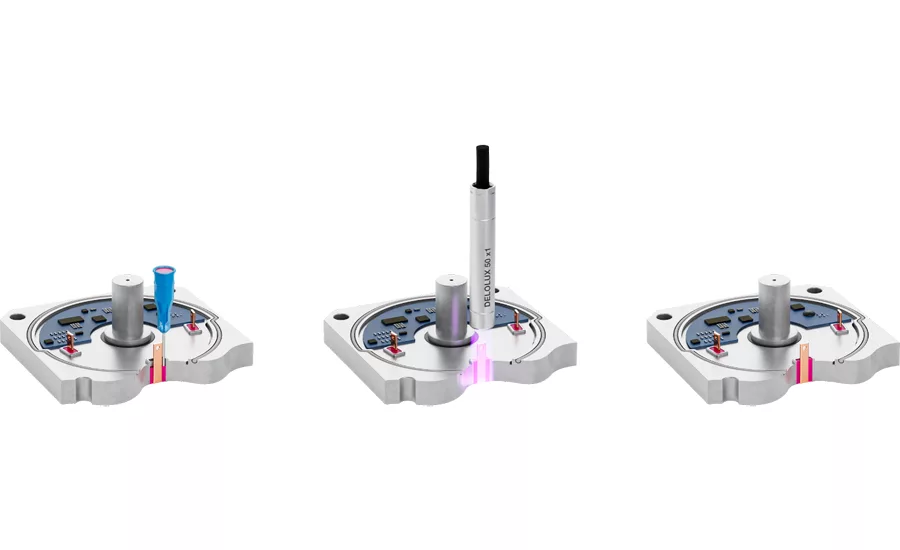
Illustration showing an automated adhesive dispensing process on an electronic assembly, including material application, UV inspection, and completed sealant placement.
Source: DELO Industrial Adhesives

These illustrations show the dual-curing process. First, the sealant is dispensed (left). Then, it is instantly fixed with exposure to UV light (center). Final curing in shadowed areas occurs at room temperature with exposure to ambient moisture.

June 23, 2026

Electric vehicles contain numerous components—oil and water pumps, compressors, control units, chargers, inverters and converters—that operate under demanding conditions, including high heat, extreme temperature cycles, and direct contact with oil or coolants.

Sealants play a key role in ensuring the durability and reliability of these components.

A particularly critical area is the transition between electronics and mechanical assemblies. Electrical pins and busbars typically connect internal electronic assemblies to the outside of a component, such as an oil pump or compressor. Sealants protect pins and busbars from chemicals and moisture. These parts must be protected even under extreme temperature stress. Even the smallest delaminations or cracks in the sealant can lead to corrosion or even short circuits.
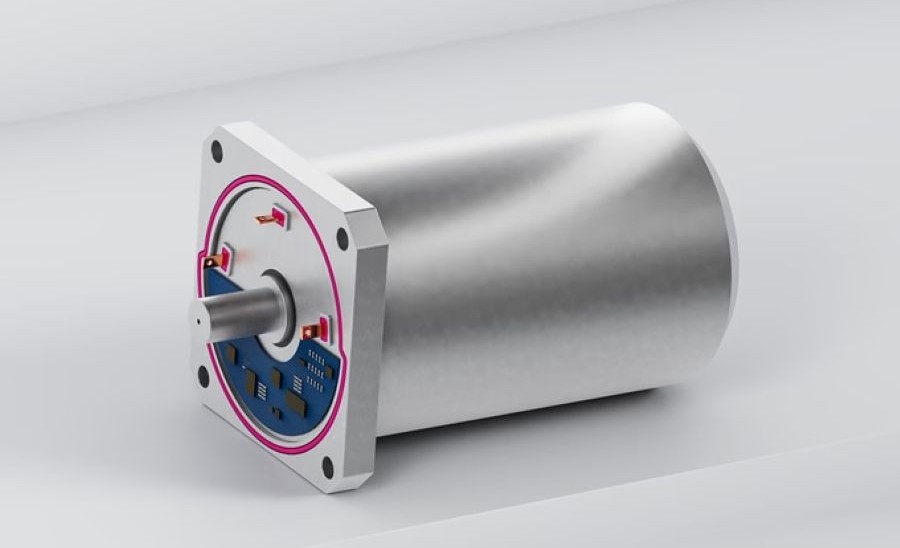
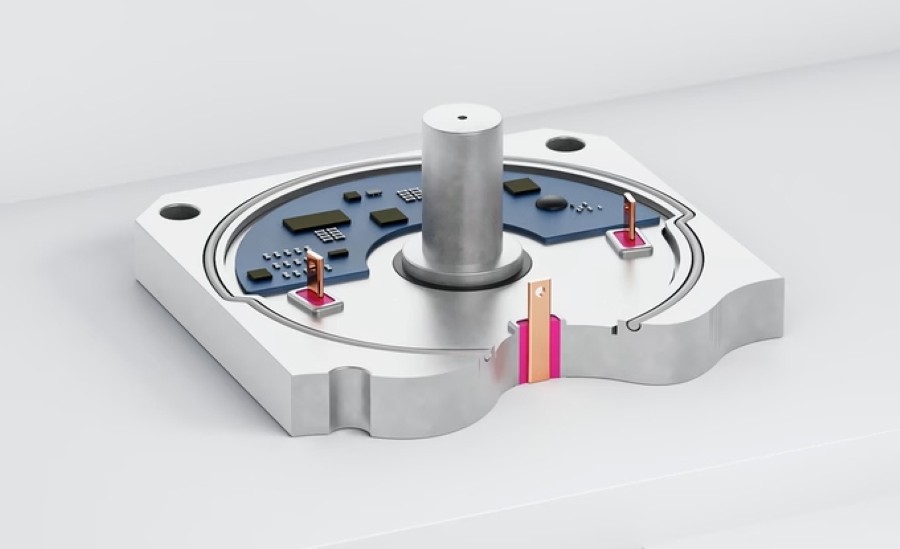
Cross-sectional illustration of an electric vehicle motor assembly showing magenta sealant applied around electrical pins and busbars to protect internal electronics from moisture, oil, coolant, and temperature-related stress. Cross-sectional view of an electric vehicle power electronics assembly showing magenta sealant surrounding electrical pins and a busbar as it passes through a metal housing, creating a barrier against moisture, coolant, oil, and thermal stress.

Sealing the pins on an oil pump is crucial to protect its internal electronics. In this illustration, the sealant is colored magenta to indicate its location. Source: DELO Industrial Adhesives

As a result, the requirements for sealants have become more stringent. Automakers are demanding higher operating temperatures, longer test durations, and faster curing times.

Sealant Basics

Sealants are applied to pins, contacts and busbars. After curing, they form a barrier between the contact surfaces and the environment. They are often in direct contact with oils, additives and coolants, and they are exposed to temperatures ranging from -40 to 160 C. In addition, sealants contribute to the mechanical strength of pins and their connection to the circuit board.

Sealants must have low viscosity to quickly and reliably wet complex geometries. They must also adhere to a various substrates, including copper, silver, tin, nickel, polybutylene terephthalate, polyamide and polycarbonate.

Equally important is permanent elasticity, even in high or low temperatures, to compensate for thermal expansion and deformation due to pressurization. These thermomechanical properties must remain stable for the life of the vehicle. This means that the sealant must exhibit minimal media swelling and low mass loss at elevated temperatures despite its wide-mesh, flexible network.

Looking for quick answers on assembly and manufacturing topics? Try Ask ASM, our new smart AI search tool. Ask ASM →

Finally, the curing process must be quick and energy efficient.

The latest sealant formulas, based on polymers, meet all these criteria.

One of the newest is Dualbond GE4926. Compared with the previous formula, the swelling behavior of Dualbond GE4926 after long-term storage in automatic transmission fluid at 160 C has been reduced by 85 percent. Various oil and temperature storage tests show that the sealant exhibits more than twice the adhesion on common substrates as the previous formula.Radar chart comparing adhesive resistance to gear oil, water and glycol, temperature and humidity, and thermal shock between two adhesive formulations.
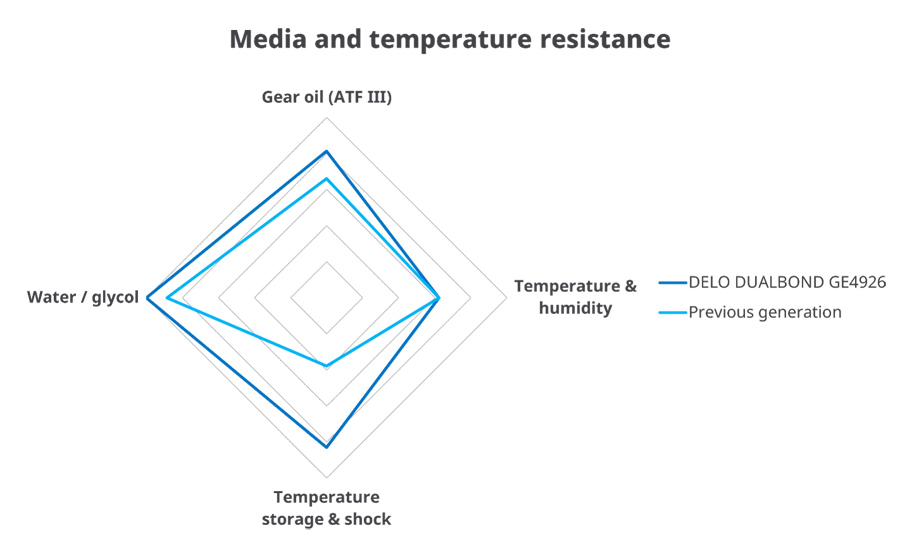
This spider diagram shows how the properties of Delo Dualbond GE4926 compare with previous formulations—particularly under temperature influence. Source: DELO Industrial Adhesives

The elongation at break—an important mechanical characteristic for evaluating permanent elasticity—has also been optimized: The decrease after long-term storage in various harsh media is about 20 percent lower. Maximum operating temperature is now 160 C.

Influence of Design and Geometry

Sealing performance is determined not only by the material, but by the geometry of the pins and cavities. Undercuts, uneven gap widths or insufficient wetting surfaces can significantly impair sealing effectiveness. A coordinated interaction of material, dispensing strategy, flow behavior and curing process is crucial. This concept applies equally to busbars, due to their flat and sometimes multi-layer conductor structures.
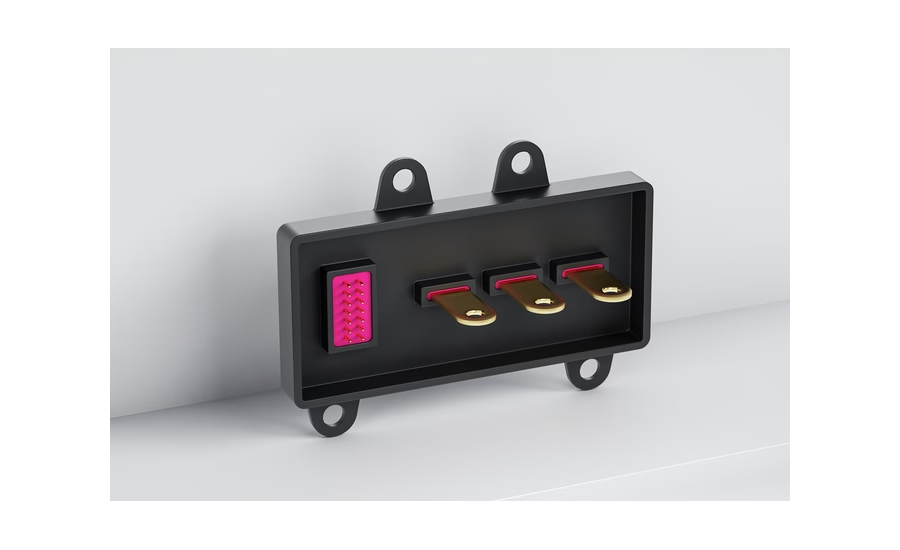
3D rendering of a sealed electrical connector assembly featuring power terminals, signal contacts, and gasket sealing for automotive and industrial applications.

For busbars, it’s essential for the sealant to flow into the smallest gaps and cover the entire component. In this illustration, the sealant is colored magenta to indicate its location. Source: DELO Industrial Adhesives

Optimized flow properties and appropriate processing time will enable the sealant to reach all areas of the assembly. Modern dispensing technologies and process monitoring, such as inline fluorescence control, ensure consistently high quality. Particularly for busbars, it’s essential for the sealant to flow into the smallest gaps and cover the entire component. This also applies to the sealing of power electronics, where pins and busbars often have complex geometries with narrow gap widths and undercuts.

Assemblers can use various curing methods, depending on the application and manufacturing requirements. Traditionally, heat curing is employed, especially for motor compartments, as it ensures the highest reliability.

However, UV-curing sealants are now also available. UV curing is faster and more energy efficient than heat curing. It also saves space.

A widespread concept is dual curing, in which the sealing compound is first fixed by light. It then cures completely in shadow zones through humidity. The assembly can be further processed and leak-tested immediately after light fixation. This shortens cycle times and enables gentle processing of temperature-sensitive components.
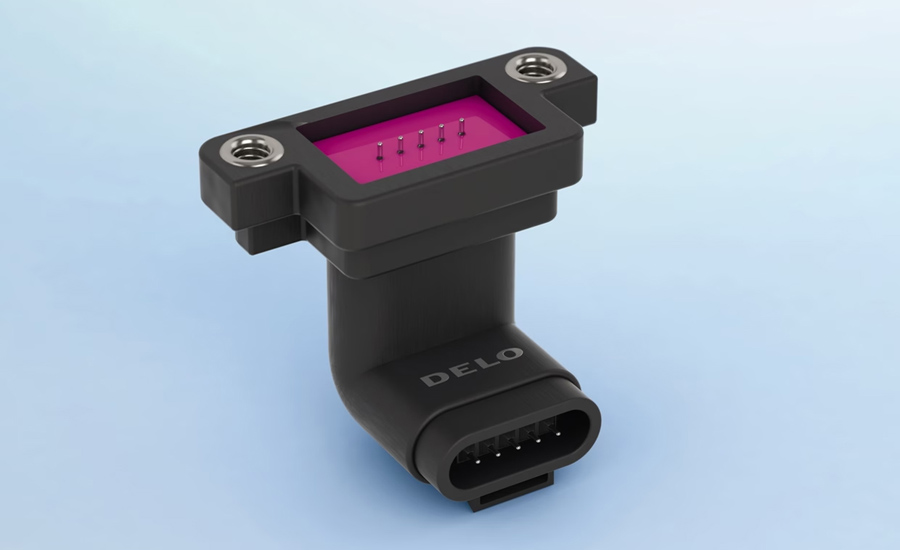
3D rendering of a sealed electronic connector with contact pins, mounting points, and integrated adhesive sealing for automotive and industrial electronics applications.

Dualbond GE is a dual-curing sealant (shown here in pink) that reliably seals connectors with passivated silver pins. Such connectors are typically used in automotive control units. Source: DELO Industrial Adhesives

An alternative method is “activation on the flow.” Here, the UV-cure adhesive is exposed to light during dispensing. This begins a 5- to 10-minute open time during which the sealant has both good flowability and sufficient wetting ability to seal the entire cavity. The sealant then cures to final strength without further steps. Immediate further processing is possible if exposed sealant is exposed to additional light after assembly. This creates immediate initial strength and prevents the sealant from flowing out of the joint.
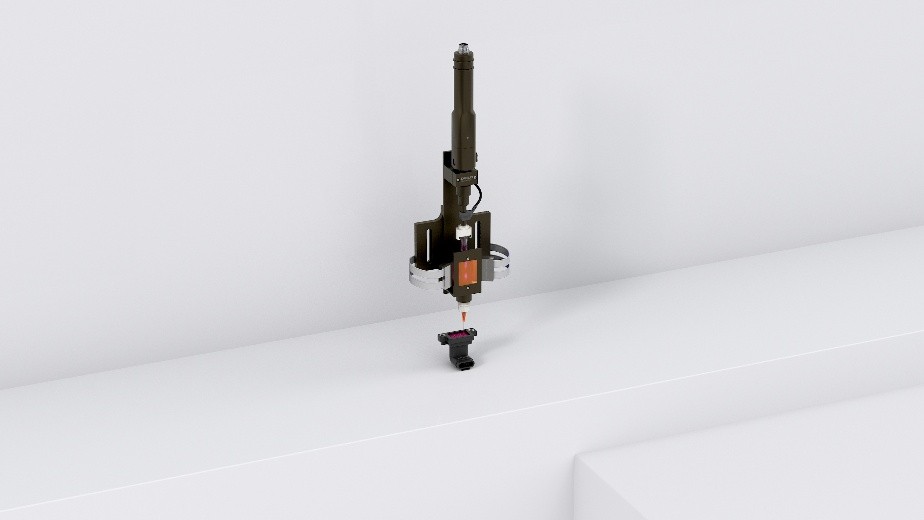
Automated dispensing system applying adhesive to an electrical connector component during a precision sealing and assembly process.

In “activation on the flow” curing, the adhesive is exposed to UV light as it is being dispensed. This begins a 5- to 10-minute open time during which the sealant has both good flowability and sufficient wetting ability to seal an entire cavity. The sealant then cures to final strength without further steps. Source: DELO Industrial Adhesives

Outlook and Development

Today’s sealants offer very good resistance to common oils and coolants, as well as stable mechanical performance at elevated temperatures. Nevertheless, new, aggressive media are introduced annually, and adhesive suppliers must stay up to date.

In particular, new varieties of automotive oils are prompting the development of new sealant formulations. Depending on oil composition, diffusion, and thus sealant swelling, can change. Often, minor optimizations in the sealant’s formulation are sufficient to solve the problem.

KEYWORDS: UV cure adhesives

Share This Story

Looking for a reprint of this article?
From high-res PDFs to custom plaques, order your copy today!

Matthias Stollberg is the Head of Corporate Communications at DELO Industrial Adhesives in Windach, Germany.

Recommended Content

JOIN TODAY
To unlock your recommendations.

Already have an account? Sign In

  • Made in the U.S.A.

    Consumer Products Manufacturing: Made in the USA

    Supply chain lessons learned during the coronavirus...
    Automated Assembly Systems
    By: Austin Weber
  • Best Practices for Press-Fit Assembly

    Best Practices for Press-Fit Assembly

    In manufacturing, ironclad formulas for success are hard...
    Assembly Presses
    By: Jim Camillo
  • aem0523leader-tesla1.jpg

    Tesla Rethinks the Assembly Line

    Engineers at Tesla Inc. have developed a new process that...
    Electrification
    By: Austin Weber
Manage My Account
  • eMagazine Subscription
  • Assembly Newsletters
  • Online Registration
  • Subscription Customer Service
  • Manage My Preferences

More Videos

Sponsored Content

Sponsored Content is a special paid section where industry companies provide high quality, objective, non-commercial content around topics of interest to the ASSEMBLY audience. All Sponsored Content is supplied by the advertising company and any opinions expressed in this article are those of the author and not necessarily reflect the views of ASSEMBLY or its parent company, BNP Media. Interested in participating in our Sponsored Content section? Contact your local rep!

close
  • ultrasonic welding
    Sponsored bySonobond Ultrasonics

    Engineering Efficiency in High-Performance Assembly: How Ultrasonic Welding Enhances Throughput, Reliability and Quality

  • UV curing system
    Sponsored byDymax

    Why UV Intensity Alone Doesn’t Define Curing Performance

  • wooden pallets
    Sponsored byLEAN Manufacturing Products

    Eliminating Waste on the Shop Floor: Applying Lean Principles to Improve Manufacturing Efficiency

Popular Stories

Ferrari

Ferrari Unveils Four-Door EV

ASSEMBLY News Now, episode-30: Volvo Redesigns EV Manufacturing

Volvo Redesigns EV Manufacturing

Robots working at Toyota Plant in Japan

Toyota Deploys Geekplus Robots for Factory Material Handling

Watch the latest episode of ANN now!

Events

July 24, 2025

From Shop Floor to CFO: How Manufacturers Are Closing the Loop Between Operations and Finance

On Demand Learn how manufacturers are bridging the gap between the shop floor and ERP systems to gain real-time visibility, streamline operations, and kick-start digital transformation—without waiting years.

Sponsored by:

PicoStratusGreen
July 30, 2025

Buffer Analysis and Design Fundamentals for Manufacturing Excellence

On Demand In this presentation, Dr. Herman Tang shares practical insights from his industry experience and research on buffer management in manufacturing operations.

View All Submit An Event

Poll

Difficult Assembly Processes

Which assembly process gives you the most difficulty?
View Results Poll Archive

Products

Manufacturing Cost Policy Deployment (MCPD) Profitability Scenarios: Systematic and Systemic Improvement of Manufacturing Costs

Manufacturing Cost Policy Deployment (MCPD) Profitability Scenarios: Systematic and Systemic Improvement of Manufacturing Costs

See More Products
ebook

Related Articles

  • Controlling Heat Build Up in EVs

    Controlling Heat Build Up in EVs

    See More
  • aem0522insight1.jpg

    Valeo Sees Big Opportunity in EVs

    See More
  • Lucidassembly.jpg

    New Study Claims Aluminum Use In EVs Will Grow

    See More

Related Products

See More Products
  • strong.jpg

    Strong Supply Chains Through Resilient Operations: Five Principles for Leaders to Win in a Volatile World

  • handbook of digital.jpg

    Handbook of Digital Innovation, Transformation, and Sustainable Development in a Post-Pandemic Era

  • lean systems.jpg

    Lean Systems Applications and Case Studies in Manufacturing, Service, and Healthcare

See More Products

Related Directories

  • Protective Packaging Corp.

    DistributorsTEXASProtective Packaging Corp.1746 W. Crosby Rd.Carrollton,  TX(800) 644-4032  www.protectivepackaging.netapinkerton@protectivepackaging.net
×

Never miss the latest news and trends driving the manufacturing industry

Stay in the know on the latest assembly trends.

JOIN TODAY!
  • RESOURCES
    • Advertise
    • Contact Us
    • Directories
    • Manufacturing Division
    • Store
    • Want More?
  • SIGN UP TODAY
    • Create Account
    • eMagazine
    • Newsletters
    • Customer Service
    • Manage Preferences
  • SERVICES
    • Marketing Services
    • Reprints
    • Market Research
    • List Rental
    • Survey/Respondent Access
  • STAY CONNECTED
    • LinkedIn
    • Facebook
    • Instagram
    • YouTube
    • X (Twitter)
  • PRIVACY
    • PRIVACY POLICY
    • TERMS & CONDITIONS
    • DO NOT SELL MY PERSONAL INFORMATION
    • PRIVACY REQUEST
    • ACCESSIBILITY

Copyright ©2026. All Rights Reserved BNP Media, Inc. and BNP Media II, LLC.

Design, CMS, Hosting & Web Development :: ePublishing