ASSEMBLY Audible
PODCAST | Inside the Self-Driving Manufacturing Lab
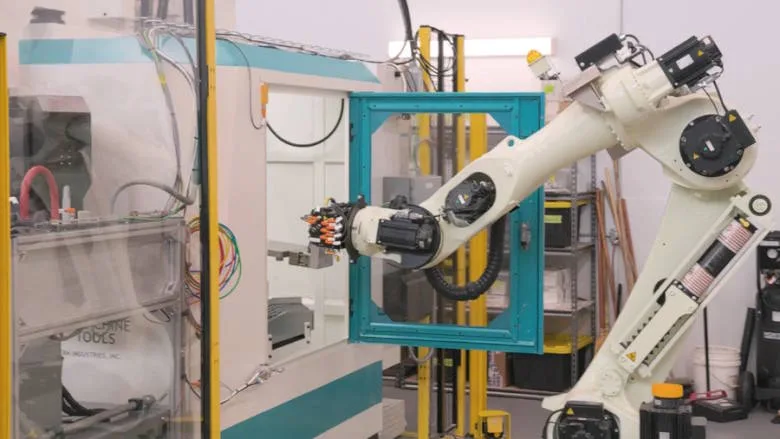
Georgia Tech’s Advanced Manufacturing Pilot Facility is designed to do something most manufacturing labs cannot: autonomously run experiments, test materials and improve manufacturing processes with minimal human intervention.
Originally launched with support from Boeing and Delta TechOps to help scale advanced manufacturing processes, Georgia Tech’s Advanced Manufacturing Pilot Facility has expanded from an 18,500-square-foot pilot space into a 65,000-square-foot “self-driving lab,” according to Dr. Tom Kurfess, executive director of the Georgia Tech Manufacturing Institute.
Kurfess says researchers and industry partners can remotely set up experiments from virtually anywhere, whether they are on campus, at another university, working from industry facilities or accessing the system through cloud-based infrastructure.
Once those experiments are scheduled, the facility can autonomously run tests, collect data and return the results through cloud-connected systems.
“All the tests are done, and all the data are then provided back in a secure fashion via the cloud,” he says.
One major focus of the facility is autonomous materials development.
“We can produce somewhere between about three and seven kilograms of metal per day,” Kurfess says.
Looking for quick answers on assembly and manufacturing topics? Try Ask ASM, our new smart AI search tool. Ask ASM
The process includes alloy creation, powder production, additive manufacturing, machining and mechanical testing — all tied together into an iterative workflow that can operate autonomously.
“What’s very cool about this is that we were designed to operate in a cycle,” he says.
The system is designed to continuously iterate material recipes and testing workflows autonomously. Researchers can test materials, analyze the results and allow AI-driven systems to adjust the material recipe automatically before running the next iteration.
“It’s not unlike cooking,” Kurfess says. “You sort of test it out, need a pinch of salt or a little more baking soda...”
That process allows the facility to continue experimenting even when researchers are not physically present.
“I head home Friday; I hit the go button,” he says. “By the time we get back on Monday morning, we may have run through three, four, five, six different cycles of material development.”
AI operates throughout the facility, from autonomous scheduling systems to machine-level process control.
“We’ve got a laser welder on a robot,” Kurfess says. “AI can control the quality of the melt pool.”
That capability allows researchers to monitor manufacturing conditions in real time and apply manufacturing concepts that previously could not be measured effectively during operation.
The facility also uses autonomous mobile robots to move materials and test samples between machines. Manufacturers are also using the facility to evaluate new technologies before deploying them into production. That includes testing additive manufacturing systems, tomography equipment and machining processes before companies commit to major investments.
Kurfess says facilities like AMPF are designed to support manufacturers across the supply chain while helping industry build the infrastructure needed for AI-driven and data-centric manufacturing.
Looking for a reprint of this article?
From high-res PDFs to custom plaques, order your copy today!