ASSEMBLY Audible
PODCAST | Manufacturing Leadership Advice That Actually Works on the Plant Floor

Julian M. Allen, Jr. will participate in an upcoming ASSEMBLY webinar July 28, where he will discuss practical leadership strategies for manufacturing managers and frontline operational leaders. Registration is now open.
Manufacturing leadership is easy to discuss in theory. It becomes much harder when a production line stops running in the middle of a shift and an entire crew is looking for answers.
That’s where Julian M. Allen, Jr. says most leadership advice breaks down.
“The polished corporate stuff is usually written for quiet conference rooms and perfect data and calm meetings,” Allen says. “It looks impressive on your bookshelf, but it doesn’t survive first contact with a line-down at shift change or a toxic high-performer who’s killing morale.”
Allen is a manufacturing veteran with more than 35 years of experience across facility startups, operational turnarounds and manufacturing leadership roles spanning 17 different sites. He currently leads Louisiana Economic Development FastStart’s training and workforce development efforts supporting new manufacturing projects entering the state.
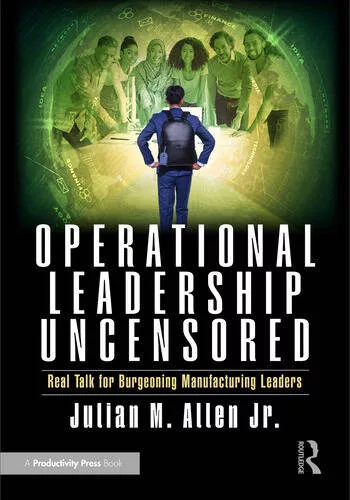
He’s also the author of Operational Leadership Uncensored: Real Talk for Burgeoning Manufacturing Leaders.
According to Allen, many new manufacturing leaders struggle because they focus too heavily on technical authority instead of trust and credibility with frontline workers.
Looking for quick answers on assembly and manufacturing topics? Try Ask ASM, our new smart AI search tool. Ask ASM
“Leadership on the assembly floor isn’t about being the smartest or the loudest,” Allen says. “It’s about being real, relatable and respectful.”
Allen says many supervisors enter manufacturing leadership roles trying to prove themselves quickly, often by pushing hard operationally without bringing teams along with them; and he admits he made that very same mistake.
“I thought I was being a strong leader,” Allen says. “In reality… I was bulldozing right over the very people who had to get the work done.”
That approach, he says, often creates resistance, turnover and operational instability.
“The crew’s watching everything,” Allen says. “Perception is reality out on that shop floor.”
Instead, Allen argues that successful operational leadership comes from consistency, humility and learning how to communicate in a way that crews trust.
“Making people feel seen, which builds their ownership of your objectives, is [a] very strong [thing to do as a leader],” Allen says.
Allen believes many leadership books fail because they focus too heavily on polished theory rather than operational reality. By contrast, his book focuses on real-world manufacturing.
Every lesson that’s discussed comes from real events that actually happened on the floor, Allen says of his book: “the wins, the spectacular failures and the messy human stuff in-between.”
Much of Allen’s leadership philosophy centers on workforce stability and retention, especially as manufacturers continue struggling with turnover and workforce shortages.
He says the strongest manufacturing operations are often built by leaders who consistently invest time developing people and helping crews succeed under pressure.
Allen believes operational leadership skills are increasingly important as manufacturers navigate automation, workforce transitions and rapid operational change.
Looking for a reprint of this article?
From high-res PDFs to custom plaques, order your copy today!