ASSEMBLY Audible
PODCAST | AI Vision on the Plant Floor: Where It Works and Where It Doesn’t
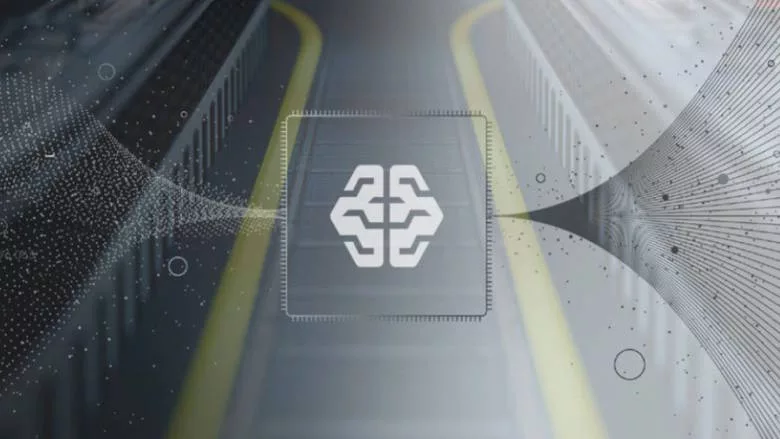
Machine vision systems have been a staple of manufacturing, used to inspect products, verify assembly and maintain quality. But the introduction of artificial intelligence is changing how those systems are deployed and forcing manufacturers to rethink when and where to use them.
According to Matt Moschner, CEO of Cognex, the key shift is not replacing traditional systems, but understanding how AI fits alongside them.
“It’s rare that we’re only using AI. Typically we’re combining traditional methods and AI-based methods.”
Traditional, rules-based vision systems are still the best choice for highly predictable environments, where precision and repeatability are critical.
These systems rely on predefined rules to evaluate images, making them ideal for tasks such as barcode reading, dimensional measurement and verifying the presence or position of components.
By contrast, AI-based vision systems excel in environments where variability makes rule-based programming difficult.
“An application that really favors AI is one that has a broad set of variation that is very hard to describe ahead of time.”
Looking for quick answers on assembly and manufacturing topics? Try Ask ASM, our new smart AI search tool. Ask ASM
This includes inspecting natural materials, detecting cosmetic defects or identifying subtle anomalies that are difficult to define with traditional logic.
Early adoption of AI vision systems focused on whether the technology could achieve sufficient accuracy. That question has largely been answered. The challenge has since shifted toward usability and scalability. Manufacturers are now looking for systems that can be deployed across multiple lines and maintained by internal teams, rather than relying on specialized expertise.
That shift has driven significant changes in how these systems are designed and deployed. In some cases, systems can be deployed with little to no additional training data, thanks to pre-trained models and embedded processing capabilities. This has reduced the barrier to entry and allowed manufacturers to experiment with vision systems more easily.
On the plant floor, these technologies are already being applied across a wide range of use cases.
Traditional systems remain essential for traceability, particularly in industries like automotive. These systems ensure that components can be tracked throughout the production process, which is critical for safety recalls and quality control.
At the same time, AI-based systems are enabling new types of inspections.
Examples include:
- detecting debris in assembly processes
- verifying wiring connections
- identifying cosmetic defects on finished products
- inspecting glue application for consistency and completeness
In one case shared by Moschner, a system performed hundreds of inspections on an engine before final assembly. These applications highlight how AI is expanding the scope of what machine vision can accomplish.
Looking ahead, AI vision systems are expected to continue evolving in two key ways: solving more complex problems and reducing deployment complexity even further.
“We’re solving it 90% faster and cheaper.”
Future systems may also become more autonomous, monitoring their own performance and recommending improvements.
For manufacturers, the key is not choosing between AI and traditional vision systems, but understanding how to use both effectively. AI expands what is possible, while traditional systems provide the precision and predictability that many applications still require. Together, they are reshaping how inspection and quality control are performed on the plant floor.
Additional findings are available in Cognex’s latest machine vision study.
Looking for a reprint of this article?
From high-res PDFs to custom plaques, order your copy today!