Assembly Magazine logo
search
Ask ASSEMBLY AI
cart
facebook twitter linkedin youtube
  • Sign In
  • Create Account
  • Sign Out
  • My Account
Assembly Magazine logo
  • TRENDS
    • Ask ASSEMBLY AI
    • Trends
    • News
    • New Products
  • INDUSTRIES
    • Aerospace
    • Appliance
    • DFMA Assembly
    • Medical Devices
    • Green Manufacturing
    • Lean Manufacturing
    • Machinery Assembly
    • Electronics Assembly
    • Automotive
  • TECHNOLOGIES
    • Adhesives & Dispensing
    • Assembly Presses
    • Automated Assembly Systems
    • Manufacturing Management
    • Manufacturing Software
    • Motion Control
    • Screwdriving & Riveting
    • Robotics
    • Test & Inspection
    • Plastics & Metal Welding
    • Wire Processing
    • Workstations
  • AUTONOMOUS & ELECTRIC MOBILITY
    • AEM Magazine Archives
    • Autonomy
    • Electrification
    • Mobility Services
    • Assembly & Testing
    • AV/EM News
  • MEDIA
    • Ask ASSEMBLY AI
    • Podcasts
    • Assembly News Now
    • Assembly TV
    • Webinars
    • eBooks
  • EVENTS
    • Calendar
    • The ASSEMBLY Show
  • MORE
    • Exclusives >
      • Plant of the Year
      • Capital Spending
    • Buyers Guide >
      • Supplier Insights
    • Classifieds
    • Featured Products
    • Newsletters
    • Store
    • White Papers
    • Columns
    • Sponsor Insights
  • INFOCENTER
    • Assembly & Test Solutions
  • EMAGAZINE
    • eMagazine
    • Archive Issues
    • Advertise
    • Contact Us
    • Sign Up

Automakers Do More With Less: How Diesel Engines Work

October 16, 2004

Although today's diesel engines are extremely advanced, diesels are not a new technology. In 1892, Rudolf Diesel obtained a German patent for diesel engines. At the time, gasoline engines were very inefficient and Diesel intended to produce a more economical combustion engine. Today's advanced diesels are among the most efficient combustion engines.

The main differences between gasoline and diesel engines are:

  • Gasoline engines take in a mixture of gas and air, compress it and ignite the mixture with a spark. Diesel engines take in just air, compress it and then inject fuel into the compressed air. The heat of the compressed air ignites the air-fuel mixture.
  • Gasoline engines have compression ratios between 8:1 and 12:1, while diesel engine compression ratios are between 14:1 and 25:1. The higher compression ratio of the diesel engine leads to better efficiency and power.

To create combustion, engines need three elements: Heat or pressure, fuel and oxygen. With four-stroke gasoline engines, air and fuel are drawn into a cylinder through the intake valve during a piston down stroke; the piston compresses the charge during an up stroke; there is an explosion ignited by the spark plug pushing the piston down; and the spent gasses escape through the exhaust valve on the next up stroke of the piston.

A diesel engine works much the same except that there is no spark to ignite the air-fuel charge. In some cold-start circumstances when the air-fuel charge cannot be brought up to combustion temperatures, diesels require a glow plug. A glow plug works like a heated wire and raises the air temperature inside the cylinder for cold-start, after which it turns off.

Most gasoline engines use port fuel injection, in which the fuel is injected just outside the cylinder into the intake manifold. Diesel engines use direct injection, in which the fuel is introduced directly into the cylinder itself.

Diesel fuel is heavier for better lubrication and evaporates much more slowly than gasoline--its boiling point is higher than water. Diesel fuel contains more energy per gallon than gasoline. On average, one gallon of diesel fuel contains approximately 155 x 106 joules, while one gallon of gasoline contains 132 x 106 joules.

Source: DaimlerChrysler

Looking for quick answers on assembly and manufacturing topics? Try Ask ASM, our new smart AI search tool. Ask ASM →

Share This Story

Looking for a reprint of this article?
From high-res PDFs to custom plaques, order your copy today!

Recommended Content

JOIN TODAY
To unlock your recommendations.

Already have an account? Sign In

  • Made in the U.S.A.

    Consumer Products Manufacturing: Made in the USA

    Supply chain lessons learned during the coronavirus...
    Automated Assembly Systems
    By: Austin Weber
  • Best Practices for Press-Fit Assembly

    Best Practices for Press-Fit Assembly

    In manufacturing, ironclad formulas for success are hard...
    Assembly Presses
    By: Jim Camillo
  • aem0523leader-tesla1.jpg

    Tesla Rethinks the Assembly Line

    Engineers at Tesla Inc. have developed a new process that...
    Automotive Assembly
    By: Austin Weber
Manage My Account
  • eMagazine Subscription
  • Assembly Newsletters
  • Online Registration
  • Subscription Customer Service
  • Manage My Preferences

More Videos

Sponsored Content

Sponsored Content is a special paid section where industry companies provide high quality, objective, non-commercial content around topics of interest to the ASSEMBLY audience. All Sponsored Content is supplied by the advertising company and any opinions expressed in this article are those of the author and not necessarily reflect the views of ASSEMBLY or its parent company, BNP Media. Interested in participating in our Sponsored Content section? Contact your local rep!

close
  • ultrasonic welding
    Sponsored bySonobond Ultrasonics

    Engineering Efficiency in High-Performance Assembly: How Ultrasonic Welding Enhances Throughput, Reliability and Quality

  • UV curing system
    Sponsored byDymax

    Why UV Intensity Alone Doesn’t Define Curing Performance

  • wooden pallets
    Sponsored byLEAN Manufacturing Products

    Eliminating Waste on the Shop Floor: Applying Lean Principles to Improve Manufacturing Efficiency

Popular Stories

ASSEMBLY News Now, episode-30: Volvo Redesigns EV Manufacturing

Volvo Redesigns EV Manufacturing

Boeing CEO Kelly Ortberg announces 1 billion investment

Boeing Plans $1 Billion Wichita Investment, Workforce Training Center

GE Appliances Worker on Line

GE Appliances Expands Factory AI With 800 Gemini Enterprise Agents

Watch the latest episode of ANN now!

Events

July 24, 2025

From Shop Floor to CFO: How Manufacturers Are Closing the Loop Between Operations and Finance

On Demand Learn how manufacturers are bridging the gap between the shop floor and ERP systems to gain real-time visibility, streamline operations, and kick-start digital transformation—without waiting years.

Sponsored by:

PicoStratusGreen
July 30, 2025

Buffer Analysis and Design Fundamentals for Manufacturing Excellence

On Demand In this presentation, Dr. Herman Tang shares practical insights from his industry experience and research on buffer management in manufacturing operations.

View All Submit An Event

Poll

Difficult Assembly Processes

Which assembly process gives you the most difficulty?
View Results Poll Archive

Products

Manufacturing Cost Policy Deployment (MCPD) Profitability Scenarios: Systematic and Systemic Improvement of Manufacturing Costs

Manufacturing Cost Policy Deployment (MCPD) Profitability Scenarios: Systematic and Systemic Improvement of Manufacturing Costs

See More Products
Register for webinar - Modernizing Automotive Assembly: Why Upgrading Legacy MES is a Business Imperative

Related Articles

  • Automakers Do More With Less: Mechatronics Will Affect How Future Cars Are Built

    See More
  • Automakers Do More With Less: Foreign Auto Industry Continues Investing in U.S. Plants

    See More
  • Automakers Do More With Less: Lightweight Materials Continue Making Inroads

    See More

Related Products

See More Products
  • leaner

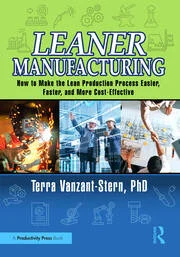
    Leaner Manufacturing: How to Make the Lean Production Process Easier, Faster, and More Cost-Effective

  • pocket.jpg

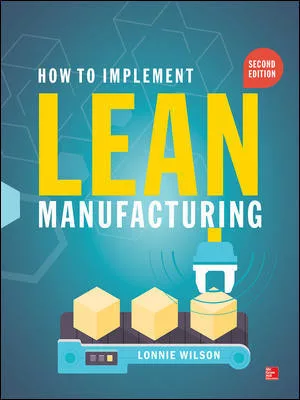
    How To Implement Lean Manufacturing, Second Edition

  • reducing.jpg

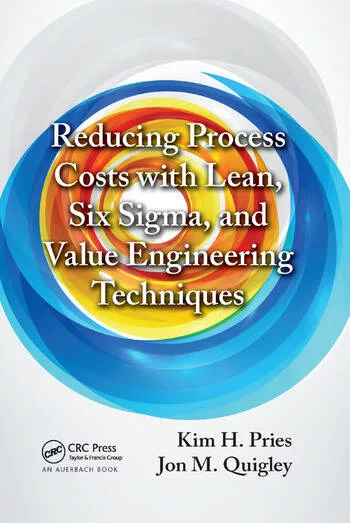
    Reducing Process Costs with Lean, Six Sigma, and Value Engineering Techniques

See More Products

Events

View AllSubmit An Event
  • March 10, 2026

    Design for Flexibility: How to Assemble More With Less

    On Demand Whether you are specifying new equipment or improving existing processes, this session will provide practical insight into building adaptable assembly strategies that support growth, reliability, and continuous improvement. Sponsored by:
View AllSubmit An Event

Related Directories

  • Paper-Less LLC

  • HowToRobot

×

Never miss the latest news and trends driving the manufacturing industry

Stay in the know on the latest assembly trends.

JOIN TODAY!
  • RESOURCES
    • Advertise
    • Contact Us
    • Directories
    • Manufacturing Division
    • Store
    • Want More?
  • SIGN UP TODAY
    • Create Account
    • eMagazine
    • Newsletters
    • Customer Service
    • Manage Preferences
  • SERVICES
    • Marketing Services
    • Reprints
    • Market Research
    • List Rental
    • Survey/Respondent Access
  • STAY CONNECTED
    • LinkedIn
    • Facebook
    • Instagram
    • YouTube
    • X (Twitter)
  • PRIVACY
    • PRIVACY POLICY
    • TERMS & CONDITIONS
    • DO NOT SELL MY PERSONAL INFORMATION
    • PRIVACY REQUEST
    • ACCESSIBILITY

Copyright ©2026. All Rights Reserved BNP Media, Inc. and BNP Media II, LLC.

Design, CMS, Hosting & Web Development :: ePublishing