Assembly Magazine logo
search
Ask ASSEMBLY AI
cart
facebook twitter linkedin youtube
  • Sign In
  • Create Account
  • Sign Out
  • My Account
Assembly Magazine logo
  • TRENDS
    • Ask ASSEMBLY AI
    • Trends
    • News
    • New Products
  • INDUSTRIES
    • Aerospace
    • Appliance
    • DFMA Assembly
    • Medical Devices
    • Green Manufacturing
    • Lean Manufacturing
    • Machinery Assembly
    • Electronics Assembly
    • Automotive
  • TECHNOLOGIES
    • Adhesives & Dispensing
    • Assembly Presses
    • Automated Assembly Systems
    • Manufacturing Management
    • Manufacturing Software
    • Motion Control
    • Screwdriving & Riveting
    • Robotics
    • Test & Inspection
    • Plastics & Metal Welding
    • Wire Processing
    • Workstations
  • AUTONOMOUS & ELECTRIC MOBILITY
    • AEM Magazine Archives
    • Autonomy
    • Electrification
    • Mobility Services
    • Assembly & Testing
    • AV/EM News
  • MEDIA
    • Ask ASSEMBLY AI
    • Podcasts
    • Assembly News Now
    • Assembly TV
    • Webinars
    • eBooks
  • EVENTS
    • Calendar
    • The ASSEMBLY Show
  • MORE
    • Exclusives >
      • Plant of the Year
      • Capital Spending
    • Buyers Guide >
      • Supplier Insights
    • Classifieds
    • Featured Products
    • Newsletters
    • Store
    • White Papers
    • Columns
    • Sponsor Insights
  • INFOCENTER
    • Assembly & Test Solutions
  • EMAGAZINE
    • eMagazine
    • Archive Issues
    • Advertise
    • Contact Us
    • Sign Up
Columns

Assembly in Action: Vision Sensor Ensures Correct Dispensing

February 1, 2002

Metrika Inc. (Sunnyvale, CA), a manufacturer of single-use, quantitative medical devices for people with diabetes, produces diabetes test meters that measure levels of hemo-globin A1c in blood. It performs an 8-minute analysis on a blood sample, typically obtained from a fingertip. The reliability of test results depends on the blood sample. Once it passes through the meter’s aperture, the sample makes direct contact with a 1-millimeter-wide stripe of dry reagent chemistry on an assay strip inside the unit.

The chemical assay strips are sealed in a fixed position during the meter assembly process. The only variable that could affect blood-to-strip contact is the width and position of the chemistry stripping. This is applied to a foot-long, inch-wide laminate card that is diced into 100 individual chemistry strips. "Basically, we are drawing a line with liquid running the length of the laminate using a precision pump dispenser," explains Joel Blatt, director of research and development. "The laminate is hand-placed onto a table, which moves under the dispenser’s pen tip sitting on a micro-meter stage. If the micrometer is slightly off or the thickness of the laminate varies, the striping may not fall within our set tolerances."

To ensure the width and position of the striping, the company uses an In-Sight 2000 vision sensor from Cognex (Natick, MA). The inspections were previously done manually. An operator would place the laminate under a reticle and perform the measurements. While the required measurement accuracy could be achieved with this approach, the process was slow and became a production bottleneck. "With the sensor, we realized we could get the same accuracy in less time than it was taking under the eyepiece," says Blatt.

After purchasing the sensor, Blatt mounted the In-Sight camera above a backlit inspection station. He then began setting up the application using the sensor’s vision spreadsheet interface. The process involved selecting vision tools and parameters from drop-down menus using a handheld control pad. The vision spreadsheet then automatically generated tool results into worksheet cells, which were then linked together to set up the width and position inspections.

As part of the setup, Blatt trained the sensor to use the centers of sprocket holes, which are punched into the edge of the laminate, as the reference points from which to measure. "The holes are created using a laser process and remain in a fixed position. For that reason, it was an ideal reference point to use," says Blatt.

In run-time mode, the camera, mounted above the inspection point, captures an image of a laminate sitting on a backlit plate immediately after it is striped. The vision processor then analyzes the image, using Segment software tools that calculate the width of the stripe and its position relative to the sprockets. To see a live image of the laminate being inspected and results data, Blatt linked a monitor to the processor’s SVGA output and developed a custom operator interface that displays the values for each measurement. A green or red dot signals a passed or failed image. A personal computer records measurement data for each laminate, eliminating manual recording.

While backlighting is used to help establish better contrast between a freshly dispensed stripe and its laminate background, a number of image variations can occur that are problematic for machine vision. For example, the dispensed fluid normally turns the membrane translucent, resulting in a bright stripe against an opaque background. However, depending on the exact chemistry being striped, the stripe may appear darker than the background, resulting in a confusing scene for the vision system. According to Blatt, these conditions are not problematic for the sensor. "There can be a lot of variation in how the striping appears, but the vision tools are robust enough not to be fooled."

If the vision sensor determines that a stripe is too thick, too thin or outside positional tolerances, the laminate is discarded. If all dimensions are within specifications, the laminate is removed from the inspection station and moved to an oven. The stripe then dries until the fluid has completely evaporated. The laminate is cut into 100 individual pieces, which are later assembled into test meters.

Looking for quick answers on assembly and manufacturing topics? Try Ask ASM, our new smart AI search tool. Ask ASM →

Blatt feels that while the vision sensor helps minimize inspection cycle time, efficiency improvements take a back seat to the ability to get precise, accurate measurements. "Quality is so critical to the performance of these devices, and the vision sensor gives us the accuracy we need. This, in turn, ensures those who use the test meters get the accuracy they need," he says.

For more information on vision sensors, call Cognex Corp. at 508-650-3000 or visit www.cognex.com.

Share This Story

Looking for a reprint of this article?
From high-res PDFs to custom plaques, order your copy today!

Recommended Content

JOIN TODAY
To unlock your recommendations.

Already have an account? Sign In

  • Made in the U.S.A.

    Consumer Products Manufacturing: Made in the USA

    Supply chain lessons learned during the coronavirus...
    Automated Assembly Systems
    By: Austin Weber
  • Best Practices for Press-Fit Assembly

    Best Practices for Press-Fit Assembly

    In manufacturing, ironclad formulas for success are hard...
    Assembly Presses
    By: Jim Camillo
  • aem0523leader-tesla1.jpg

    Tesla Rethinks the Assembly Line

    Engineers at Tesla Inc. have developed a new process that...
    Assembly and Testing
    By: Austin Weber
Manage My Account
  • eMagazine Subscription
  • Assembly Newsletters
  • Online Registration
  • Subscription Customer Service
  • Manage My Preferences

More Videos

Sponsored Content

Sponsored Content is a special paid section where industry companies provide high quality, objective, non-commercial content around topics of interest to the ASSEMBLY audience. All Sponsored Content is supplied by the advertising company and any opinions expressed in this article are those of the author and not necessarily reflect the views of ASSEMBLY or its parent company, BNP Media. Interested in participating in our Sponsored Content section? Contact your local rep!

close
  • ultrasonic welding
    Sponsored bySonobond Ultrasonics

    Engineering Efficiency in High-Performance Assembly: How Ultrasonic Welding Enhances Throughput, Reliability and Quality

  • UV curing system
    Sponsored byDymax

    Why UV Intensity Alone Doesn’t Define Curing Performance

  • wooden pallets
    Sponsored byLEAN Manufacturing Products

    Eliminating Waste on the Shop Floor: Applying Lean Principles to Improve Manufacturing Efficiency

Popular Stories

ASSEMBLY News Now, episode-30: Volvo Redesigns EV Manufacturing

Volvo Redesigns EV Manufacturing

Boeing CEO Kelly Ortberg announces 1 billion investment

Boeing Plans $1 Billion Wichita Investment, Workforce Training Center

GE Appliances Worker on Line

GE Appliances Expands Factory AI With 800 Gemini Enterprise Agents

Watch the latest episode of ANN now!

Events

July 24, 2025

From Shop Floor to CFO: How Manufacturers Are Closing the Loop Between Operations and Finance

On Demand Learn how manufacturers are bridging the gap between the shop floor and ERP systems to gain real-time visibility, streamline operations, and kick-start digital transformation—without waiting years.

Sponsored by:

PicoStratusGreen
July 30, 2025

Buffer Analysis and Design Fundamentals for Manufacturing Excellence

On Demand In this presentation, Dr. Herman Tang shares practical insights from his industry experience and research on buffer management in manufacturing operations.

View All Submit An Event

Poll

Difficult Assembly Processes

Which assembly process gives you the most difficulty?
View Results Poll Archive

Products

Manufacturing Cost Policy Deployment (MCPD) Profitability Scenarios: Systematic and Systemic Improvement of Manufacturing Costs

Manufacturing Cost Policy Deployment (MCPD) Profitability Scenarios: Systematic and Systemic Improvement of Manufacturing Costs

See More Products
Register for webinar - Modernizing Automotive Assembly: Why Upgrading Legacy MES is a Business Imperative

Related Articles

  • Assembly in Action: Vision Enables Reliable, High-volume Inspection

    See More
  • Assembly in Action: Vision System Verifies Spec Motor Codes

    See More
  • Assembly In Action: Vision Enables Feeder to Handle Multiple Parts

    See More

Related Products

See More Products
  • digital.jpg

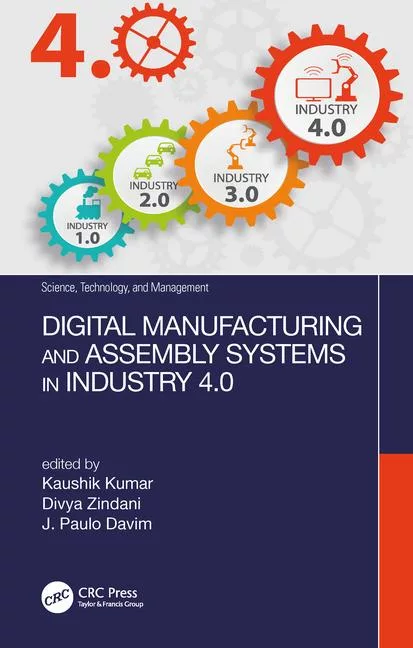
    Digital Manufacturing and Assembly Systems in Industry 4.0

  • Kaizen Assembly: Designing, Constructing, and Managing a Lean Assembly Line

See More Products

Events

View AllSubmit An Event
  • October 30, 2025

    Assembly Simulation in Action: 3 Approaches Driving OEM Savings

    On Demand Participants will gain actionable insights and real-world examples that demonstrate how digital simulation supports assembly planning, geometry assurance, and quality control. Sponsored by:
View AllSubmit An Event

Related Directories

  • Dispense Works Inc.

    Dispense Works Inc. is a full-service manufacturer specializing in robotic dispensing and automated assembly systems, including advanced robotic capping and filling machines. All of our products are proudly designed and manufactured in-house at our McHenry, Illinois facility. Made in the USA
×

Never miss the latest news and trends driving the manufacturing industry

Stay in the know on the latest assembly trends.

JOIN TODAY!
  • RESOURCES
    • Advertise
    • Contact Us
    • Directories
    • Manufacturing Division
    • Store
    • Want More?
  • SIGN UP TODAY
    • Create Account
    • eMagazine
    • Newsletters
    • Customer Service
    • Manage Preferences
  • SERVICES
    • Marketing Services
    • Reprints
    • Market Research
    • List Rental
    • Survey/Respondent Access
  • STAY CONNECTED
    • LinkedIn
    • Facebook
    • Instagram
    • YouTube
    • X (Twitter)
  • PRIVACY
    • PRIVACY POLICY
    • TERMS & CONDITIONS
    • DO NOT SELL MY PERSONAL INFORMATION
    • PRIVACY REQUEST
    • ACCESSIBILITY

Copyright ©2026. All Rights Reserved BNP Media, Inc. and BNP Media II, LLC.

Design, CMS, Hosting & Web Development :: ePublishing