Assembly Magazine logo
search
Ask ASSEMBLY AI
cart
facebook twitter linkedin youtube
  • Sign In
  • Create Account
  • Sign Out
  • My Account
Assembly Magazine logo
  • TRENDS
    • Ask ASSEMBLY AI
    • Trends
    • News
    • New Products
  • INDUSTRIES
    • Aerospace
    • Appliance
    • DFMA Assembly
    • Medical Devices
    • Green Manufacturing
    • Lean Manufacturing
    • Machinery Assembly
    • Electronics Assembly
    • Automotive
  • TECHNOLOGIES
    • Adhesives & Dispensing
    • Assembly Presses
    • Automated Assembly Systems
    • Manufacturing Management
    • Manufacturing Software
    • Motion Control
    • Screwdriving & Riveting
    • Robotics
    • Test & Inspection
    • Plastics & Metal Welding
    • Wire Processing
    • Workstations
  • AUTONOMOUS & ELECTRIC MOBILITY
    • AEM Magazine Archives
    • Autonomy
    • Electrification
    • Mobility Services
    • Assembly & Testing
    • AV/EM News
  • MEDIA
    • Ask ASSEMBLY AI
    • Podcasts
    • Assembly News Now
    • Assembly TV
    • Webinars
    • eBooks
  • EVENTS
    • Calendar
    • The ASSEMBLY Show
  • MORE
    • Exclusives >
      • Plant of the Year
      • Capital Spending
    • Buyers Guide >
      • Supplier Insights
    • Classifieds
    • Featured Products
    • Newsletters
    • Store
    • White Papers
    • Columns
    • Sponsor Insights
  • INFOCENTER
    • Assembly & Test Solutions
  • EMAGAZINE
    • eMagazine
    • Archive Issues
    • Advertise
    • Contact Us
    • Sign Up
Columns

Assembly in Action: Assembly Automation Eliminates Wrong Numbers

October 1, 2002


AT&T’s private brand exchange (PBX) phone systems, manufactured in Denver, are customized for individual customers. They are in small and large businesses, hospitals and universities. Yet people take the complex technology behind each clear cross-country conversation for granted.

At the Denver facility, one look at a single printed circuit board, which makes up the PBX nerve center, is eye-popping. Hundreds of components, some not much larger than a pinhead, occupy its landscape.

Considering that some complex PBX systems, which support thousands of phones, have an array of dozens of boards, the question "How does AT&T get it right?" arises.

There’s no room for error. One wrong component compromises a board. The board must be pulled, and a technician has to troubleshoot it. The errant component is removed by hand, the solder is carefully cleaned away, the correct component is inserted and then the board is retested. The process takes hours and slows final assembly.

Now, the assembly operation is virtually error-free thanks to a device that includes bar coding and spread-spectrum radio frequency technology. Operators select bar-coded reels of components and place them in a predetermined order in a robot feeder. The robot, programmed to follow a board schematic, inserts the components.

When the reels are loaded onto the component feeders, the operators scan each one with a Symbol Technologies (Holtsville, NY) laser radio terminal (LRT) 3800. The boards are also barcoded and scanned.

The LRT 3800 combines a noncontact laser scanner, 16-bit DOS computer, keyboard and screen with the Symbol Spectrum One radio frequency network in a portable, handheld device. This device transmits the bar-coded information back over the Spectrum One network to the facility’s designated host computer. The information is cross-checked in real time against a file, and the operator is prompted with an audible signal. An incorrect reel triggers a distinguishable warning beep when scanned. "By combining bar-coding and radio frequency, we’ve improved quality, and we know it in real time," says Andy Zumfelde, a member of AT&T’s technical staff.

Operators used to pick the component reels and place them in a feeder, and another operator used to double- check the work. Each reel’s identifying code number was nine digits, and some of them had repetitive numbers. There could be 30 to 80 reels for each board setup. It was easy to select the wrong reel, and someArial the second operator missed that mistake.

Looking for quick answers on assembly and manufacturing topics? Try Ask ASM, our new smart AI search tool. Ask ASM →

"We’ve not only reduced our mistake rate down to virtually zero, we’ve also become more efficient. The 15-minute manual process to load and double-check the component feeder now takes about 2 minutes. We’re far more responsive," says Zumfelde.

One concern was the acceptance of the LRT 3800s and the new technology by operators who spent years manually loading and checking the component feeders.

"I was tentative at first," explains Karen Dwyer. "But now, I’m thrilled. It’s just a new tool that’s helping me do my job better. The very first time I used the scanner, I double-checked reels that I just placed in the feeder. Sure enough, I made a mistake. I was sold. Now, I wouldn’t think of working without it. We have a banner that hangs over the plant that reads, ‘Quality Systems. Quality People.’ This fits right in."

Another concern by Zumfelde was the use of the Spectrum One technology at the Denver site. The plant is 1.2 million square feet and lined with storage racks and heavy machinery, and the transmission range—1,000 plus feet from wall to wall—was at the limit for a single transceiver and antenna setup.

"It hasn’t been an issue. We have two antennae, use 45 LRTs and we have the freedom to roam the site," Zumfelde points out. "Two favorable aspects about our implementation of spread spectrum radio frequency technology are the quick response and transaction turnaround time, and the option to reconfigure machines and operators without upsetting our configuration."

For more information on radio frequency technology, call 800-722-6234 or visit www.symbol.com.

Share This Story

Looking for a reprint of this article?
From high-res PDFs to custom plaques, order your copy today!

Recommended Content

JOIN TODAY
To unlock your recommendations.

Already have an account? Sign In

  • Made in the U.S.A.

    Consumer Products Manufacturing: Made in the USA

    Supply chain lessons learned during the coronavirus...
    Automated Assembly Systems
    By: Austin Weber
  • Best Practices for Press-Fit Assembly

    Best Practices for Press-Fit Assembly

    In manufacturing, ironclad formulas for success are hard...
    Assembly Presses
    By: Jim Camillo
  • aem0523leader-tesla1.jpg

    Tesla Rethinks the Assembly Line

    Engineers at Tesla Inc. have developed a new process that...
    Automotive Assembly
    By: Austin Weber
Manage My Account
  • eMagazine Subscription
  • Assembly Newsletters
  • Online Registration
  • Subscription Customer Service
  • Manage My Preferences

More Videos

Sponsored Content

Sponsored Content is a special paid section where industry companies provide high quality, objective, non-commercial content around topics of interest to the ASSEMBLY audience. All Sponsored Content is supplied by the advertising company and any opinions expressed in this article are those of the author and not necessarily reflect the views of ASSEMBLY or its parent company, BNP Media. Interested in participating in our Sponsored Content section? Contact your local rep!

close
  • ultrasonic welding
    Sponsored bySonobond Ultrasonics

    Engineering Efficiency in High-Performance Assembly: How Ultrasonic Welding Enhances Throughput, Reliability and Quality

  • UV curing system
    Sponsored byDymax

    Why UV Intensity Alone Doesn’t Define Curing Performance

  • wooden pallets
    Sponsored byLEAN Manufacturing Products

    Eliminating Waste on the Shop Floor: Applying Lean Principles to Improve Manufacturing Efficiency

Popular Stories

ASSEMBLY News Now, episode-30: Volvo Redesigns EV Manufacturing

Volvo Redesigns EV Manufacturing

Boeing CEO Kelly Ortberg announces 1 billion investment

Boeing Plans $1 Billion Wichita Investment, Workforce Training Center

GE Appliances Worker on Line

GE Appliances Expands Factory AI With 800 Gemini Enterprise Agents

Watch the latest episode of ANN now!

Events

July 24, 2025

From Shop Floor to CFO: How Manufacturers Are Closing the Loop Between Operations and Finance

On Demand Learn how manufacturers are bridging the gap between the shop floor and ERP systems to gain real-time visibility, streamline operations, and kick-start digital transformation—without waiting years.

Sponsored by:

PicoStratusGreen
July 30, 2025

Buffer Analysis and Design Fundamentals for Manufacturing Excellence

On Demand In this presentation, Dr. Herman Tang shares practical insights from his industry experience and research on buffer management in manufacturing operations.

View All Submit An Event

Poll

Difficult Assembly Processes

Which assembly process gives you the most difficulty?
View Results Poll Archive

Products

Manufacturing Cost Policy Deployment (MCPD) Profitability Scenarios: Systematic and Systemic Improvement of Manufacturing Costs

Manufacturing Cost Policy Deployment (MCPD) Profitability Scenarios: Systematic and Systemic Improvement of Manufacturing Costs

See More Products
Register for webinar - Modernizing Automotive Assembly: Why Upgrading Legacy MES is a Business Imperative

Related Articles

  • Assembly in Action: Assembly in Action: Dispensing System Boosts Throughput 50 Percent

    See More
  • Assembly in Action: Assembly Expo: BIGGER and BETTER THAN EVER

    See More
  • Assembly in Action: Manual Assembly Line Gets An Upgrade

    See More

Related Products

See More Products
  • digital.jpg

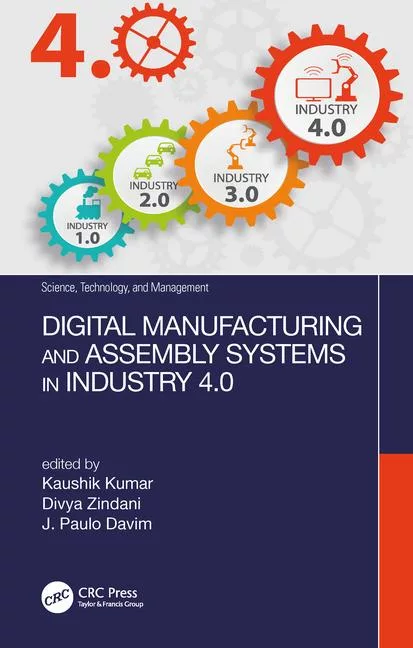
    Digital Manufacturing and Assembly Systems in Industry 4.0

  • Kaizen Assembly: Designing, Constructing, and Managing a Lean Assembly Line

See More Products

Events

View AllSubmit An Event
  • October 30, 2025

    Assembly Simulation in Action: 3 Approaches Driving OEM Savings

    On Demand Participants will gain actionable insights and real-world examples that demonstrate how digital simulation supports assembly planning, geometry assurance, and quality control. Sponsored by:
View AllSubmit An Event

Related Directories

  • Assembly & Automation Technology Inc.

    Assembly & Automation Technology delivers intelligent automation systems integrating machine learning, computer vision and smart robotics for industrial, medical and biotechnical applications. Our AI-enhanced assembly machines, robotic systems and vision-guided quality control optimize productivity while reducing human error. We engineer custom automated solutions that learn, adapt and continuously improve manufacturing processes.
  • Automated Assembly Corp.

    Automated Assembly Corporation stands at the forefront of the manufacturing industry, specializing in roll-to-roll assembly capabilities that range from low to high-volume production. Our advanced automation systems are engineered to handle diverse production requirements with precision and efficiency, making us the ideal partner for businesses needing scalable assembly solutions.
×

Never miss the latest news and trends driving the manufacturing industry

Stay in the know on the latest assembly trends.

JOIN TODAY!
  • RESOURCES
    • Advertise
    • Contact Us
    • Directories
    • Manufacturing Division
    • Store
    • Want More?
  • SIGN UP TODAY
    • Create Account
    • eMagazine
    • Newsletters
    • Customer Service
    • Manage Preferences
  • SERVICES
    • Marketing Services
    • Reprints
    • Market Research
    • List Rental
    • Survey/Respondent Access
  • STAY CONNECTED
    • LinkedIn
    • Facebook
    • Instagram
    • YouTube
    • X (Twitter)
  • PRIVACY
    • PRIVACY POLICY
    • TERMS & CONDITIONS
    • DO NOT SELL MY PERSONAL INFORMATION
    • PRIVACY REQUEST
    • ACCESSIBILITY

Copyright ©2026. All Rights Reserved BNP Media, Inc. and BNP Media II, LLC.

Design, CMS, Hosting & Web Development :: ePublishing