Assembly Magazine logo
search
Ask ASSEMBLY AI
cart
facebook twitter linkedin youtube
  • Sign In
  • Create Account
  • Sign Out
  • My Account
Assembly Magazine logo
  • TRENDS
    • Ask ASSEMBLY AI
    • Trends
    • News
    • New Products
  • INDUSTRIES
    • Aerospace
    • Appliance
    • DFMA Assembly
    • Medical Devices
    • Green Manufacturing
    • Lean Manufacturing
    • Machinery Assembly
    • Electronics Assembly
    • Automotive
  • TECHNOLOGIES
    • Adhesives & Dispensing
    • Assembly Presses
    • Automated Assembly Systems
    • Manufacturing Management
    • Manufacturing Software
    • Motion Control
    • Screwdriving & Riveting
    • Robotics
    • Test & Inspection
    • Plastics & Metal Welding
    • Wire Processing
    • Workstations
  • AUTONOMOUS & ELECTRIC MOBILITY
    • AEM Magazine Archives
    • Autonomy
    • Electrification
    • Mobility Services
    • Assembly & Testing
    • AV/EM News
  • MEDIA
    • Ask ASSEMBLY AI
    • Podcasts
    • Assembly News Now
    • Assembly TV
    • Webinars
    • eBooks
  • EVENTS
    • Calendar
    • The ASSEMBLY Show
  • MORE
    • Exclusives >
      • Plant of the Year
      • Capital Spending
    • Buyers Guide >
      • Supplier Insights
    • Classifieds
    • Featured Products
    • Newsletters
    • Store
    • White Papers
    • Columns
    • Sponsor Insights
  • INFOCENTER
    • Assembly & Test Solutions
  • EMAGAZINE
    • eMagazine
    • Archive Issues
    • Advertise
    • Contact Us
    • Sign Up
Columns

Assembly in Action: Robots Support Meteor Machines

October 1, 2002


Meteor Maschinen AG (Hünenberg, Switzerland) manufactures winding machines for electrical coils. As a rule, wire with a diameter between 0.01 and 0.7 millimeter is processed on up to 16 spindles. The modular machines can operate alone or be combined with other processing equipment to create complex production cells.

In the Meteor Compact System (MCS) coil production cell, an automatic winding machine is equipped with a linear loading and unloading axis. In addition, parallel process stations are located on a rotary table in the cell. Modular, replaceable components are also used, such as soldering or welding systems, wrapping and labeling equipment, and testing stations. A Turboscara robot from Bosch Rexroth AG (Stuttgart, Germany) links the parts supply, winding machine and rotary table. The robot handles workpieces in the MCS cell. The gripper modules were developed by Meteor. Depending on the requirement, up to three individually controllable grippers are accommodated in a compact gripper head. In addition, the gripper head can be equipped with a swivel unit and three additional grippers.

Up until a few years ago, the winding cells were built by customer-oriented handling facilities. By using the Turboscara robots, no design or assembly is required. Moreover, programming and commissioning time is drastically reduced. An entire cell can be programmed and commissioned in 1 or 2 days. The large working radius of these robots allows the MCS coil production cells to be equipped with a variety of process stations. With four-axis movement, the robots can place the workpiece in various positions. A later change in processing order can be performed by replacing or adding individual components.

The work sequence for the Turboscara robot in an MCS coil production cell is always the same. If the workpiece is fed automatically via feeding systems, such as conveying bowls, the robot positions the coil bodies onto a loading rake in preparation for winding. The rake cycles to the winding machine and back on the CNC-controlled loading and unloading axis. The robot must transfer the wound coils from the rake to the workpiece stations on the rotary table. Here, the robot can perform additional handling operations, such as rotating, holding or positioning the parts. When the finished coils have passed 100 percent testing, the robot sorts out good and bad coils and loads them onto pallets.

The cycle Arial in an MCS cell depend primarily on the winding process variables, such as the wire thickness, number of turns and number of spindles. In the case of fast winding cycles, individual parallel processes can determine the cycle time. An example is the station where wound coils are wrapped with adhesive tape. Here, the adhesive’s reaction time must be followed. The maximum speeds of the robot (axis three can lift objects up to 1,600 millimeters per second and axis four can rotate up to 1,200 degrees per second) have not been needed. So the robots offer sufficient reserves for additional tasks.

Standard components allow for various applications. An example is the programmable loading and unloading axis with the loading rake. This axis approaches the spindles according to their number and positions, and it also permits additional positions along the path. This enables implementation of manual parts feeding, which is good for small lots where automatic parts feeding would not be economical. Further parts handling, from the winding machine to the rotary table, can take place by robot, either with or without changes. This increases the model variety attainable in an MCS cell with a varying degree of automation.

To fully use the variety of combinations offered by independently usable mechanical components, the control concept must be modular. Therefore, all major components in an MCS coil production cell have their own controls. This starts with a PC-based control for the winding machine. It offers specially developed functionality and a user interface adapted to the machine configuration. There is a superordinate master control for the cell. This master control assumes control tasks for the entire periphery. All controls for the independent process modules are connected via controller area network bus. This also includes the control for the robot.

For more information on robotics, call 847-645-3600 or visit www.boschrexroth-us.com.

Looking for quick answers on assembly and manufacturing topics? Try Ask ASM, our new smart AI search tool. Ask ASM →

Share This Story

Looking for a reprint of this article?
From high-res PDFs to custom plaques, order your copy today!

Recommended Content

JOIN TODAY
To unlock your recommendations.

Already have an account? Sign In

  • Made in the U.S.A.

    Consumer Products Manufacturing: Made in the USA

    Supply chain lessons learned during the coronavirus...
    Automated Assembly Systems
    By: Austin Weber
  • Best Practices for Press-Fit Assembly

    Best Practices for Press-Fit Assembly

    In manufacturing, ironclad formulas for success are hard...
    Assembly Presses
    By: Jim Camillo
  • aem0523leader-tesla1.jpg

    Tesla Rethinks the Assembly Line

    Engineers at Tesla Inc. have developed a new process that...
    Electrification
    By: Austin Weber
Manage My Account
  • eMagazine Subscription
  • Assembly Newsletters
  • Online Registration
  • Subscription Customer Service
  • Manage My Preferences

More Videos

Sponsored Content

Sponsored Content is a special paid section where industry companies provide high quality, objective, non-commercial content around topics of interest to the ASSEMBLY audience. All Sponsored Content is supplied by the advertising company and any opinions expressed in this article are those of the author and not necessarily reflect the views of ASSEMBLY or its parent company, BNP Media. Interested in participating in our Sponsored Content section? Contact your local rep!

close
  • ultrasonic welding
    Sponsored bySonobond Ultrasonics

    Engineering Efficiency in High-Performance Assembly: How Ultrasonic Welding Enhances Throughput, Reliability and Quality

  • UV curing system
    Sponsored byDymax

    Why UV Intensity Alone Doesn’t Define Curing Performance

  • wooden pallets
    Sponsored byLEAN Manufacturing Products

    Eliminating Waste on the Shop Floor: Applying Lean Principles to Improve Manufacturing Efficiency

Popular Stories

ASSEMBLY News Now, episode-30: Volvo Redesigns EV Manufacturing

Volvo Redesigns EV Manufacturing

Boeing CEO Kelly Ortberg announces 1 billion investment

Boeing Plans $1 Billion Wichita Investment, Workforce Training Center

GE Appliances Worker on Line

GE Appliances Expands Factory AI With 800 Gemini Enterprise Agents

Watch the latest episode of ANN now!

Events

July 24, 2025

From Shop Floor to CFO: How Manufacturers Are Closing the Loop Between Operations and Finance

On Demand Learn how manufacturers are bridging the gap between the shop floor and ERP systems to gain real-time visibility, streamline operations, and kick-start digital transformation—without waiting years.

Sponsored by:

PicoStratusGreen
July 30, 2025

Buffer Analysis and Design Fundamentals for Manufacturing Excellence

On Demand In this presentation, Dr. Herman Tang shares practical insights from his industry experience and research on buffer management in manufacturing operations.

View All Submit An Event

Poll

Difficult Assembly Processes

Which assembly process gives you the most difficulty?
View Results Poll Archive

Products

Manufacturing Cost Policy Deployment (MCPD) Profitability Scenarios: Systematic and Systemic Improvement of Manufacturing Costs

Manufacturing Cost Policy Deployment (MCPD) Profitability Scenarios: Systematic and Systemic Improvement of Manufacturing Costs

See More Products
Register for webinar - Modernizing Automotive Assembly: Why Upgrading Legacy MES is a Business Imperative

Related Articles

  • Assembly in Action: Robots Improve Brake Assembly

    See More
  • Assembly in Action: Robots Clear Machining Bottleneck

    See More
  • Assembly in Action: Robots Pay for Themselves in Seven Months

    See More

Related Products

See More Products
  • digital.jpg

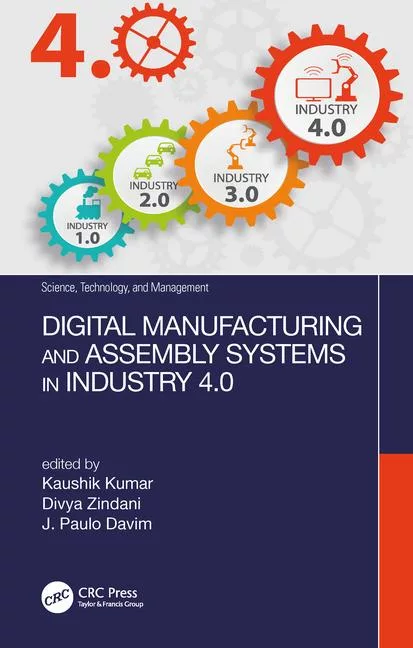
    Digital Manufacturing and Assembly Systems in Industry 4.0

  • sustainable.jpg

    Sustainable Supply Chain Management: Sustainable Decision Support

  • Kaizen Assembly: Designing, Constructing, and Managing a Lean Assembly Line

See More Products

Events

View AllSubmit An Event
  • October 30, 2025

    Assembly Simulation in Action: 3 Approaches Driving OEM Savings

    On Demand Participants will gain actionable insights and real-world examples that demonstrate how digital simulation supports assembly planning, geometry assurance, and quality control. Sponsored by:
View AllSubmit An Event

Related Directories

  • Assembly & Automation Technology Inc.

    Assembly & Automation Technology delivers intelligent automation systems integrating machine learning, computer vision and smart robotics for industrial, medical and biotechnical applications. Our AI-enhanced assembly machines, robotic systems and vision-guided quality control optimize productivity while reducing human error. We engineer custom automated solutions that learn, adapt and continuously improve manufacturing processes.
  • Shibaura Machine

    TM Robotics is the master distributor for the Shibaura Machine line of industrial robots. Formerly Toshiba Machine, Shibaura Machine's product range includes SCARA, 6-Axis, single and 2, 3 and 4-axis Cartesian. Factory trained and authorized distribution and local support worldwide.
×

Never miss the latest news and trends driving the manufacturing industry

Stay in the know on the latest assembly trends.

JOIN TODAY!
  • RESOURCES
    • Advertise
    • Contact Us
    • Directories
    • Manufacturing Division
    • Store
    • Want More?
  • SIGN UP TODAY
    • Create Account
    • eMagazine
    • Newsletters
    • Customer Service
    • Manage Preferences
  • SERVICES
    • Marketing Services
    • Reprints
    • Market Research
    • List Rental
    • Survey/Respondent Access
  • STAY CONNECTED
    • LinkedIn
    • Facebook
    • Instagram
    • YouTube
    • X (Twitter)
  • PRIVACY
    • PRIVACY POLICY
    • TERMS & CONDITIONS
    • DO NOT SELL MY PERSONAL INFORMATION
    • PRIVACY REQUEST
    • ACCESSIBILITY

Copyright ©2026. All Rights Reserved BNP Media, Inc. and BNP Media II, LLC.

Design, CMS, Hosting & Web Development :: ePublishing