Assembly Magazine logo
search
Ask ASSEMBLY AI
cart
facebook twitter linkedin youtube
  • Sign In
  • Create Account
  • Sign Out
  • My Account
Assembly Magazine logo
  • TRENDS
    • Ask ASSEMBLY AI
    • Trends
    • News
    • New Products
  • INDUSTRIES
    • Aerospace
    • Appliance
    • DFMA Assembly
    • Medical Devices
    • Green Manufacturing
    • Lean Manufacturing
    • Machinery Assembly
    • Electronics Assembly
    • Automotive
  • TECHNOLOGIES
    • Adhesives & Dispensing
    • Assembly Presses
    • Automated Assembly Systems
    • Manufacturing Management
    • Manufacturing Software
    • Motion Control
    • Screwdriving & Riveting
    • Robotics
    • Test & Inspection
    • Plastics & Metal Welding
    • Wire Processing
    • Workstations
  • AUTONOMOUS & ELECTRIC MOBILITY
    • AEM Magazine Archives
    • Autonomy
    • Electrification
    • Mobility Services
    • Assembly & Testing
    • AV/EM News
  • MEDIA
    • Ask ASSEMBLY AI
    • Podcasts
    • Assembly News Now
    • Assembly TV
    • Webinars
    • eBooks
  • EVENTS
    • Calendar
    • The ASSEMBLY Show
  • MORE
    • Exclusives >
      • Plant of the Year
      • Capital Spending
    • Buyers Guide >
      • Supplier Insights
    • Classifieds
    • Featured Products
    • Newsletters
    • Store
    • White Papers
    • Columns
    • Sponsor Insights
  • INFOCENTER
    • Assembly & Test Solutions
  • EMAGAZINE
    • eMagazine
    • Archive Issues
    • Advertise
    • Contact Us
    • Sign Up
Columns

Assembly in Action: Motion Package Cuts Cost, Minimizes Footprint

February 1, 2001

When Orthodyne Electronics (Irvine, CA), a manufacturer of electronics assembly equipment, adapted its ultrasonic wire bonders to a new market, it installed compact feeders driven by a motion control package from Rexroth Star (Charlotte, NC) on its Model 360CH and 360CHD robotic wire bonders.

The low-profile leadscrew and rail minimized the footprint of the automated bonder. To further reduce the cost and improve the reliability of the machine, the company adopted a fully assembled motion control module in place of individual components.

The bonder's four-axis rotary head attaches aluminum wire leads to electronic devices for interconnects. When semiconductor manufacturers expressed interest in a high-volume production machine, engineers looked for a space-saving mechanism to feed leadframe magazines. "Floor space in electronics assembly areas is expensive," explains Bob Babayan, vice president of engineering. "There's a lot of emphasis on achieving a small footprint for assembly machines."

Semiconductor chips from 1 to 10 millimeters square are commonly bonded on leadframes packed in standard magazines. The automated feeder concept called for magazines to be loaded at the load-station of the machine. Leadframes are fed out of the magazine to the bond area, and wire-bonded leadframes are fed into empty magazines on the output side.

To minimize the impact on the machine design, company engineers looked for a simple linear motion system that could be integrated with the existing wire bonder. They also wanted an affordable package that could minimize the overall footprint of the machine. According to Babayan, "We really didn't know how small it had to be. We just knew the smaller, the better."

Engineers developed a linear guide feed mechanism with LOSTPED criteria--load, orientation, speed, travel, precision, environment and duty cycle. They calculated a 7-pound design load would accommodate a magazine full of TO-220 devices. Vertical and horizontal actuators could be used in tandem to elevate full magazines to working height and push them through the work area and out the front. Required speed for the elevator is 2 inches per second. Travel is 232 millimeters in the vertical plane and 305 millimeters for the horizontal slide.

With leadframes positioned for welding by the four-axis bonding head, the magazine feeder did not need exceptional positioning accuracy. However, accurate alignment was critical to ensure smooth feeds without jamming. A 1/2-inch stainless steel leadscrew with 0.2-inch lead per revolution provided the driving force for the recirculating ball slide. The Acme leadscrew has ±0.0001-inch deviation per inch of travel and less than 0.005-inch backlash. It is turned by a stepping motor at about 10 revolutions per second to drive the carrier block at 2 ips.

The electronics assembly environment is clean, so factory-sealed actuators would not need bellows or special auxiliary seals. With relatively short strokes and electronics assembly operations running 24 hours a day, the feeder mechanism also needed the reliability to withstand a demanding duty cycle.

Looking for quick answers on assembly and manufacturing topics? Try Ask ASM, our new smart AI search tool. Ask ASM →

Traditional linear bearings require a large, costly base plate to anchor the rail. Using the end plates as mounting points eliminated the base plate and cut the system cost by 25 percent. Overall, the package required about 20 percent less overhead space than recirculating ball-and-rail actuators. It measured just 1.25 inches high by 3 inches wide.

A dedicated motor mount was eliminated in favor of motor mounting holes. The result was a linear motion package with modest impact on the footprint of the lead bonding machine. The Model 360C automatic wire bonder without a leadframe feeder has a footprint 24 inches wide by 43 inches deep. The Model 360CH with a single bonder is 50 inches wide by 47 inches deep. The Model 360CHD with dual feeders accommodating different size wires on the same component, or increasing throughput by alternating feeders, is 76 inches wide.

With the semiconductor wire bonder in production, the company looked at ways to simplify assembly, cut the cost of the feeder and enhance reliability. The ready-to-install module also guarantees alignment of the miniature recirculating ball slide and Acme leadscrew drive.

A fully assembled module reduced the number of components to be installed, saving alignment and installation time. The company saved $500 per unit in assembly costs. The pre-aligned miniature ball rail and leadscrew is now bolted into the machine.

For more information on motion control, call Rexroth Star at 864- 967-2777, visit www.rexroth.com.

Share This Story

Looking for a reprint of this article?
From high-res PDFs to custom plaques, order your copy today!

Recommended Content

JOIN TODAY
To unlock your recommendations.

Already have an account? Sign In

  • Made in the U.S.A.

    Consumer Products Manufacturing: Made in the USA

    Supply chain lessons learned during the coronavirus...
    Automated Assembly Systems
    By: Austin Weber
  • Best Practices for Press-Fit Assembly

    Best Practices for Press-Fit Assembly

    In manufacturing, ironclad formulas for success are hard...
    Assembly Presses
    By: Jim Camillo
  • aem0523leader-tesla1.jpg

    Tesla Rethinks the Assembly Line

    Engineers at Tesla Inc. have developed a new process that...
    Electrification
    By: Austin Weber
Manage My Account
  • eMagazine Subscription
  • Assembly Newsletters
  • Online Registration
  • Subscription Customer Service
  • Manage My Preferences

More Videos

Sponsored Content

Sponsored Content is a special paid section where industry companies provide high quality, objective, non-commercial content around topics of interest to the ASSEMBLY audience. All Sponsored Content is supplied by the advertising company and any opinions expressed in this article are those of the author and not necessarily reflect the views of ASSEMBLY or its parent company, BNP Media. Interested in participating in our Sponsored Content section? Contact your local rep!

close
  • ultrasonic welding
    Sponsored bySonobond Ultrasonics

    Engineering Efficiency in High-Performance Assembly: How Ultrasonic Welding Enhances Throughput, Reliability and Quality

  • UV curing system
    Sponsored byDymax

    Why UV Intensity Alone Doesn’t Define Curing Performance

  • wooden pallets
    Sponsored byLEAN Manufacturing Products

    Eliminating Waste on the Shop Floor: Applying Lean Principles to Improve Manufacturing Efficiency

Popular Stories

ASSEMBLY News Now, episode-30: Volvo Redesigns EV Manufacturing

Volvo Redesigns EV Manufacturing

Boeing CEO Kelly Ortberg announces 1 billion investment

Boeing Plans $1 Billion Wichita Investment, Workforce Training Center

GE Appliances Worker on Line

GE Appliances Expands Factory AI With 800 Gemini Enterprise Agents

Watch the latest episode of ANN now!

Events

July 24, 2025

From Shop Floor to CFO: How Manufacturers Are Closing the Loop Between Operations and Finance

On Demand Learn how manufacturers are bridging the gap between the shop floor and ERP systems to gain real-time visibility, streamline operations, and kick-start digital transformation—without waiting years.

Sponsored by:

PicoStratusGreen
July 30, 2025

Buffer Analysis and Design Fundamentals for Manufacturing Excellence

On Demand In this presentation, Dr. Herman Tang shares practical insights from his industry experience and research on buffer management in manufacturing operations.

View All Submit An Event

Poll

Difficult Assembly Processes

Which assembly process gives you the most difficulty?
View Results Poll Archive

Products

Manufacturing Cost Policy Deployment (MCPD) Profitability Scenarios: Systematic and Systemic Improvement of Manufacturing Costs

Manufacturing Cost Policy Deployment (MCPD) Profitability Scenarios: Systematic and Systemic Improvement of Manufacturing Costs

See More Products
Register for webinar - Modernizing Automotive Assembly: Why Upgrading Legacy MES is a Business Imperative

Related Articles

  • Assembly in Action: Adhesive Cuts Cost Not Quality

    See More
  • Assembly in Action: Plastic Cuts Cost of Motorcycle Engines

    See More
  • Assembly In Action: Motion Control Systems Help Develop Solar Cell Technology

    See More

Related Products

See More Products
  • digital.jpg

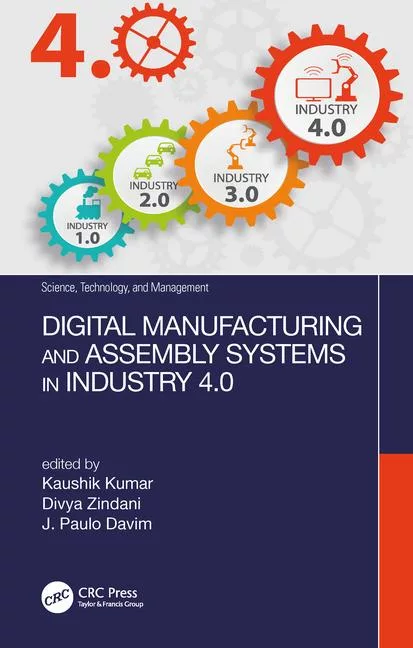
    Digital Manufacturing and Assembly Systems in Industry 4.0

  • Kaizen Assembly: Designing, Constructing, and Managing a Lean Assembly Line

  • leaner

    Leaner Manufacturing: How to Make the Lean Production Process Easier, Faster, and More Cost-Effective

See More Products

Events

View AllSubmit An Event
  • October 30, 2025

    Assembly Simulation in Action: 3 Approaches Driving OEM Savings

    On Demand Participants will gain actionable insights and real-world examples that demonstrate how digital simulation supports assembly planning, geometry assurance, and quality control. Sponsored by:
View AllSubmit An Event

Related Directories

  • Action Feed Systems

×

Never miss the latest news and trends driving the manufacturing industry

Stay in the know on the latest assembly trends.

JOIN TODAY!
  • RESOURCES
    • Advertise
    • Contact Us
    • Directories
    • Manufacturing Division
    • Store
    • Want More?
  • SIGN UP TODAY
    • Create Account
    • eMagazine
    • Newsletters
    • Customer Service
    • Manage Preferences
  • SERVICES
    • Marketing Services
    • Reprints
    • Market Research
    • List Rental
    • Survey/Respondent Access
  • STAY CONNECTED
    • LinkedIn
    • Facebook
    • Instagram
    • YouTube
    • X (Twitter)
  • PRIVACY
    • PRIVACY POLICY
    • TERMS & CONDITIONS
    • DO NOT SELL MY PERSONAL INFORMATION
    • PRIVACY REQUEST
    • ACCESSIBILITY

Copyright ©2026. All Rights Reserved BNP Media, Inc. and BNP Media II, LLC.

Design, CMS, Hosting & Web Development :: ePublishing