Assembly Magazine logo
search
Ask ASSEMBLY AI
cart
facebook twitter linkedin youtube
  • Sign In
  • Create Account
  • Sign Out
  • My Account
Assembly Magazine logo
  • TRENDS
    • Ask ASSEMBLY AI
    • Trends
    • News
    • New Products
  • INDUSTRIES
    • Aerospace
    • Appliance
    • DFMA Assembly
    • Medical Devices
    • Green Manufacturing
    • Lean Manufacturing
    • Machinery Assembly
    • Electronics Assembly
    • Automotive
  • TECHNOLOGIES
    • Adhesives & Dispensing
    • Assembly Presses
    • Automated Assembly Systems
    • Manufacturing Management
    • Manufacturing Software
    • Motion Control
    • Screwdriving & Riveting
    • Robotics
    • Test & Inspection
    • Plastics & Metal Welding
    • Wire Processing
    • Workstations
  • AUTONOMOUS & ELECTRIC MOBILITY
    • AEM Magazine Archives
    • Autonomy
    • Electrification
    • Mobility Services
    • Assembly & Testing
    • AV/EM News
  • MEDIA
    • Ask ASSEMBLY AI
    • Podcasts
    • Assembly News Now
    • Assembly TV
    • Webinars
    • eBooks
  • EVENTS
    • Calendar
    • The ASSEMBLY Show
  • MORE
    • Exclusives >
      • Plant of the Year
      • Capital Spending
    • Buyers Guide >
      • Supplier Insights
    • Classifieds
    • Featured Products
    • Newsletters
    • Store
    • White Papers
    • Columns
    • Sponsor Insights
  • INFOCENTER
    • Assembly & Test Solutions
  • EMAGAZINE
    • eMagazine
    • Archive Issues
    • Advertise
    • Contact Us
    • Sign Up
Columns

Assembly in Action: Software Helps With Efficiency

August 1, 2002

The Boeing Co. (Seattle) is one of the biggest airframe manufacturers in the world. In any given year, its facility produces 300 to 600 commercial airplanes, ranging from 717s to 747s. In addition, the company has evolved to become a major defense contractor and the one of the biggest aerospace manufacturers in the world.

One of Boeing’s core engineering technologies is airplane wings. Early in the manufacturing process of wings, two critical components are built: wing spars, which are large beams that support the bulk of the wing structure; and wing skins, which are the metal outer coverings of the wing structure. To create these parts, plates of aluminum are cut down in a milling process.

The shot peening process is one major step in manufacturing wing parts. Shot peening involves hurling streams of tiny, forged steel balls at the parts. This shapes the parts. It also improves fatigue life and prevents corrosion. An area called the forming corridor contains five large machines that perform shot peening operations. An overhead material handling system consisting of a rail network, load bars, cranes, storage locations and a transfer bridge ties the five machines together.

Senior management considered the forming corridor to be a space-limiting constraint in the skin and spar manufacturing process. Excessively long flow Arial were a symptom that management wanted to eliminate. The underlying goals were shorter lead and cycle Arial, and lower work-in-process inventories. Management also wanted to see if more space could be made for additional work.

People acquainted with this area felt that it could run more efficiently. But they didn’t have a solution. Because the shot peening area was so complex, it was difficult to look at the area with a normal process-improvement approach. Fifty different kinds of parts, each with different run and setup Arial on each machine, share five different routings through the area.

Management didn’t want to risk experimenting with the system for fear of causing additional production slowdowns. Research and development employees concluded that the area was a good candidate for ProModel’s (Orem, UT) simulation modeling.

A model was developed that management agreed was valid. From there, additional code was written to permit experimenting with parameters of interest, including the number of load bars in the system, prioritization of transfer bridge usage, machine operation schedules, and how machine downArial affected the system.

One key finding involved the number of load bars in the system. Model analysis showed that as the number of load bars was reduced, system performance improved. Further analysis helped establish a safe lower bound for cutting load bars. This was based on minimum throughput requirements and practical limitations, such as storage availability. Modeling also showed that cutting the number of load bars from 22 to 14 was practical and would reduce average flow time by about 7 percent.

Looking for quick answers on assembly and manufacturing topics? Try Ask ASM, our new smart AI search tool. Ask ASM →

Decreasing load bars would reduce the number of parts that could be in the system at any given time, so work-in-process inventory would also drop by one-third. In addition, the model predicted that delivery performance would improve as a result of this change.

The model also helped management understand the effects of operating policies. Increasing one machine’s usage from two to three shifts per day had a noticeable impact on performance. Increasing utilization on another machine also helped.

In addition, modeling clearly showed the impacts of machine failures on system performance for the first time. This data can be used in the future to help justify machine reliability improvement efforts.

After seeing the model results, senior manager immediately decided to implement these changes.

For more information on software modeling, call 801-223-4600, visit www.promodel.com.

Share This Story

Looking for a reprint of this article?
From high-res PDFs to custom plaques, order your copy today!

Recommended Content

JOIN TODAY
To unlock your recommendations.

Already have an account? Sign In

  • Made in the U.S.A.

    Consumer Products Manufacturing: Made in the USA

    Supply chain lessons learned during the coronavirus...
    Automated Assembly Systems
    By: Austin Weber
  • Best Practices for Press-Fit Assembly

    Best Practices for Press-Fit Assembly

    In manufacturing, ironclad formulas for success are hard...
    Assembly Presses
    By: Jim Camillo
  • aem0523leader-tesla1.jpg

    Tesla Rethinks the Assembly Line

    Engineers at Tesla Inc. have developed a new process that...
    Industries
    By: Austin Weber
Manage My Account
  • eMagazine Subscription
  • Assembly Newsletters
  • Online Registration
  • Subscription Customer Service
  • Manage My Preferences

More Videos

Sponsored Content

Sponsored Content is a special paid section where industry companies provide high quality, objective, non-commercial content around topics of interest to the ASSEMBLY audience. All Sponsored Content is supplied by the advertising company and any opinions expressed in this article are those of the author and not necessarily reflect the views of ASSEMBLY or its parent company, BNP Media. Interested in participating in our Sponsored Content section? Contact your local rep!

close
  • ultrasonic welding
    Sponsored bySonobond Ultrasonics

    Engineering Efficiency in High-Performance Assembly: How Ultrasonic Welding Enhances Throughput, Reliability and Quality

  • UV curing system
    Sponsored byDymax

    Why UV Intensity Alone Doesn’t Define Curing Performance

  • wooden pallets
    Sponsored byLEAN Manufacturing Products

    Eliminating Waste on the Shop Floor: Applying Lean Principles to Improve Manufacturing Efficiency

Popular Stories

ASSEMBLY News Now, episode-30: Volvo Redesigns EV Manufacturing

Volvo Redesigns EV Manufacturing

Boeing CEO Kelly Ortberg announces 1 billion investment

Boeing Plans $1 Billion Wichita Investment, Workforce Training Center

GE Appliances Worker on Line

GE Appliances Expands Factory AI With 800 Gemini Enterprise Agents

Watch the latest episode of ANN now!

Events

July 24, 2025

From Shop Floor to CFO: How Manufacturers Are Closing the Loop Between Operations and Finance

On Demand Learn how manufacturers are bridging the gap between the shop floor and ERP systems to gain real-time visibility, streamline operations, and kick-start digital transformation—without waiting years.

Sponsored by:

PicoStratusGreen
July 30, 2025

Buffer Analysis and Design Fundamentals for Manufacturing Excellence

On Demand In this presentation, Dr. Herman Tang shares practical insights from his industry experience and research on buffer management in manufacturing operations.

View All Submit An Event

Poll

Difficult Assembly Processes

Which assembly process gives you the most difficulty?
View Results Poll Archive

Products

Manufacturing Cost Policy Deployment (MCPD) Profitability Scenarios: Systematic and Systemic Improvement of Manufacturing Costs

Manufacturing Cost Policy Deployment (MCPD) Profitability Scenarios: Systematic and Systemic Improvement of Manufacturing Costs

See More Products
Register for webinar - Modernizing Automotive Assembly: Why Upgrading Legacy MES is a Business Imperative

Related Articles

  • Assembly in Action: Software Helps Firm Streamline its Design Phase

    See More
  • Assembly in Action: Software Helps Firm Streamline its Design Phase

    See More
  • Assembly in Action: Software Helps Develop Cars

    See More

Related Products

See More Products
  • digital.jpg

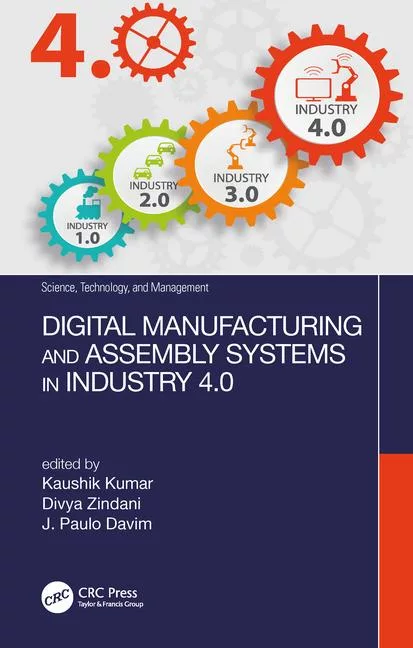
    Digital Manufacturing and Assembly Systems in Industry 4.0

  • Kaizen Assembly: Designing, Constructing, and Managing a Lean Assembly Line

  • integration.jpg

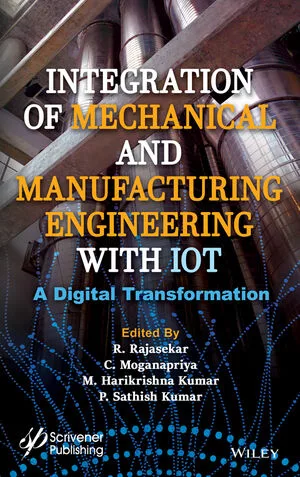
    Integration of Mechanical and Manufacturing Engineering with IoT: A Digital Transformation

See More Products

Events

View AllSubmit An Event
  • October 30, 2025

    Assembly Simulation in Action: 3 Approaches Driving OEM Savings

    On Demand Participants will gain actionable insights and real-world examples that demonstrate how digital simulation supports assembly planning, geometry assurance, and quality control. Sponsored by:
View AllSubmit An Event

Related Directories

  • QT9 Software

    QT9 Software offers comprehensive ERP, MRP, and QMS solutions designed for small and mid-sized manufacturers. Our cloud-based platform integrates inventory management, production planning, and quality control into one seamless system. QT9 helps streamline operations, improve product quality, and drive growth, providing real-time insights for smarter decision-making and efficiency.
  • Action Feed Systems

×

Never miss the latest news and trends driving the manufacturing industry

Stay in the know on the latest assembly trends.

JOIN TODAY!
  • RESOURCES
    • Advertise
    • Contact Us
    • Directories
    • Manufacturing Division
    • Store
    • Want More?
  • SIGN UP TODAY
    • Create Account
    • eMagazine
    • Newsletters
    • Customer Service
    • Manage Preferences
  • SERVICES
    • Marketing Services
    • Reprints
    • Market Research
    • List Rental
    • Survey/Respondent Access
  • STAY CONNECTED
    • LinkedIn
    • Facebook
    • Instagram
    • YouTube
    • X (Twitter)
  • PRIVACY
    • PRIVACY POLICY
    • TERMS & CONDITIONS
    • DO NOT SELL MY PERSONAL INFORMATION
    • PRIVACY REQUEST
    • ACCESSIBILITY

Copyright ©2026. All Rights Reserved BNP Media, Inc. and BNP Media II, LLC.

Design, CMS, Hosting & Web Development :: ePublishing