Assembly Magazine logo
search
Ask ASSEMBLY AI
cart
facebook twitter linkedin youtube
  • Sign In
  • Create Account
  • Sign Out
  • My Account
Assembly Magazine logo
  • TRENDS
    • Ask ASSEMBLY AI
    • Trends
    • News
    • New Products
  • INDUSTRIES
    • Aerospace
    • Appliance
    • DFMA Assembly
    • Medical Devices
    • Green Manufacturing
    • Lean Manufacturing
    • Machinery Assembly
    • Electronics Assembly
    • Automotive
  • TECHNOLOGIES
    • Adhesives & Dispensing
    • Assembly Presses
    • Automated Assembly Systems
    • Manufacturing Management
    • Manufacturing Software
    • Motion Control
    • Screwdriving & Riveting
    • Robotics
    • Test & Inspection
    • Plastics & Metal Welding
    • Wire Processing
    • Workstations
  • AUTONOMOUS & ELECTRIC MOBILITY
    • AEM Magazine Archives
    • Autonomy
    • Electrification
    • Mobility Services
    • Assembly & Testing
    • AV/EM News
  • MEDIA
    • Ask ASSEMBLY AI
    • Podcasts
    • Assembly News Now
    • Assembly TV
    • Webinars
    • eBooks
  • EVENTS
    • Calendar
    • The ASSEMBLY Show
  • MORE
    • Exclusives >
      • Plant of the Year
      • Capital Spending
    • Buyers Guide >
      • Supplier Insights
    • Classifieds
    • Featured Products
    • Newsletters
    • Store
    • White Papers
    • Columns
    • Sponsor Insights
  • INFOCENTER
    • Assembly & Test Solutions
  • EMAGAZINE
    • eMagazine
    • Archive Issues
    • Advertise
    • Contact Us
    • Sign Up
Columns

Editorial: Technological Dilemma

By Don Hegland
August 1, 2002
The world today requires that its citizens, if they intend to survive and prosper, continue to learn and develop technical skills throughout their lives. Our nation depends on science and engineering for its way of life—and for its domestic security.

In a 1994 interview, the late Carl Sagan, then David Duncan professor of astronomy and physics at Cornell University, said, "We live in a society absolutely dependent on science and technology and yet we have cleverly arranged things so that almost no one understands science and technology. That’s a clear prescription for disaster."

It’s questionable whether the situation has improved significantly since Dr. Sagan made that observation. People abound who genuinely believe that perpetual motion machines really work, and that the oil companies continue to suppress 200 miles per gallon carburetors. Many people fervently believe they have seen UFOs; others claim they have been kidnapped by aliens and returned.

In its annual report to Congress, Science and Engineering Indicators 2002, the National Science Foundation (NSF) says that only 15 percent of Americans feel well-informed about issues relating to science and technology. Worse yet, the report cites data from NSF and other research showing that belief in pseudoscience such as astrology and extrasensory perception (ESP) is widespread and growing. The report says 60 percent of Americans believe in ESP, and more than 25 percent believe that the positions of the stars and planets affect people’s lives. The report is voluminous but worth the time; you can find it at www.nsf.gov/sbe/srs/seind02/start.htm.

The fact is that information- and technology-based changes in the U.S. economy have created new opportunities and will continue to do so at an increasing rate. The Bureau of Labor Statistics predicts that during this decade, science and engineering occupations will grow by 47 percent, compared with 15 percent for the overall American workforce.

This is not to imply that science and engineering are all we need to prepare students for productive careers. Indeed, in testimony before the House Committee on Education and The Workforce, Alan Greenspan pointed out that because technological advances are increasingly interdisciplinary, we must not slight the value of a liberal arts education. For example, exposure to music, literature and the arts broadens intellectual awareness and enhances the ability to reach across disciplines to forge new ideas.

If we were working in the context of a formal mathematical proof, we would say that science and engineering are "necessary but not of themselves sufficient" for sustaining and improving our way of life. Our technological dilemma is that, even with the educational resources we have in the United States, the NSF report shows clearly that we aren’t satisfying the "necessary" part nearly well enough.

Looking for quick answers on assembly and manufacturing topics? Try Ask ASM, our new smart AI search tool. Ask ASM →

Share This Story

Looking for a reprint of this article?
From high-res PDFs to custom plaques, order your copy today!

Editorial Director Emeritus

Recommended Content

JOIN TODAY
To unlock your recommendations.

Already have an account? Sign In

  • Made in the U.S.A.

    Consumer Products Manufacturing: Made in the USA

    Supply chain lessons learned during the coronavirus...
    Automated Assembly Systems
    By: Austin Weber
  • Best Practices for Press-Fit Assembly

    Best Practices for Press-Fit Assembly

    In manufacturing, ironclad formulas for success are hard...
    Assembly Presses
    By: Jim Camillo
  • aem0523leader-tesla1.jpg

    Tesla Rethinks the Assembly Line

    Engineers at Tesla Inc. have developed a new process that...
    Electrification
    By: Austin Weber
Manage My Account
  • eMagazine Subscription
  • Assembly Newsletters
  • Online Registration
  • Subscription Customer Service
  • Manage My Preferences

More Videos

Sponsored Content

Sponsored Content is a special paid section where industry companies provide high quality, objective, non-commercial content around topics of interest to the ASSEMBLY audience. All Sponsored Content is supplied by the advertising company and any opinions expressed in this article are those of the author and not necessarily reflect the views of ASSEMBLY or its parent company, BNP Media. Interested in participating in our Sponsored Content section? Contact your local rep!

close
  • ultrasonic welding
    Sponsored bySonobond Ultrasonics

    Engineering Efficiency in High-Performance Assembly: How Ultrasonic Welding Enhances Throughput, Reliability and Quality

  • UV curing system
    Sponsored byDymax

    Why UV Intensity Alone Doesn’t Define Curing Performance

  • wooden pallets
    Sponsored byLEAN Manufacturing Products

    Eliminating Waste on the Shop Floor: Applying Lean Principles to Improve Manufacturing Efficiency

Popular Stories

ASSEMBLY News Now, episode-30: Volvo Redesigns EV Manufacturing

Volvo Redesigns EV Manufacturing

Boeing CEO Kelly Ortberg announces 1 billion investment

Boeing Plans $1 Billion Wichita Investment, Workforce Training Center

GE Appliances Worker on Line

GE Appliances Expands Factory AI With 800 Gemini Enterprise Agents

Watch the latest episode of ANN now!

Events

July 24, 2025

From Shop Floor to CFO: How Manufacturers Are Closing the Loop Between Operations and Finance

On Demand Learn how manufacturers are bridging the gap between the shop floor and ERP systems to gain real-time visibility, streamline operations, and kick-start digital transformation—without waiting years.

Sponsored by:

PicoStratusGreen
July 30, 2025

Buffer Analysis and Design Fundamentals for Manufacturing Excellence

On Demand In this presentation, Dr. Herman Tang shares practical insights from his industry experience and research on buffer management in manufacturing operations.

View All Submit An Event

Poll

Difficult Assembly Processes

Which assembly process gives you the most difficulty?
View Results Poll Archive

Products

Manufacturing Cost Policy Deployment (MCPD) Profitability Scenarios: Systematic and Systemic Improvement of Manufacturing Costs

Manufacturing Cost Policy Deployment (MCPD) Profitability Scenarios: Systematic and Systemic Improvement of Manufacturing Costs

See More Products
Register for webinar - Modernizing Automotive Assembly: Why Upgrading Legacy MES is a Business Imperative

Related Articles

  • Editorial: The Jobs Dilemma

    See More
  • Editorial: The Electric Dilemma

    See More
  • Editorial: Losing Our Edge

    See More

Related Products

See More Products
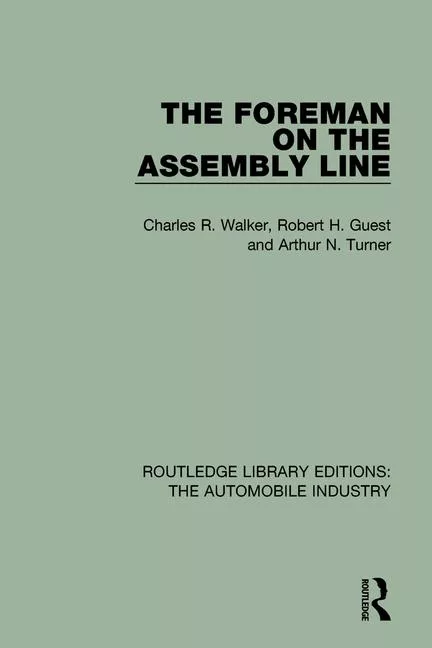
  • foreman.jpg

    The Foreman on the Assembly Line

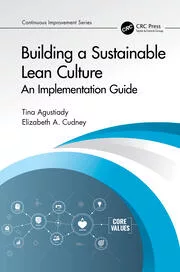
  • building a sus.jpg

    Building a Sustainable Lean Culture An Implementation Guide

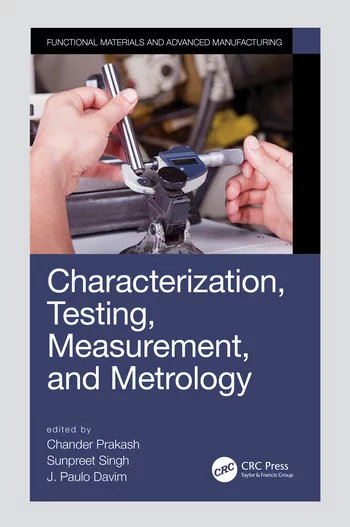
  • characterization.jpg

    Characterization, Testing, Measurement, and Metrology

See More Products

Events

View AllSubmit An Event
  • June 15, 2026

    2nd International Conference on Applied Science, Engineering and Technology

    These events serve as dynamic forums where cutting-edge research, technological advancements, and practical applications converge to address global challenges and foster innovation.
View AllSubmit An Event

Related Directories

  • Gerber Technology

    DistributorsCONNECTICUTGerber Technology24 Industrial Park Rd. W.Tolland,  CTwww.gerbertechnology.com
×

Never miss the latest news and trends driving the manufacturing industry

Stay in the know on the latest assembly trends.

JOIN TODAY!
  • RESOURCES
    • Advertise
    • Contact Us
    • Directories
    • Manufacturing Division
    • Store
    • Want More?
  • SIGN UP TODAY
    • Create Account
    • eMagazine
    • Newsletters
    • Customer Service
    • Manage Preferences
  • SERVICES
    • Marketing Services
    • Reprints
    • Market Research
    • List Rental
    • Survey/Respondent Access
  • STAY CONNECTED
    • LinkedIn
    • Facebook
    • Instagram
    • YouTube
    • X (Twitter)
  • PRIVACY
    • PRIVACY POLICY
    • TERMS & CONDITIONS
    • DO NOT SELL MY PERSONAL INFORMATION
    • PRIVACY REQUEST
    • ACCESSIBILITY

Copyright ©2026. All Rights Reserved BNP Media, Inc. and BNP Media II, LLC.

Design, CMS, Hosting & Web Development :: ePublishing