Assembly Magazine logo
search
Ask ASSEMBLY AI
cart
facebook twitter linkedin youtube
  • Sign In
  • Create Account
  • Sign Out
  • My Account
Assembly Magazine logo
  • TRENDS
    • Ask ASSEMBLY AI
    • Trends
    • News
    • New Products
  • INDUSTRIES
    • Aerospace
    • Appliance
    • DFMA Assembly
    • Medical Devices
    • Green Manufacturing
    • Lean Manufacturing
    • Machinery Assembly
    • Electronics Assembly
    • Automotive
  • TECHNOLOGIES
    • Adhesives & Dispensing
    • Assembly Presses
    • Automated Assembly Systems
    • Manufacturing Management
    • Manufacturing Software
    • Motion Control
    • Screwdriving & Riveting
    • Robotics
    • Test & Inspection
    • Plastics & Metal Welding
    • Wire Processing
    • Workstations
  • AUTONOMOUS & ELECTRIC MOBILITY
    • AEM Magazine Archives
    • Autonomy
    • Electrification
    • Mobility Services
    • Assembly & Testing
    • AV/EM News
  • MEDIA
    • Ask ASSEMBLY AI
    • Podcasts
    • Assembly News Now
    • Assembly TV
    • Webinars
    • eBooks
  • EVENTS
    • Calendar
    • The ASSEMBLY Show
  • MORE
    • Exclusives >
      • Plant of the Year
      • Capital Spending
    • Buyers Guide >
      • Supplier Insights
    • Classifieds
    • Featured Products
    • Newsletters
    • Store
    • White Papers
    • Columns
    • Sponsor Insights
  • INFOCENTER
    • Assembly & Test Solutions
  • EMAGAZINE
    • eMagazine
    • Archive Issues
    • Advertise
    • Contact Us
    • Sign Up
Columns

Assembly in Action: New Wire Architecture Cuts Time-to-Market

January 1, 2003

When Gilbarco Inc. (Greensboro, NC) set out to retool its lead product 5 years ago, its primary motivations were customer convenience and manufacturing efficiency. But it turned out that the new design created a platform for faster product development.

The Advantage Series gas pump from Gilbarco became one of the leading products in its market. However, it had been built with a traditional point-to-point wiring harness—a legacy from the days when gas pumps were no more electrically complex than toasters. Like other manufacturers, the company had added more options to its pumps over the years. The result was a snarl of wiring packed inside the pump, making assembly expensive and servicing difficult.

So Gilbarco abandoned the point-to-point harness in favor of a modular design. The new design is built around a central backbone of ribbon cables, with insulation displacement connectors (IDCs) arranged along the cable to deliver power and signal to the various components.

The design uses Tyco Electronics’ (Harrisburg, PA) mass termination assembly (MTA) family of connectors and headers, using both 0.1- and 0.156-centerline components. The MTA system allows termination of multiple wires to a connector in one process.

The most immediate benefit of this simpler architecture is easier and faster assembly of the gas pumps. Instead of tedious point-to-point connections, workers snap together connectors between the components and the ribbon cable. In addition, this system eliminates the risk of misassembly, because the connectors on the components are keyed to their counterparts on the ribbon cable.

The new design also improves serviceability. Technicians can more easily replace components in the field to fix problems or upgrade the unit. And the simplified harness makes it easier for technicians to troubleshoot problems.

Another benefit of the new architecture became apparent when Gilbarco began designing its next generation of products. Because the architecture was so flexible, designers didn’t have to start from scratch. They could develop new prototypes by relocating, changing or adding components. This could be achieved by changing the location of existing connectors or adding new ones along the cable.

This design flexibility offered a significant competitive advantage in their market, which is evolving quickly. More consumers are pumping their own gas, so they want a pump that is simple, reliable and intuitive. And they also want more functions. For example, consumers expect to pay at the pump with cash or a credit card, or use new, wireless units to charge their account automatically without using a credit card.

Looking for quick answers on assembly and manufacturing topics? Try Ask ASM, our new smart AI search tool. Ask ASM →

Rather than rely on assumptions and anecdotes, Gilbarco staff asked people what they needed and wanted when they pulled in for a tank of gas. They learned that:

  • Consumers had a high concern for personal safety at service stations and convenience stores. They wanted an unobstructed view of the area. Traditional gas pumps were bulky and hard to see around.
  • Consumers wanted a simpler, more intuitive interface.
  • Consumers wanted hoses that could reach the fuel door on either side of the car. They also wanted a hose that could reach around big vehicles, to eliminate time waiting for other cars to pull out of the way.
  • They wanted to save time by using credit cards and wireless payment systems at the pump.
Gilbarco’s first generation redesign addressed many of these issues. The Encore line took advantage of the simpler architecture to offer a less bulky design that didn’t obstruct the customer’s view. The increased data-carrying capacity of the harness allowed designers to create an easy-to-use intuitive customer interface.

Another pump design—the Eclipse—went even further. The designers stood the design on its head, moving most of the pump components from the base to an overhead tower that angled out over the vehicle. The fuel hose was attached to this overhanging tower, where it could more easily reach either side of the car without dragging on the ground. The user interface was placed at eye level.

In another twist, the designers added a large graphics screen as part of the user interface on both Encore and Eclipse, creating new possibilities for consumers and retailers. The display can carry advertising messages to bring consumers into the store. It can even be configured to offer Web-based interactive content, allowing customers to select and print discount coupons or specials.

Designers and engineers at Gilbarco credit the ribbon cable and IDC-connector system with helping them bring these new designs to market much more quickly than would have been possible with a traditional design. Tyco supported the company’s aggressive time-to-market goals by supplying the MTA and IDC components on a just-in-time schedule for manufacturing.

For more information on wire harnesses, call 800-522-6752 or visit http://www.tycoelectronics.com.

Share This Story

Looking for a reprint of this article?
From high-res PDFs to custom plaques, order your copy today!

Recommended Content

JOIN TODAY
To unlock your recommendations.

Already have an account? Sign In

  • Made in the U.S.A.

    Consumer Products Manufacturing: Made in the USA

    Supply chain lessons learned during the coronavirus...
    Automated Assembly Systems
    By: Austin Weber
  • Best Practices for Press-Fit Assembly

    Best Practices for Press-Fit Assembly

    In manufacturing, ironclad formulas for success are hard...
    Assembly Presses
    By: Jim Camillo
  • aem0523leader-tesla1.jpg

    Tesla Rethinks the Assembly Line

    Engineers at Tesla Inc. have developed a new process that...
    Automotive Assembly
    By: Austin Weber
Manage My Account
  • eMagazine Subscription
  • Assembly Newsletters
  • Online Registration
  • Subscription Customer Service
  • Manage My Preferences

More Videos

Sponsored Content

Sponsored Content is a special paid section where industry companies provide high quality, objective, non-commercial content around topics of interest to the ASSEMBLY audience. All Sponsored Content is supplied by the advertising company and any opinions expressed in this article are those of the author and not necessarily reflect the views of ASSEMBLY or its parent company, BNP Media. Interested in participating in our Sponsored Content section? Contact your local rep!

close
  • ultrasonic welding
    Sponsored bySonobond Ultrasonics

    Engineering Efficiency in High-Performance Assembly: How Ultrasonic Welding Enhances Throughput, Reliability and Quality

  • UV curing system
    Sponsored byDymax

    Why UV Intensity Alone Doesn’t Define Curing Performance

  • wooden pallets
    Sponsored byLEAN Manufacturing Products

    Eliminating Waste on the Shop Floor: Applying Lean Principles to Improve Manufacturing Efficiency

Popular Stories

ASSEMBLY News Now, episode-30: Volvo Redesigns EV Manufacturing

Volvo Redesigns EV Manufacturing

Boeing CEO Kelly Ortberg announces 1 billion investment

Boeing Plans $1 Billion Wichita Investment, Workforce Training Center

GE Appliances Worker on Line

GE Appliances Expands Factory AI With 800 Gemini Enterprise Agents

Watch the latest episode of ANN now!

Events

July 24, 2025

From Shop Floor to CFO: How Manufacturers Are Closing the Loop Between Operations and Finance

On Demand Learn how manufacturers are bridging the gap between the shop floor and ERP systems to gain real-time visibility, streamline operations, and kick-start digital transformation—without waiting years.

Sponsored by:

PicoStratusGreen
July 30, 2025

Buffer Analysis and Design Fundamentals for Manufacturing Excellence

On Demand In this presentation, Dr. Herman Tang shares practical insights from his industry experience and research on buffer management in manufacturing operations.

View All Submit An Event

Poll

Difficult Assembly Processes

Which assembly process gives you the most difficulty?
View Results Poll Archive

Products

Manufacturing Cost Policy Deployment (MCPD) Profitability Scenarios: Systematic and Systemic Improvement of Manufacturing Costs

Manufacturing Cost Policy Deployment (MCPD) Profitability Scenarios: Systematic and Systemic Improvement of Manufacturing Costs

See More Products
Register for webinar - Modernizing Automotive Assembly: Why Upgrading Legacy MES is a Business Imperative

Related Articles

  • Assembly in Action: Vision Boosts Throughput, Cuts Time to Market

    See More
  • Assembly in Action: CAD Configurators Reduce Time to Market

    See More
  • Assembly In Action: New Calibration Method Improves Accuracy of Machine Tools

    See More

Related Products

See More Products
  • digital.jpg

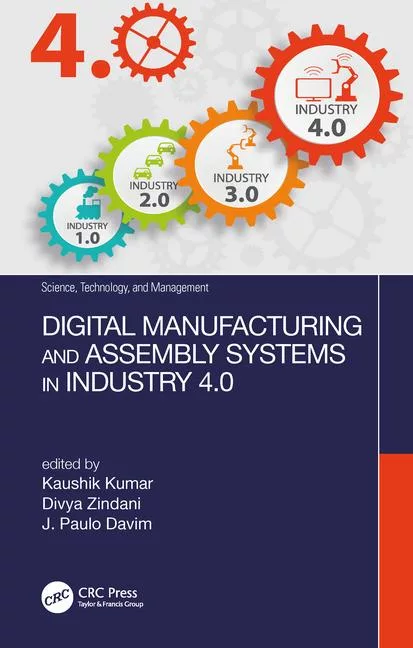
    Digital Manufacturing and Assembly Systems in Industry 4.0

  • Kaizen Assembly: Designing, Constructing, and Managing a Lean Assembly Line

  • history.jpg

    Faster, Better, Cheaper in the History of Manufacturing: From the Stone Age to Lean Manufacturing and Beyond

See More Products

Events

View AllSubmit An Event
  • October 30, 2025

    Assembly Simulation in Action: 3 Approaches Driving OEM Savings

    On Demand Participants will gain actionable insights and real-world examples that demonstrate how digital simulation supports assembly planning, geometry assurance, and quality control. Sponsored by:
View AllSubmit An Event

Related Directories

  • Action Feed Systems

×

Never miss the latest news and trends driving the manufacturing industry

Stay in the know on the latest assembly trends.

JOIN TODAY!
  • RESOURCES
    • Advertise
    • Contact Us
    • Directories
    • Manufacturing Division
    • Store
    • Want More?
  • SIGN UP TODAY
    • Create Account
    • eMagazine
    • Newsletters
    • Customer Service
    • Manage Preferences
  • SERVICES
    • Marketing Services
    • Reprints
    • Market Research
    • List Rental
    • Survey/Respondent Access
  • STAY CONNECTED
    • LinkedIn
    • Facebook
    • Instagram
    • YouTube
    • X (Twitter)
  • PRIVACY
    • PRIVACY POLICY
    • TERMS & CONDITIONS
    • DO NOT SELL MY PERSONAL INFORMATION
    • PRIVACY REQUEST
    • ACCESSIBILITY

Copyright ©2026. All Rights Reserved BNP Media, Inc. and BNP Media II, LLC.

Design, CMS, Hosting & Web Development :: ePublishing