Assembly Magazine logo
search
Ask ASSEMBLY AI
cart
facebook twitter linkedin youtube
  • Sign In
  • Create Account
  • Sign Out
  • My Account
Assembly Magazine logo
  • TRENDS
    • Ask ASSEMBLY AI
    • Trends
    • News
    • New Products
  • INDUSTRIES
    • Aerospace
    • Appliance
    • DFMA Assembly
    • Medical Devices
    • Green Manufacturing
    • Lean Manufacturing
    • Machinery Assembly
    • Electronics Assembly
    • Automotive
  • TECHNOLOGIES
    • Adhesives & Dispensing
    • Assembly Presses
    • Automated Assembly Systems
    • Manufacturing Management
    • Manufacturing Software
    • Motion Control
    • Screwdriving & Riveting
    • Robotics
    • Test & Inspection
    • Plastics & Metal Welding
    • Wire Processing
    • Workstations
  • AUTONOMOUS & ELECTRIC MOBILITY
    • AEM Magazine Archives
    • Autonomy
    • Electrification
    • Mobility Services
    • Assembly & Testing
    • AV/EM News
  • MEDIA
    • Ask ASSEMBLY AI
    • Podcasts
    • Assembly News Now
    • Assembly TV
    • Webinars
    • eBooks
  • EVENTS
    • Calendar
    • The ASSEMBLY Show
  • MORE
    • Exclusives >
      • Plant of the Year
      • Capital Spending
    • Buyers Guide >
      • Supplier Insights
    • Classifieds
    • Featured Products
    • Newsletters
    • Store
    • White Papers
    • Columns
    • Sponsor Insights
  • INFOCENTER
    • Assembly & Test Solutions
  • EMAGAZINE
    • eMagazine
    • Archive Issues
    • Advertise
    • Contact Us
    • Sign Up
Columns

Forward Thinking: MSSC Aims to Improve Worker Skills

By Adam Cort
December 1, 2001
The Manufacturing Skill Standards Council (MSSC) is a coalition of different organizations from all sectors within manufacturing that has developed a common set of skill standards, assessments and certifications for manufacturing.

A skill standard describes the knowledge and skills needed to perform particular job duties. Because skill standards reflect workplace changes, standards are essential in helping applicants and employees enjoy greater career opportunities and economic security. To learn more about skill standards and the goals of the MSSC, we spoke with John Rauschenberger, chairman of the MSSC Steering Committee and manager of personnel research and development at Ford Motor Co. (Dearborn, MI).

Q: Which work skills need improvement or enhancement?

Rauschenberger: Some sort of a skills gap exists, but I think the nature of the skills gap is apparent when you compare the standard against the industry. We’re going to have to meet worldwide competitive levels of productivity and quality. Therefore, we’re gearing the standards against a benchmark of excellence that will allow us to say to people in the workforce, if you want to compete on a world-class level, these are the skills needed to ensure your workforce will be able to pull that off. This effort is geared toward knowing the basic skills. However, if we want to successfully compete at a world level, we need to ask what are those higher order skills that we’re going to need in our workforce.

Q: How does our workforce compare with the workforces of other industrialized nations?

Rauschenberger: It is not a question of being uncompetitive in that arena. We’re trying to say we need to ensure our future capability. We need to have a plan that is going to keep us competitive, and hopefully more than competitive, with what we know is going on in the rest of the world. We’re not saying we’re broken; we’ve got to get fixed. We’re saying we’re strong, but we’ve got to be sure that we’ve got a plan in place to continue to make us stronger as we go forward into the future, because we know our competition will be there, too.

Q: Who would be responsible for continuing worker education?

Rauschenberger: Hopefully, it’s a systemic approach. We are suggesting that the organizations and companies associated with manufacturing have a role in making sure that the programs they teach provide that sense of agreed-upon need. Clearly, organizations, including unions, have a stake in this. But actually, employees, or those who want a career in manufacturing, will want to use these standards to guide whatever educational pursuits they may have. We’ll eventually produce a certificate or certification of capability that will allow you to go from employer to employer to show the kinds of capabilities that you have. We have to do this together to ensure that those who choose this kind of opportunity and career path have a way of understanding what they need to know.

Q: How often will the skill standards be updated?

Looking for quick answers on assembly and manufacturing topics? Try Ask ASM, our new smart AI search tool. Ask ASM →

Rauschenberger: We’ll have a review mechanism that will allow us to routinely look at the skill standards. We’ll then be able ask ourselves if we see significant changes that require a skill standard to be reviewed for its currency. As part of the charter, the MSSC will be responsible for this.

Q: Can these skill standards be tailored to specific companies, or are they meant to have a broad application?

Rauschenberger: The standards can be used by anyone. Clearly it would not be inappropriate for organizations to use them as a starting point to try and drill down into more particular aspects of those standards. Some organizations, maybe smaller organizations, will just benefit by making sure that these standards exist in the first place, so they can understand what capabilities people are bringing into their workforce. We’ve used the analogy of a tree to talk about the skills issue. A tree starts with a trunk of core skills. To be successful in the workplace, there are core skills that everyone should have. In manufacturing, we provide six major branches [manufacturing production process development; logistics and inventory control; production; maintenance, installation and repair; production quality assurance; and health, safety and environmental assurance] on our tree. For these major job families within manufacturing, these skills are needed to be successful in that arena. Now, beyond branches, there are leaves, and we can look at specific skill requirements that would be associated with certain jobs to help us identify those that need to be carried out.

Q: How will the skill standards be disseminated?

Rauschenberger: Well, they’re actually being disseminated now. They are available in print form to all that want them. They’re on the Web at www.msscusa.org. They’re in the public domain, because they are federally funded. So our work is going to continue to try to work on the notion of the certification and evaluation of these skills. And we will be providing, as we move forward, processes to do that as well.

Q: Describe, if you can, the ideal, future American worker?

Rauschenberger: To boil it down, the accelerated nature of change is going to require every worker to be able to understand and grasp what new requirements, skills and capabilities are required to be able to get their work done. They then need to go out and get them. They’ll need the mindset and capability of being continuous, lifelong learners. It’s not like in the past, where you could say I’m going to work in the factory and spend my time bolting wheels onto cars, and that’s all I’m going to do for the rest of my life. Those days are over. We need people who are going to realize that even though those particular tasks still need to be performed, there’s going to be other associated tasks with that work that are going to require new skills and new capabilities, and new ways of doing it that we haven’t done before. That’s the kind of worker we’re going to have to have, or we’re going to have serious quality and productivity problems.

Q: What is the time frame for seeing results?

Rauschenberger: We’ve seen results already in, quite frankly, that the skill standards even exist. It was no small effort to get the variety of players in the manufacturing arena to agree to what these standards ought to be. The next major effort will be the assessment and certification model. It will probably start with the production concentration.

Share This Story

Looking for a reprint of this article?
From high-res PDFs to custom plaques, order your copy today!

Senior Editor

Recommended Content

JOIN TODAY
To unlock your recommendations.

Already have an account? Sign In

  • Made in the U.S.A.

    Consumer Products Manufacturing: Made in the USA

    Supply chain lessons learned during the coronavirus...
    Automated Assembly Systems
    By: Austin Weber
  • Best Practices for Press-Fit Assembly

    Best Practices for Press-Fit Assembly

    In manufacturing, ironclad formulas for success are hard...
    Assembly Presses
    By: Jim Camillo
  • aem0523leader-tesla1.jpg

    Tesla Rethinks the Assembly Line

    Engineers at Tesla Inc. have developed a new process that...
    Assembly and Testing
    By: Austin Weber
Manage My Account
  • eMagazine Subscription
  • Assembly Newsletters
  • Online Registration
  • Subscription Customer Service
  • Manage My Preferences

More Videos

Sponsored Content

Sponsored Content is a special paid section where industry companies provide high quality, objective, non-commercial content around topics of interest to the ASSEMBLY audience. All Sponsored Content is supplied by the advertising company and any opinions expressed in this article are those of the author and not necessarily reflect the views of ASSEMBLY or its parent company, BNP Media. Interested in participating in our Sponsored Content section? Contact your local rep!

close
  • ultrasonic welding
    Sponsored bySonobond Ultrasonics

    Engineering Efficiency in High-Performance Assembly: How Ultrasonic Welding Enhances Throughput, Reliability and Quality

  • UV curing system
    Sponsored byDymax

    Why UV Intensity Alone Doesn’t Define Curing Performance

  • wooden pallets
    Sponsored byLEAN Manufacturing Products

    Eliminating Waste on the Shop Floor: Applying Lean Principles to Improve Manufacturing Efficiency

Popular Stories

ASSEMBLY News Now, episode-30: Volvo Redesigns EV Manufacturing

Volvo Redesigns EV Manufacturing

Boeing CEO Kelly Ortberg announces 1 billion investment

Boeing Plans $1 Billion Wichita Investment, Workforce Training Center

GE Appliances Worker on Line

GE Appliances Expands Factory AI With 800 Gemini Enterprise Agents

Watch the latest episode of ANN now!

Events

July 24, 2025

From Shop Floor to CFO: How Manufacturers Are Closing the Loop Between Operations and Finance

On Demand Learn how manufacturers are bridging the gap between the shop floor and ERP systems to gain real-time visibility, streamline operations, and kick-start digital transformation—without waiting years.

Sponsored by:

PicoStratusGreen
July 30, 2025

Buffer Analysis and Design Fundamentals for Manufacturing Excellence

On Demand In this presentation, Dr. Herman Tang shares practical insights from his industry experience and research on buffer management in manufacturing operations.

View All Submit An Event

Poll

Difficult Assembly Processes

Which assembly process gives you the most difficulty?
View Results Poll Archive

Products

Manufacturing Cost Policy Deployment (MCPD) Profitability Scenarios: Systematic and Systemic Improvement of Manufacturing Costs

Manufacturing Cost Policy Deployment (MCPD) Profitability Scenarios: Systematic and Systemic Improvement of Manufacturing Costs

See More Products
Register for webinar - Modernizing Automotive Assembly: Why Upgrading Legacy MES is a Business Imperative

Related Articles

  • Forward Thinking: Want to Grow? Think Lean, First

    See More
  • Forward Thinking: Build or Buy? When to Outsource

    See More
  • Forward Thinking: New Approach Combines Lean, Six Sigma

    See More

Related Products

See More Products
  • value stream.jpg

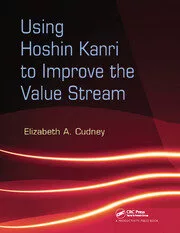
    Using Hoshin Kanri to Improve the Value Stream

  • pocket.jpg

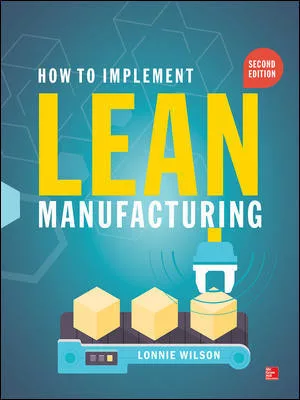
    How To Implement Lean Manufacturing, Second Edition

  • leaner

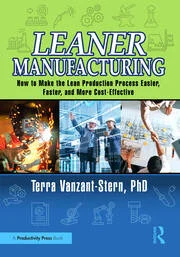
    Leaner Manufacturing: How to Make the Lean Production Process Easier, Faster, and More Cost-Effective

See More Products

Related Directories

  • ThinkIQ

×

Never miss the latest news and trends driving the manufacturing industry

Stay in the know on the latest assembly trends.

JOIN TODAY!
  • RESOURCES
    • Advertise
    • Contact Us
    • Directories
    • Manufacturing Division
    • Store
    • Want More?
  • SIGN UP TODAY
    • Create Account
    • eMagazine
    • Newsletters
    • Customer Service
    • Manage Preferences
  • SERVICES
    • Marketing Services
    • Reprints
    • Market Research
    • List Rental
    • Survey/Respondent Access
  • STAY CONNECTED
    • LinkedIn
    • Facebook
    • Instagram
    • YouTube
    • X (Twitter)
  • PRIVACY
    • PRIVACY POLICY
    • TERMS & CONDITIONS
    • DO NOT SELL MY PERSONAL INFORMATION
    • PRIVACY REQUEST
    • ACCESSIBILITY

Copyright ©2026. All Rights Reserved BNP Media, Inc. and BNP Media II, LLC.

Design, CMS, Hosting & Web Development :: ePublishing