Assembly Magazine logo
search
Ask ASSEMBLY AI
cart
facebook twitter linkedin youtube
  • Sign In
  • Create Account
  • Sign Out
  • My Account
Assembly Magazine logo
  • TRENDS
    • Ask ASSEMBLY AI
    • Trends
    • News
    • New Products
  • INDUSTRIES
    • Aerospace
    • Appliance
    • DFMA Assembly
    • Medical Devices
    • Green Manufacturing
    • Lean Manufacturing
    • Machinery Assembly
    • Electronics Assembly
    • Automotive
  • TECHNOLOGIES
    • Adhesives & Dispensing
    • Assembly Presses
    • Automated Assembly Systems
    • Manufacturing Management
    • Manufacturing Software
    • Motion Control
    • Screwdriving & Riveting
    • Robotics
    • Test & Inspection
    • Plastics & Metal Welding
    • Wire Processing
    • Workstations
  • AUTONOMOUS & ELECTRIC MOBILITY
    • AEM Magazine Archives
    • Autonomy
    • Electrification
    • Mobility Services
    • Assembly & Testing
    • AV/EM News
  • MEDIA
    • Ask ASSEMBLY AI
    • Podcasts
    • Assembly News Now
    • Assembly TV
    • Webinars
    • eBooks
  • EVENTS
    • Calendar
    • The ASSEMBLY Show
  • MORE
    • Exclusives >
      • Plant of the Year
      • Capital Spending
    • Buyers Guide >
      • Supplier Insights
    • Classifieds
    • Featured Products
    • Newsletters
    • Store
    • White Papers
    • Columns
    • Sponsor Insights
  • INFOCENTER
    • Assembly & Test Solutions
  • EMAGAZINE
    • eMagazine
    • Archive Issues
    • Advertise
    • Contact Us
    • Sign Up
Columns

Leading Lean: The Little Engine That Could

By Jamie Flinchbaugh
December 1, 2006
You can too, when you follow the Plan-Do-Check-Act path to improvement.

Everyone remembers the classic children's story, The Little Engine That Could, by Watty Piper. This engine was not new, powerful or full of features. But that little engine kept chuggin' along an inch at a time until it reached its goal.

Business must relearn this lesson. We have lost an appreciation for inch-by-inch progress toward success. The endless deluge of hype about overnight success, instant billionaires and cure-alls fails to mention the preceding years of struggle. This obsession manifests itself through what I call the Pareto-chart mentality. Many companies are only willing to consider a problem if it falls within the top five on their list of problems. But any company faces an infinite list of problems, and the combined effect of problems six through 1,000 far outweighs the top five.

An analog to the "little engine" can help you deal with all those problems. This is the effective use of an 80-year-old concept called Plan-Do-Check-Act, or PDCA. This is simple in concept, but difficult to master. Whether the problem is a massive corporate initiative or equipment leaking oil, start with a clear Plan. Then Do that plan. No magic so far, right? But most companies do very little of what comes next: Check.

Check means pausing to analyze the results. The Check step sets up the final step, Act or Adjust. We react to what we just learned during Check and either standardize what worked or return to the Plan and try again. But, instead of just moving on to another Plan, we now have specific knowledge about why and how to adjust the original plan to be more effective. The universal truth is that we spend the bulk of time and energy on planning and doing with very little time, energy and skill devoted to checking. But Check is where ALL real learning occurs. Without this step, all of our ideas, solutions and plans will remain theories until they are tested in reality.

The PDCA approach is nothing more than an application of the scientific method. In a lean organization, we want everyone to be an intensely curious scientist of his or her own processes. Why do so many companies and individuals struggle with this practice? The ability and desire to deeply understand our current state is the starting point for all effective learning. But, as a rule, this ability and desire are neither skill nor principle. Without a deep understanding of the process, we cannot be expected to develop an effective Plan for improvement.

The key to improvement is developing a hypothesis. This is not complex; it simply requires a clear statement of what result we expect from a specific action. For example, a hypothesis might be that we expect to reduce walk time by 20 seconds if we move a material rack. Unfortunately, a great chasm exists between having a plan for action and having a plan for learning. Without a hypothesis, however simple, of what we expect before we act we cannot learn.

Imagine two people that each perform a task 100 times. One performs correctly 75 times out of 100, but doesn't learn anything from either the successes or failures. The other only performs correctly 65 times out of 100, but learns from every success or failure. Who will do better in the long run? The answer is obvious, yet we treat our actions and improvements casually as if they only matter for today. We should instead treat our actions with the respect they deserve. Within the whole cycle of Plan-Do-Check-Act, they will provide much more than just immediate gratification. That's the analog to The Little Engine That Could. Climb aboard and see the progress you make.

Jamie Flinchbaugh is a founder and partner of the Lean Learning Center in Novi, MI, and the co-author of The Hitchhiker's Guide to Lean: Lessons from the Road. He shares his successful and varied experiences of lean transformation as a practitioner and leader through companies such as Chrysler and DTE Energy. He also has a wide range of practical experience in industrial operations, including production, maintenance, material control, product development and manufacturing engineering. Jamie is a graduate fellow of the Leaders for Manufacturing Program at the Massachusetts Institute of Technology, where his research thesis was on implementing lean manufacturing through factory design. He also holds a B.S. in Engineering from Lehigh University in Bethlehem, PA, and an M.S. in Engineering from the University of Michigan. To contact Jamie directly, go to the web site www.leanlearningcenter.com.

Looking for quick answers on assembly and manufacturing topics? Try Ask ASM, our new smart AI search tool. Ask ASM →

Share This Story

Looking for a reprint of this article?
From high-res PDFs to custom plaques, order your copy today!

Jamie Flinchbaugh is a founder and partner of the Lean Learning Center in Novi, MI, and the co-author of The Hitchhiker’s Guide to Lean: Lessons from the Road. He is a coach and consultant to executives and practitioners in industries ranging from hospitals to high technology. You can follow his writings on his blog at www.jamieflinchbaugh.com. To contact Jamie directly, go to the web site www.leanlearningcenter.com.

Recommended Content

JOIN TODAY
To unlock your recommendations.

Already have an account? Sign In

  • Made in the U.S.A.

    Consumer Products Manufacturing: Made in the USA

    Supply chain lessons learned during the coronavirus...
    Automated Assembly Systems
    By: Austin Weber
  • Best Practices for Press-Fit Assembly

    Best Practices for Press-Fit Assembly

    In manufacturing, ironclad formulas for success are hard...
    Assembly Presses
    By: Jim Camillo
  • aem0523leader-tesla1.jpg

    Tesla Rethinks the Assembly Line

    Engineers at Tesla Inc. have developed a new process that...
    Automotive Assembly
    By: Austin Weber
Manage My Account
  • eMagazine Subscription
  • Assembly Newsletters
  • Online Registration
  • Subscription Customer Service
  • Manage My Preferences

More Videos

Sponsored Content

Sponsored Content is a special paid section where industry companies provide high quality, objective, non-commercial content around topics of interest to the ASSEMBLY audience. All Sponsored Content is supplied by the advertising company and any opinions expressed in this article are those of the author and not necessarily reflect the views of ASSEMBLY or its parent company, BNP Media. Interested in participating in our Sponsored Content section? Contact your local rep!

close
  • ultrasonic welding
    Sponsored bySonobond Ultrasonics

    Engineering Efficiency in High-Performance Assembly: How Ultrasonic Welding Enhances Throughput, Reliability and Quality

  • UV curing system
    Sponsored byDymax

    Why UV Intensity Alone Doesn’t Define Curing Performance

  • wooden pallets
    Sponsored byLEAN Manufacturing Products

    Eliminating Waste on the Shop Floor: Applying Lean Principles to Improve Manufacturing Efficiency

Popular Stories

ASSEMBLY News Now, episode-30: Volvo Redesigns EV Manufacturing

Volvo Redesigns EV Manufacturing

Boeing CEO Kelly Ortberg announces 1 billion investment

Boeing Plans $1 Billion Wichita Investment, Workforce Training Center

GE Appliances Worker on Line

GE Appliances Expands Factory AI With 800 Gemini Enterprise Agents

Watch the latest episode of ANN now!

Events

July 24, 2025

From Shop Floor to CFO: How Manufacturers Are Closing the Loop Between Operations and Finance

On Demand Learn how manufacturers are bridging the gap between the shop floor and ERP systems to gain real-time visibility, streamline operations, and kick-start digital transformation—without waiting years.

Sponsored by:

PicoStratusGreen
July 30, 2025

Buffer Analysis and Design Fundamentals for Manufacturing Excellence

On Demand In this presentation, Dr. Herman Tang shares practical insights from his industry experience and research on buffer management in manufacturing operations.

View All Submit An Event

Poll

Difficult Assembly Processes

Which assembly process gives you the most difficulty?
View Results Poll Archive

Products

Manufacturing Cost Policy Deployment (MCPD) Profitability Scenarios: Systematic and Systemic Improvement of Manufacturing Costs

Manufacturing Cost Policy Deployment (MCPD) Profitability Scenarios: Systematic and Systemic Improvement of Manufacturing Costs

See More Products
Register for webinar - Modernizing Automotive Assembly: Why Upgrading Legacy MES is a Business Imperative

Related Articles

  • Leading Lean: Ban the Hockey Stick!

    See More
  • Leading Lean: Engaging the Board of Directors

    See More
  • Leading Lean: Grab the Thistle Boldly

    See More

Related Products

See More Products
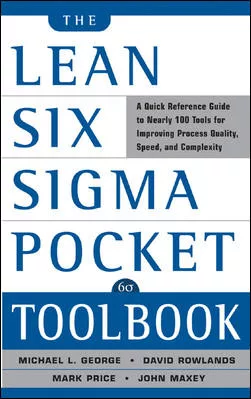
  • pocket.jpg

    The Lean Six Sigma Pocket Toolbook

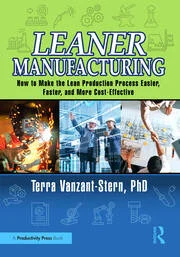
  • leaner

    Leaner Manufacturing: How to Make the Lean Production Process Easier, Faster, and More Cost-Effective

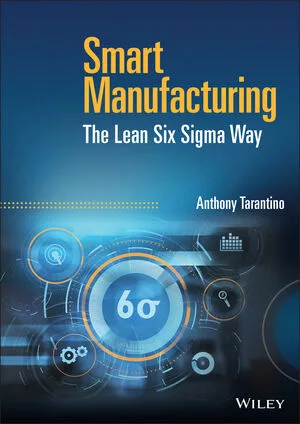
  • smart.jpg

    Smart Manufacturing: The Lean Six Sigma Way

See More Products

Related Directories

  • Lean Manufacturing Products

    Lean Manufacturing Products LLC is a leading provider of innovative solutions designed to enhance operational efficiency and productivity in various industries. Specializing in lean manufacturing principles, we offer a comprehensive range of high-quality products, including racking systems, safety equipment, and modular storage solutions. Our mission is to help companies streamline their processes, reduce waste, and create more effective work environments. With a commitment to exceptional customer service and cutting-edge design, Lean Manufacturing Products LLC partners with businesses to implement best practices that drive success and foster continuous improvement.
×

Never miss the latest news and trends driving the manufacturing industry

Stay in the know on the latest assembly trends.

JOIN TODAY!
  • RESOURCES
    • Advertise
    • Contact Us
    • Directories
    • Manufacturing Division
    • Store
    • Want More?
  • SIGN UP TODAY
    • Create Account
    • eMagazine
    • Newsletters
    • Customer Service
    • Manage Preferences
  • SERVICES
    • Marketing Services
    • Reprints
    • Market Research
    • List Rental
    • Survey/Respondent Access
  • STAY CONNECTED
    • LinkedIn
    • Facebook
    • Instagram
    • YouTube
    • X (Twitter)
  • PRIVACY
    • PRIVACY POLICY
    • TERMS & CONDITIONS
    • DO NOT SELL MY PERSONAL INFORMATION
    • PRIVACY REQUEST
    • ACCESSIBILITY

Copyright ©2026. All Rights Reserved BNP Media, Inc. and BNP Media II, LLC.

Design, CMS, Hosting & Web Development :: ePublishing