ASSEMBLY Planbook: Lean Automation Is Not an Impossible Dream

Semi- and fully automated assembly systems come in many formats, ranging from rotary indexing systems to high-speed continuous motion systems to six-axis robots. But, no matter the shape, size or speed, engineers can use lean manufacturing principles to continuously improve the performance and effectiveness of production equipment.
Many people believe that lean manufacturing principles only apply to manual assembly applications. But, lean initiatives work equally well with either automated assembly systems or manual assembly processes. Of course, it’s important to know what level of automation is necessary.
“Any assembly system must be evaluated through the lens of the customer and through the lens of value,” says Jamie Flinchbaugh, a partner at the Lean Learning Center (Novi, MI). “Automation is fine, if it helps reduce waste and maximize value. At the same time, more automation than is necessary is a waste. Too often, automation is bought that is so fast that it runs for 1 hour a day and sits [idle] for 23 hours. That’s not exactly aligned to customer needs.”
“Lean principles are based on the elimination of waste,” adds Sammy Obara, president of Honsha Associates (San Diego). “Automation may hide the waste; automating waste can be as damaging as having [production] done manually.”
No matter where lean thinking is applied, continuous improvement, customer focus, one-piece flow, pull, value and waste elimination all play key roles. Whether it’s used for manual or automated assembly, lean thinking focuses on flow, adding value, and the efficiency of the overall system. Lean principles allow manufacturers to significantly boost throughput, reduce time to market and quickly increase capacity.
Capital equipment expenditure in a lean environment should be justified based on two factors: the amount of manufacturing waste eliminated and the reduction in production lead times. Productivity improvements and labor cost reduction are internal measures that are less important.
“Most elements of lean apply to automated assembly just as much as manual assembly,” says Quarterman Lee, president of Strategos Inc. (Kansas City, MO). “There are some differences, but they are primarily on emphasis rather than principle.”
According to Lee, it’s not always a good idea to use large, complex, high-volume equipment that produces a variety of assemblies and requires many long changeovers. Instead, he suggests breaking the process down into more narrowly designed product families.
“For assembly, product families are related by component commonality,” notes Lee. “That is, the products in a particular family might have 70 percent to 100 percent common components. This reduces changeover and often simplifies the design of feeders and fixtures. It may eliminate the need for some stations that only operate for certain variants of the product.
“This may result in several smaller assembly machines instead of a single, large, complex machine,” explains Lee. “Each machine becomes the focal point for a workcell that might include secondary operations, such as preparation, subassembly, packaging or testing.” Lee suggests designing cells around automated equipment with excess capacity for most secondary operations.

Lean Challenges
To continuously improve the performance of assembly systems, engineers must confront several challenges. Lee believes the biggest challenge is integrating machine design with overall workcell design.
“What often happens is that manufacturing engineers issue a specification based on preliminary ideas of what the machine should do, with little thought to such integration,” he explains. “Or, machine builders propose a design with little knowledge of the larger workflow and little experience with lean principles.
“Ideally, the machine designers should know a lot about lean principles and the overall process,” adds Lee. “The two groups should work together as the design moves from a preliminary specification to detail design.”
Without this constant interaction, machine builders and systems integrators may spend extra time, money and effort to incorporate some minor operation that could easily be done manually. As a result, Lee says that operators often end up spending hours every day watching an overly expensive machine do work while they are idle.
Two important lean tools, kaizen and poka yoke, can be used to improve assembly systems. “Kaizen events in various forms apply directly to assembly equipment,” explains Lee. “A major kaizen event can design, rearrange and improve an assembly workcell. Smaller, more focused events can solve particular problems, such as misfeeds.”
However, continuous, incremental improvement may take longer to implement than with manual assembly. Traditionally, a kaizen event lasts 1 week. But, in an automated setting, it’s harder to make constant, everyday improvements. Anything that involves new tooling, reprogramming or moving equipment may have to go on a 30-day action plan.
In a manual assembly process, actions are often implemented on the spot. Moving a rack of parts 2 feet to the left or 3 feet to the right isn’t too difficult. However, reprogramming a robot and retooling a bowl feeder or parts fixture is much harder and takes more time.
“Kaizen involves generating ideas for improvement and testing them in a structured, but quick fashion in order to obtain a benefit and improve the thinking capability of the person engaged in the improvement task,” notes Art Smalley, president of the Art of Lean Inc. (Huntington Beach, CA). He says the simplest way to think about kaizen is by addressing these four questions:
- What steps or wastes in the process or operation can be eliminated and how?
- What steps in the process or operation can be combined or done sequentially?
- What steps in the process or operation can be rearranged for better effect?
- What steps in the process or operation can be simplified?
“Practicing [this approach] along with the practical method of Plan-Do-Check-Act is what the process entails,” says Smalley, a former Toyota engineer.
When doing kaizen, people should have access to the necessary resources to make improvements and changes to the process, including the equipment. “This may range from buying extremely flexible equipment and tools that just about anyone can modify to having ‘moonshine shops’ that specialize in quick fabrication of just about anything,” explains Flinchbaugh. “Consider the ability to improve when making your initial choices. The best system today will one day be the worst if it is too difficult to improve.”
Poka yoke, or error proofing, can also improve the performance and effectiveness of assembly systems, especially during changeover and setup of equipment. “Error proofing is most effective when you consider changes to both the product and the process,” Flinchbaugh points out.
“And there are many levels of error proofing, ranging from simple warnings that an error was just made, to product configurations that make the error truly impossible to commit,” adds Flinchbaugh. “Consider all levels, as the risk and reward may vary.”
According to Lee, poka yoke has more applications for assembly than for most other production processes. “It may include many ingenious little devices that prevent defects, such as fixtures [or sensors] that do not allow parts to be inserted in the wrong orientation,” he explains. “Most modern assembly machines incorporate many such devices to prevent wrong assembly or detect it when it occurs.”
Poka yoke is much easier to accomplish today with digital controls and vision systems than it was years ago, when everything used relays and microswitches. “In the 1960s, I worked for a major automobile manufacturer,” Lee recalls. “We had many automated machines that required constant operator monitoring. Operators did not do anything until something went wrong, but they had to be there. This kind of situation was the original inspiration for poka yoke and jidoka at Toyota.”
Jidoka refers to building 100 percent quality into the process so that a defect cannot be made. “Poka yoke is really a subset of this bigger equation in the Toyota Production System (TPS),” says Smalley. This includes using gauging to measure and monitor quality, and error-proofing devices to help prevent mistakes.

Mistakes to Avoid
Manufacturing engineers typically make several mistakes when applying lean principles to assembly systems. Obara sees several common problems when visiting plants that are trying to automate.“Engineers tend to accept the latest technology as the latest solution, whereas, actually, automation should be considered the last solution,” he explains. “When you cannot find any other way to improve your system, then automation may be the answer. Automation is less flexible, subject to unexpected breakdowns, [and requires expensive] spare parts and complex maintenance. It demands specific skills to fix, it frequently constrains takt time, and it makes line balancing restrictive.
“There must be a reason why assembly is one of the least automated processes at Toyota,” argues Obara, who spent 3 years studying lean manufacturing principles in Toyota City, Japan, and another 10 years applying it at Toyota Motor Corp. (Nagoya, Japan) plants in Brazil, Venezuela and the United States. “It may be perhaps that they did not need to tap into this last resort. The process is not dangerous, such as metal stamping; the process is not hazardous, such as the welding shop; the process does not need to be free of human contamination, such as the paint room; and the process is not an overburden, such as an axle machining shop.”
In addition, Obara claims that automation is constantly being used in the wrong operations. “I recently visited a manufacturer with a workcell that it thought was maxed out on capacity,” he recalls. “A team was in charge of designing and quoting an automated system for this cell. After a day of measurement and analysis, we found hidden capacity which could improve throughput by more than 80 percent. They dropped the project.
“This is a common finding. However it is equally typical that we find companies thinking they have a process bottleneck when, in reality, if current capacity gets measured against takt, their capacity is so great that it may cause overproduction . . . the worst type of waste.”
Some lean experts claim that manufacturers in Europe and the United States are falling victim to the “implement the tool” mode of TPS. “The books and literature do a good job of explaining standardized work, poka yoke, value-stream mapping, kanban and visual control, and some of the how-to steps,” contends Smalley. “Those are merely techniques, however.
“The real question is back at the starting point where Sakichi and Kiichiro Toyoda, the founders of Toyota, started,” adds Smalley. “How do I build a machine that is more productive, cheaper, flexible and safer to operate? If you can do that, then the answer de facto is a more lean process or machine.”
Flinchbaugh urges manufacturing engineers to remember that every production process has five basic elements: queue, setup, run, wait and move. “The biggest mistake by far is to focus solely on the run step, meaning the one activity where you actually transform the product,” he warns. “We tend to treat as afterthoughts the queue, setup, wait and move aspects of the overall process. This is not just to be left to material management. How we design our overall assembly systems is the dominant impact on the whole process.”
Click "Web Extra" to find a glossary of lean manufacturing terms. A
5 Key Concepts for Assembly Systems
Sammy Obara, president of Honsha Associates (San Diego), says highly automated processes can benefit greatly from these five lean manufacturing concepts:
- Andon-a highly automated machine will have a high waiting time when someone needs to watch that machine. Waste of waiting can be addressed by using andon systems, which are visual control devices located in a production area, such as lighted overhead displays.
- Poka-yoke-an automated, very fast process may produce many mistakes very fast. Poka-yoka or error-proofing addresses the waste of correction.
- Plan-Do-Check-Act (PDCA)-many of the frequent reasons a machine stops come from common root causes. PDCA is simple in concept, but difficult to master.
- Takt-costly, automatic systems tend to run full-speed to pay off the investment quickly. Producing faster, earlier, means consuming resources faster, earlier. Takt helps eliminate the waste of overproduction.
- Total productive maintenance (TPM)-the more automated a process is, the more it will suffer from breakdowns and unexpected stops. TPM is critical for an automated process; it is the tool used to improve overall equipment effectiveness.
Old School Automation
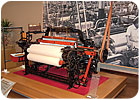
The Toyota Production System (TPS), the foundation of every lean manufacturing initiative, is actually rooted in automation. Sakichi and Kiichiro Toyoda, the founders of Toyota Motor Corp. (Nagoya, Japan), made the initial family fortune by manufacturing automatic spinning and weaving machines. Experience with this early company, Toyoda Auto Loom, is where many of the basic principles behind TPS came from.“Perhaps it is best to look there for inspiration and guiding principles in [the case of modern production equipment],” says Art Smalley, president of the Art of Lean Inc. (Huntington Beach, CA). “The Toyoda men set out to make an automated loom and a factory to build them in. They continuously worked from 1895 to 1922, improving their loom designs year by year. The original loom was a manual wooden model and a copy of a foreign machine. It was essentially a one-woman, one-machine operation.”
After a lot of trial and error, Sakichi Toyoda invented the Type G automatic loom, the world’s first device with a nonstop shuttle-change motion. Full-scale production of the loom started in 1928 and it eventually helped transform the textile industry.
By 1937, a year after the company built its first passenger car, Toyoda was mass-producing 1,000 units per month on a conveyorized assembly line. To address quantity and quality issues, shelves located beside the assembly line were stocked with parts and subassemblies just as they were needed. As a result, a 14-step assembly process was reduced to only seven steps.
“Anywhere from 24 to 36 of these machines could be operated by one person at a time, which is a tremendous leap in terms of productivity,” says Smalley. The looms had several unique features and there were more than 22 technical patents.
Quite a few of these ingenious solutions were based on the concept of jidoka. For instance, they had a built-in auto stop function that shut down the machine if a single thread broke. “This stopped defects from getting downstream and material from being wasted,” explains Smalley.
In addition, the horizontal thread shuttle could be replaced without stopping the machine. “In other words, it had an aspect of zero changeover time built-in,” Smalley points out. “The overall purchase cost was also low enough to the end customer that they [stopped using manual] wooden looms and upgraded to automated ones.”
Try to Avoid These Mistakes
Quarterman Lee, president of Strategos Inc. (Kansas City, MO), says manufacturing engineers frequently make several mistakes when implementing lean assembly systems, including:
- Over-automation. “This refers to the automation of processes or process operations that could be done just as well manually,” says Lee. “For example, I once saw a robotic insertion machine for printed circuit boards that was actually slower than manual assembly. In addition, the pick location of components was so critical that it required more hand labor to prepare and place the components on fixtures than it would have taken to insert them into the circuit boards.” The automated operation required more labor hours than a simple manual assembly process.
- Part preparation. Engineers should consider the entire process, including any preparation, inspection, sorting, preplacement or orientation of parts. “This work may be a natural part of a manual assembly process that requires no additional assembly time,” notes Lee. “However, when automated, the manual work can be greater than the actual assembly time saved. I once observed an automated assembly machine for lighting fixtures. Parts for assembly had to be carefully placed on special fixtures. This placement consumed more time and effort than an actual manual assembly process.”
- Automating a poor process or product. With manual assembly, operators often compensate for poorly designed products or processes. For example, parts may be out of tolerance but operators can still make them fit with special attention. Or certain parts, even within tolerance, may need a selective fit or special attention. “Engineers should not assume that drawing dimensions will always be held unless this has been actually true in practice,” Lee points out. “They should also observe and participate in actual manual production to ensure that operators are not unconsciously performing some task that may turn out to be vital.”
- Changeover. “When equipment must produce different products or variants, changeover is often an afterthought,” claims Lee. “With lean manufacturing, fast changeover should be designed into the equipment.” According to Lee, saving time on changeover may even be more important than saving time in the production process.
- Operator integration. This is an area where integration with the overall workcell design and the overall assembly process is vital. “Operator stations should be positioned not only for easy access for the assembly operation performed there, but also easy access to some or all of the other operator positions,” explains Lee. These other positions might include loading, replenishing, monitoring or unjamming production equipment-anything that operators must do whether constant or intermittent. This allows operators to assist each other, keeps them aware of minute-by-minute conditions, and allows them to balance their work. Whenever possible, Lee says assembly lines should be configured in a U-shape. This allows operators to easily move between positions to balance their work. It also promotes better communication and teamwork.
Looking for quick answers on assembly and manufacturing topics? Try Ask ASM, our new smart AI search tool. Ask ASM
Looking for a reprint of this article?
From high-res PDFs to custom plaques, order your copy today!