Assembly Magazine logo
search
Ask ASSEMBLY AI
cart
facebook twitter linkedin youtube
  • Sign In
  • Create Account
  • Sign Out
  • My Account
Assembly Magazine logo
  • TRENDS
    • Ask ASSEMBLY AI
    • Trends
    • News
    • New Products
  • INDUSTRIES
    • Aerospace
    • Appliance
    • DFMA Assembly
    • Medical Devices
    • Green Manufacturing
    • Lean Manufacturing
    • Machinery Assembly
    • Electronics Assembly
    • Automotive
  • TECHNOLOGIES
    • Adhesives & Dispensing
    • Assembly Presses
    • Automated Assembly Systems
    • Manufacturing Management
    • Manufacturing Software
    • Motion Control
    • Screwdriving & Riveting
    • Robotics
    • Test & Inspection
    • Plastics & Metal Welding
    • Wire Processing
    • Workstations
  • AUTONOMOUS & ELECTRIC MOBILITY
    • AEM Magazine Archives
    • Autonomy
    • Electrification
    • Mobility Services
    • Assembly & Testing
    • AV/EM News
  • MEDIA
    • Ask ASSEMBLY AI
    • Podcasts
    • Assembly News Now
    • Assembly TV
    • Webinars
    • eBooks
  • EVENTS
    • Calendar
    • The ASSEMBLY Show
  • MORE
    • Exclusives >
      • Plant of the Year
      • Capital Spending
    • Buyers Guide >
      • Supplier Insights
    • Classifieds
    • Featured Products
    • Newsletters
    • Store
    • White Papers
    • Columns
    • Sponsor Insights
  • INFOCENTER
    • Assembly & Test Solutions
  • EMAGAZINE
    • eMagazine
    • Archive Issues
    • Advertise
    • Contact Us
    • Sign Up
Columns

Quality in Assembly: Want Fast Improvement? Try a Kaizen Blitz

By John Sprovieri
September 30, 2008

For a kaizen blitz to succeed, the team must have absolute authority to change the process.


A kaizen blitz team should consist primarily of the process stakeholders: those performing the process, those who receive output from the process, and those who provide input into the process. Photo courtesy Dell Inc.

On the football field, when the offense faces third and long, the defense has a golden opportunity to blitz. On the assembly line, when there’s a nagging problem with quality or productivity, it’s also a good time for a blitz-a kaizen blitz, that is.

Kaizen, of course, is the Japanese concept of continuous, incremental improvement that is a tenet of lean manufacturing. In theory at least, the kaizen process never ends and covers every activity and employee in the company. In contrast, a kaizen blitz is an intense and rapid improvement process in which a team of six to 10 people dedicates itself to a narrowly defined improvement project over 2 to 5 days.

Kaizen blitzes get results by creating a sense of urgency. Just as a football blitz forces a quarterback to make a snap decision, a kaizen blitz forces engineers, managers and assemblers to think and act quickly. They drop their resistance to new ways of thinking, and they don’t have time to think of reasons for delay.

The technique can produce dramatic results. For example, Automatic Screw Machine Products Co. (Decatur, AL) recently ran a kaizen blitz focused on the processing of slotted aerospace fasteners. The fasteners required six operations, and order size averaged 5,000 units. The company had been moving the fasteners to each operation in lots of 5,000. However, that strategy created excessive work-in-process (WIP) inventory, and lead time for the product stretched to 24 weeks.

With help from the Manufacturing Extension Program at the University of Alabama in Hunstville, the company ran a 3-day kaizen blitz. A cross-functional team spent the first day timing and analyzing the operations, balancing the line and developing a cellular layout. The next day, the team rearranged equipment and built the cell. On the third day, the team debugged the cell. In the end, fasteners that once took 24 weeks to process now flow through the cell in minutes, and just two people are needed to operate all six machines. Productivity improved by 25 percent, throughput improved by 90 percent, and WIP decreased by 90 percent.

A kaizen blitz team should consist primarily of the process stakeholders: those performing the process, those who receive output from the process, those who provide input into the process, and even external customers and suppliers to the process. The rest of the team can be drawn from support departments, such as maintenance; subject matter experts, such as regulatory affairs personnel; and “outside” areas-objective parties who have no stake in the outcome of the blitz. The latter are particularly important because they often ask questions or see opportunities that aren’t obvious to people who live with the process every day. The team should be led by someone experienced with kaizen and lean manufacturing. To promote uninhibited communication, representation from management should be minimal.

Once a target for improvement has been identified, the team leader should draw up a charter that clearly defines the process to be improved; why improvement is needed; the results to be achieved; the boundaries within which the team will operate; the people and places that will be involved; the schedule; and potential obstacles.

While they participate in the blitz, team members should be relieved of other duties and attend solely to the task at hand. Messages and e-mails can be checked during breaks. Team members should keep an open mind, maintain a positive attitude, respect each other, question everything, and avoid pointing fingers.

For a kaizen blitz to succeed, the team must have absolute authority to change the process within the scope of its mandate. In other words, as long as the changes do not adversely affect customers, increase head count or exceed the company’s operating budget, management must go along with the team’s decisions. Any support needed to make the changes must be provided by the appropriate departments and treated with the highest priority.

Share This Story

Looking for a reprint of this article?
From high-res PDFs to custom plaques, order your copy today!

John has been with ASSEMBLY magazine since February 1997. John was formerly with a national medical news magazine, and has written for Pathology Today and the Green Bay Press-Gazette. John holds a B.A. in journalism from Northwestern University, Medill School of Journalism.

Recommended Content

JOIN TODAY
To unlock your recommendations.

Already have an account? Sign In

  • Made in the U.S.A.

    Consumer Products Manufacturing: Made in the USA

    Supply chain lessons learned during the coronavirus...
    Automated Assembly Systems
    By: Austin Weber
  • Best Practices for Press-Fit Assembly

    Best Practices for Press-Fit Assembly

    In manufacturing, ironclad formulas for success are hard...
    Assembly Presses
    By: Jim Camillo
  • aem0523leader-tesla1.jpg

    Tesla Rethinks the Assembly Line

    Engineers at Tesla Inc. have developed a new process that...
    Automotive Assembly
    By: Austin Weber
Manage My Account
  • eMagazine Subscription
  • Assembly Newsletters
  • Online Registration
  • Subscription Customer Service
  • Manage My Preferences

More Videos

Sponsored Content

Sponsored Content is a special paid section where industry companies provide high quality, objective, non-commercial content around topics of interest to the ASSEMBLY audience. All Sponsored Content is supplied by the advertising company and any opinions expressed in this article are those of the author and not necessarily reflect the views of ASSEMBLY or its parent company, BNP Media. Interested in participating in our Sponsored Content section? Contact your local rep!

close
  • ultrasonic welding
    Sponsored bySonobond Ultrasonics

    Engineering Efficiency in High-Performance Assembly: How Ultrasonic Welding Enhances Throughput, Reliability and Quality

  • UV curing system
    Sponsored byDymax

    Why UV Intensity Alone Doesn’t Define Curing Performance

  • wooden pallets
    Sponsored byLEAN Manufacturing Products

    Eliminating Waste on the Shop Floor: Applying Lean Principles to Improve Manufacturing Efficiency

Popular Stories

ASSEMBLY News Now, episode-30: Volvo Redesigns EV Manufacturing

Volvo Redesigns EV Manufacturing

Boeing CEO Kelly Ortberg announces 1 billion investment

Boeing Plans $1 Billion Wichita Investment, Workforce Training Center

GE Appliances Worker on Line

GE Appliances Expands Factory AI With 800 Gemini Enterprise Agents

Watch the latest episode of ANN now!

Events

July 24, 2025

From Shop Floor to CFO: How Manufacturers Are Closing the Loop Between Operations and Finance

On Demand Learn how manufacturers are bridging the gap between the shop floor and ERP systems to gain real-time visibility, streamline operations, and kick-start digital transformation—without waiting years.

Sponsored by:

PicoStratusGreen
July 30, 2025

Buffer Analysis and Design Fundamentals for Manufacturing Excellence

On Demand In this presentation, Dr. Herman Tang shares practical insights from his industry experience and research on buffer management in manufacturing operations.

View All Submit An Event

Poll

Difficult Assembly Processes

Which assembly process gives you the most difficulty?
View Results Poll Archive

Products

Manufacturing Cost Policy Deployment (MCPD) Profitability Scenarios: Systematic and Systemic Improvement of Manufacturing Costs

Manufacturing Cost Policy Deployment (MCPD) Profitability Scenarios: Systematic and Systemic Improvement of Manufacturing Costs

See More Products
Register for webinar - Modernizing Automotive Assembly: Why Upgrading Legacy MES is a Business Imperative

Related Articles

  • Quality in Assembly: High-Speed Video Captures What's Too Fast to See

    See More
  • Quality in Assembly: Even Humble Screws Get a Battery of Quality Checks

    See More
  • Quality in Assembly: Software Helps Assemblers Manage Quality Tasks

    See More

Related Products

See More Products
  • Kaizen Assembly: Designing, Constructing, and Managing a Lean Assembly Line

  • OIP.jpg

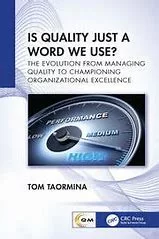
    Is Quality Just a Word We Use?

  • manu.jpg

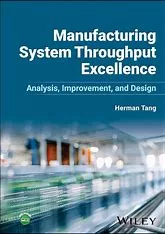
    Manufacturing System Throughput Excellence: Analysis, Improvement, and Design

See More Products

Related Directories

  • Assembly & Automation Technology Inc.

    Assembly & Automation Technology delivers intelligent automation systems integrating machine learning, computer vision and smart robotics for industrial, medical and biotechnical applications. Our AI-enhanced assembly machines, robotic systems and vision-guided quality control optimize productivity while reducing human error. We engineer custom automated solutions that learn, adapt and continuously improve manufacturing processes.
  • Fast-Rite International

×

Never miss the latest news and trends driving the manufacturing industry

Stay in the know on the latest assembly trends.

JOIN TODAY!
  • RESOURCES
    • Advertise
    • Contact Us
    • Directories
    • Manufacturing Division
    • Store
    • Want More?
  • SIGN UP TODAY
    • Create Account
    • eMagazine
    • Newsletters
    • Customer Service
    • Manage Preferences
  • SERVICES
    • Marketing Services
    • Reprints
    • Market Research
    • List Rental
    • Survey/Respondent Access
  • STAY CONNECTED
    • LinkedIn
    • Facebook
    • Instagram
    • YouTube
    • X (Twitter)
  • PRIVACY
    • PRIVACY POLICY
    • TERMS & CONDITIONS
    • DO NOT SELL MY PERSONAL INFORMATION
    • PRIVACY REQUEST
    • ACCESSIBILITY

Copyright ©2026. All Rights Reserved BNP Media, Inc. and BNP Media II, LLC.

Design, CMS, Hosting & Web Development :: ePublishing