Assembly Magazine logo
search
Ask ASSEMBLY AI
cart
facebook twitter linkedin youtube
  • Sign In
  • Create Account
  • Sign Out
  • My Account
Assembly Magazine logo
  • TRENDS
    • Ask ASSEMBLY AI
    • Trends
    • News
    • New Products
  • INDUSTRIES
    • Aerospace
    • Appliance
    • DFMA Assembly
    • Medical Devices
    • Green Manufacturing
    • Lean Manufacturing
    • Machinery Assembly
    • Electronics Assembly
    • Automotive
  • TECHNOLOGIES
    • Adhesives & Dispensing
    • Assembly Presses
    • Automated Assembly Systems
    • Manufacturing Management
    • Manufacturing Software
    • Motion Control
    • Screwdriving & Riveting
    • Robotics
    • Test & Inspection
    • Plastics & Metal Welding
    • Wire Processing
    • Workstations
  • AUTONOMOUS & ELECTRIC MOBILITY
    • AEM Magazine Archives
    • Autonomy
    • Electrification
    • Mobility Services
    • Assembly & Testing
    • AV/EM News
  • MEDIA
    • Ask ASSEMBLY AI
    • Podcasts
    • Assembly News Now
    • Assembly TV
    • Webinars
    • eBooks
  • EVENTS
    • Calendar
    • The ASSEMBLY Show
  • MORE
    • Exclusives >
      • Plant of the Year
      • Capital Spending
    • Buyers Guide >
      • Supplier Insights
    • Classifieds
    • Featured Products
    • Newsletters
    • Store
    • White Papers
    • Columns
    • Sponsor Insights
  • INFOCENTER
    • Assembly & Test Solutions
  • EMAGAZINE
    • eMagazine
    • Archive Issues
    • Advertise
    • Contact Us
    • Sign Up
Automotive Assembly

Gesture, Touch and Voice Systems Transform Driver Interaction

By Austin Weber
May 4, 2015

Traditionally, automobile dashboards and center consoles have been the domain of buttons, dials and knobs. But, those mechanical devices are about to go the way of running boards, hood ornaments and rumble seats.

In the future, drivers will interact with their vehicles and infotainment systems via gesture, touch and voice technology. Advanced human-machine interface (HMI) features are already available on luxury vehicles produced by Audi, BMW, Cadillac, Lexus, Lincoln and Mercedes-Benz. And, at the Consumer Electronics Show in Las Vegas earlier this year, suppliers such as Continental and Visteon unveiled technology that pushes the envelope even further.

“Technologies and features developed by automakers and suppliers have heavily focused on designing interfaces that users can understand quickly and operate efficiently,” says Mark Boyadjis, senior analyst at IHS Automotive Inc. “Automotive engineers are searching for the perfect intersection between device complexity and user input and output.”

According to Boyadjis, automakers are trying to differentiate their brands through HMI technology, so they’re adopting multimodal interfaces. He says several technologies are forecast to grow 20 percent annually between now and the end of the decade, including touch screens, touchpads, haptic feedback, proximity sensing and gesture recognition.

“Each technology has its pros and cons, and a multimodal HMI is the best way to harness the pros of each while mitigating the cons,” notes Derek Viita, senior analyst at Strategy Analytics Inc. “For example, voice recognition systems are great when they work well, and not so great when an error needs to be corrected.

“But, if a voice recognition system is combined with a touch screen that provides simple visuals during the voice-controlled task, and allows the user to touch suggested commands at any point, this common problem with voice-based systems is mitigated,” explains Viita.

“For gesture controls to work well, the driver needs to be trained on proper hand placement and movement,” Viita points out. “Gesture controls are also very challenging to implement in a moving car, as jostling movements and changing light conditions make it difficult for cameras and sensors to reliably detect gestures.”

Looking for quick answers on assembly and manufacturing topics? Try Ask ASM, our new smart AI search tool. Ask ASM →

In the future, drivers may use advanced technology, such as eye gaze, head direction and image attribute tracking systems, to make vehicle control selections.

Visteon engineers recently developed technology that allows drivers to select controls through eye movement and head direction. The HMeye cockpit concept relies on hidden eye-tracking cameras that capture and process data. It allows vehicle controls, such as the radio, cabin temperature and navigation, to be operated through the drivers’ eyes.

“Eye-tracking works best as a secondary HMI supplemental control, or as a supplemental safety system, not as a primary infotainment HMI control,” claims Viita. “By definition, eye-tracking HMI requires the driver’s eyes to be off the road for a certain period of time for the system to detect a selection. This either encourages abnormally long and unsafe glances, or if a shorter glance can trigger a selection, leads to more errors.”

Touch screens are the most mature HMI technology. But, their sensitivity and reliability still needs improvement.

“Many in-car touch screens suffer from an excessive amount of lag, and don’t work well with gloved hands, which presents a problem in colder-weather environments,” says Viita. “Automakers’ attempts to address this issue have, in turn, directly affected the design of the interior.

“HMI technology makes vehicle assembly different, but not necessarily more complex,” Viita points out. “The main difference is that concerns over physical control location are now shifting to concerns about software code and algorithms, which means that testing and validation procedures will need to be adjusted.”

“Today, HMI components are more and more modular, which reduces the manufacturing complexity of dashboards and consoles,” adds Boyadjis. “However, many automakers are offering three types of optional HMI platform packages, featuring different sizes of displays and navigation systems.

 “Those kinds of options can make assembly challenging,” notes Boyadjis. “It’s no longer as simple as just sliding an all-in-one component in and out. Wire harnesses are also affected, because high-speed cabling is necessary to support high-resolution displays.” 

KEYWORDS: automotive infotainment systems automotive innovation automotive interior component human-machine interface (HMI) touch-screen manufacturing

Share This Story

Looking for a reprint of this article?
From high-res PDFs to custom plaques, order your copy today!

Austinweber headshot
Austin has been senior editor for ASSEMBLY Magazine since September 1999. He has more than 21 years of b-to-b publishing experience and has written about a wide variety of manufacturing and engineering topics. Austin is a graduate of the University of Michigan.

Recommended Content

JOIN TODAY
To unlock your recommendations.

Already have an account? Sign In

  • Made in the U.S.A.

    Consumer Products Manufacturing: Made in the USA

    Supply chain lessons learned during the coronavirus...
    Automated Assembly Systems
    By: Austin Weber
  • Best Practices for Press-Fit Assembly

    Best Practices for Press-Fit Assembly

    In manufacturing, ironclad formulas for success are hard...
    Assembly Presses
    By: Jim Camillo
  • aem0523leader-tesla1.jpg

    Tesla Rethinks the Assembly Line

    Engineers at Tesla Inc. have developed a new process that...
    Automotive Assembly
    By: Austin Weber
Manage My Account
  • eMagazine Subscription
  • Assembly Newsletters
  • Online Registration
  • Subscription Customer Service
  • Manage My Preferences

More Videos

Sponsored Content

Sponsored Content is a special paid section where industry companies provide high quality, objective, non-commercial content around topics of interest to the ASSEMBLY audience. All Sponsored Content is supplied by the advertising company and any opinions expressed in this article are those of the author and not necessarily reflect the views of ASSEMBLY or its parent company, BNP Media. Interested in participating in our Sponsored Content section? Contact your local rep!

close
  • ultrasonic welding
    Sponsored bySonobond Ultrasonics

    Engineering Efficiency in High-Performance Assembly: How Ultrasonic Welding Enhances Throughput, Reliability and Quality

  • UV curing system
    Sponsored byDymax

    Why UV Intensity Alone Doesn’t Define Curing Performance

  • wooden pallets
    Sponsored byLEAN Manufacturing Products

    Eliminating Waste on the Shop Floor: Applying Lean Principles to Improve Manufacturing Efficiency

Popular Stories

Ferrari

Ferrari Unveils Four-Door EV

ASSEMBLY News Now, episode-30: Volvo Redesigns EV Manufacturing

Volvo Redesigns EV Manufacturing

Robots working at Toyota Plant in Japan

Toyota Deploys Geekplus Robots for Factory Material Handling

Watch the latest episode of ANN now!

Events

July 24, 2025

From Shop Floor to CFO: How Manufacturers Are Closing the Loop Between Operations and Finance

On Demand Learn how manufacturers are bridging the gap between the shop floor and ERP systems to gain real-time visibility, streamline operations, and kick-start digital transformation—without waiting years.

Sponsored by:

PicoStratusGreen
July 30, 2025

Buffer Analysis and Design Fundamentals for Manufacturing Excellence

On Demand In this presentation, Dr. Herman Tang shares practical insights from his industry experience and research on buffer management in manufacturing operations.

View All Submit An Event

Poll

Difficult Assembly Processes

Which assembly process gives you the most difficulty?
View Results Poll Archive

Products

Manufacturing Cost Policy Deployment (MCPD) Profitability Scenarios: Systematic and Systemic Improvement of Manufacturing Costs

Manufacturing Cost Policy Deployment (MCPD) Profitability Scenarios: Systematic and Systemic Improvement of Manufacturing Costs

See More Products
ebook

Related Articles

  • NeurOSmart technology platform

    Sensor System Automatically Monitors Human-Machine Interaction

    See More
  • On Campus: Purdue Studies the Interaction of People, Computers and Machines

    See More
  • Big Challenges Still Confront Human-Robot Interaction

    See More

Related Products

See More Products
  • The Automotive Body Manufacturing Systems and Processes

  • supply chain.jpg

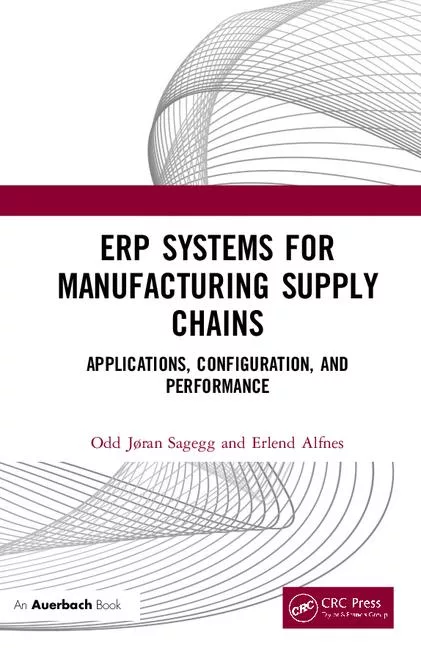
    ERP Systems for Manufacturing Supply Chains

  • 4 perspective.jpg

    Handbook of Manufacturing Systems and Design: An Industry 4.0 Perspective

See More Products

Related Directories

  • Nitto Seiko America

    Nitto Seiko America is the North American branch of Nitto Seiko, Ltd. and a provider of industry leading screw driving equipment. We offer the full range of screw driving equipment - our own motors and controllers, hand-held drivers, single-spindle drivers, multi-spindle drivers, feeder and robots. This allows us to provide any all of the equipment you need from a single source, from stand-alone motors and controllers, all the way up to turn-key robotic screw driving system.
  • Lighthouse Systems

    Lighthouse Systems, a global vendor of Manufacturing Execution Systems (MES) software, enables Smart Manufacturing through the digitization of manufacturing processes and operations. With functionalities across production, quality, inventory/logistics and maintenance, Lighthouse' MES Shopfloor-Online removes traditional organizational silos to enforce business processes.
×

Never miss the latest news and trends driving the manufacturing industry

Stay in the know on the latest assembly trends.

JOIN TODAY!
  • RESOURCES
    • Advertise
    • Contact Us
    • Directories
    • Manufacturing Division
    • Store
    • Want More?
  • SIGN UP TODAY
    • Create Account
    • eMagazine
    • Newsletters
    • Customer Service
    • Manage Preferences
  • SERVICES
    • Marketing Services
    • Reprints
    • Market Research
    • List Rental
    • Survey/Respondent Access
  • STAY CONNECTED
    • LinkedIn
    • Facebook
    • Instagram
    • YouTube
    • X (Twitter)
  • PRIVACY
    • PRIVACY POLICY
    • TERMS & CONDITIONS
    • DO NOT SELL MY PERSONAL INFORMATION
    • PRIVACY REQUEST
    • ACCESSIBILITY

Copyright ©2026. All Rights Reserved BNP Media, Inc. and BNP Media II, LLC.

Design, CMS, Hosting & Web Development :: ePublishing