Assembly Magazine logo
search
Ask ASSEMBLY AI
cart
facebook twitter linkedin youtube
  • Sign In
  • Create Account
  • Sign Out
  • My Account
Assembly Magazine logo
  • TRENDS
    • Ask ASSEMBLY AI
    • Trends
    • News
    • New Products
  • INDUSTRIES
    • Aerospace
    • Appliance
    • DFMA Assembly
    • Medical Devices
    • Green Manufacturing
    • Lean Manufacturing
    • Machinery Assembly
    • Electronics Assembly
    • Automotive
  • TECHNOLOGIES
    • Adhesives & Dispensing
    • Assembly Presses
    • Automated Assembly Systems
    • Manufacturing Management
    • Manufacturing Software
    • Motion Control
    • Screwdriving & Riveting
    • Robotics
    • Test & Inspection
    • Plastics & Metal Welding
    • Wire Processing
    • Workstations
  • AUTONOMOUS & ELECTRIC MOBILITY
    • AEM Magazine Archives
    • Autonomy
    • Electrification
    • Mobility Services
    • Assembly & Testing
    • AV/EM News
  • MEDIA
    • Ask ASSEMBLY AI
    • Podcasts
    • Assembly News Now
    • Assembly TV
    • Webinars
    • eBooks
  • EVENTS
    • Calendar
    • The ASSEMBLY Show
  • MORE
    • Exclusives >
      • Plant of the Year
      • Capital Spending
    • Buyers Guide >
      • Supplier Insights
    • Classifieds
    • Featured Products
    • Newsletters
    • Store
    • White Papers
    • Columns
    • Sponsor Insights
  • INFOCENTER
    • Assembly & Test Solutions
  • EMAGAZINE
    • eMagazine
    • Archive Issues
    • Advertise
    • Contact Us
    • Sign Up
Machinery AssemblyAdhesives & Dispensing AssemblyWire Processing Assembly

Sealing Crimped Contacts Avoids Corrosion

Miele uses a dual-curing adhesive to seal electrical contacts in its washing machine motors.
By Alexander Woerner
Sealing Crimped Contacts Avoids Corrosion

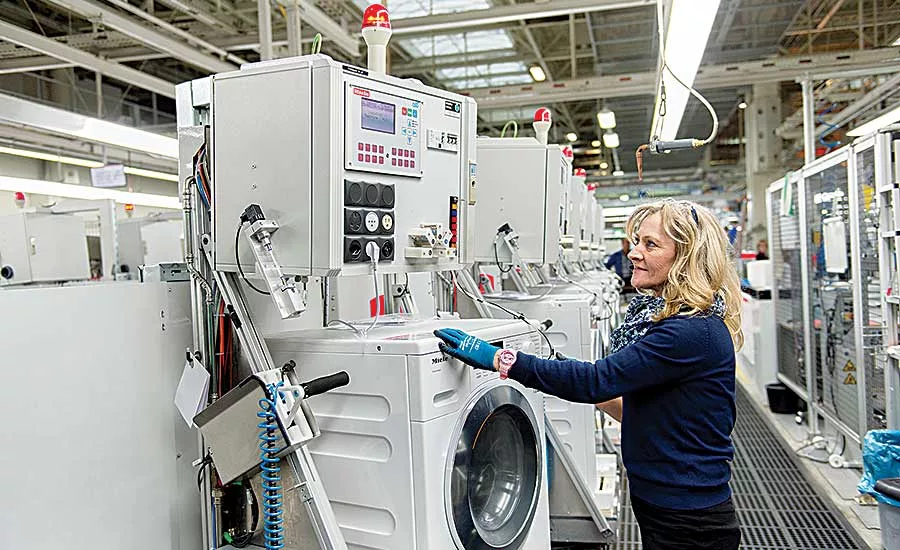
Washing machines are assembled at Miele’s factory in Gütersloh, Germany. Photo courtesy The Miele Group
Sealing Crimped Contacts Avoids Corrosion

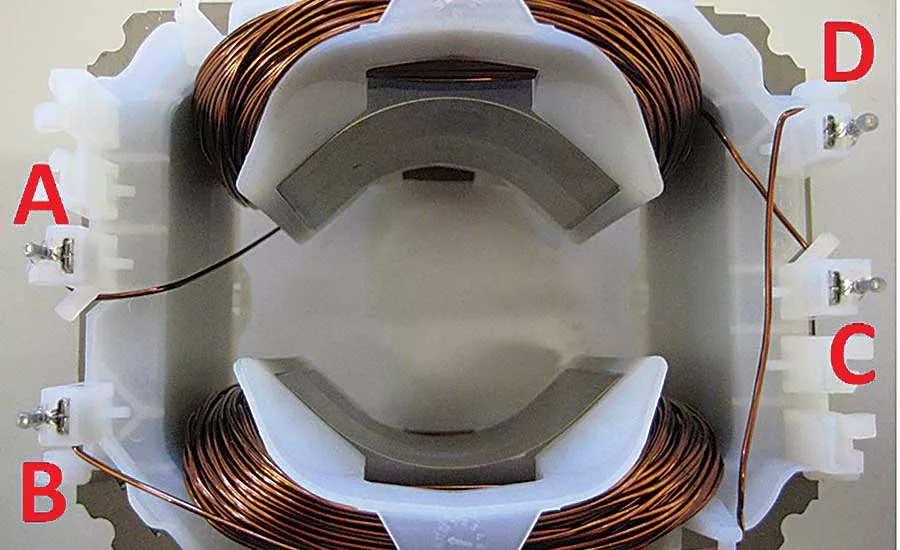
This photo shows the stator package for a washing machine motor. Crimped contacts are marked with letters. Photo courtesy The Miele Group
Sealing Crimped Contacts Avoids Corrosion

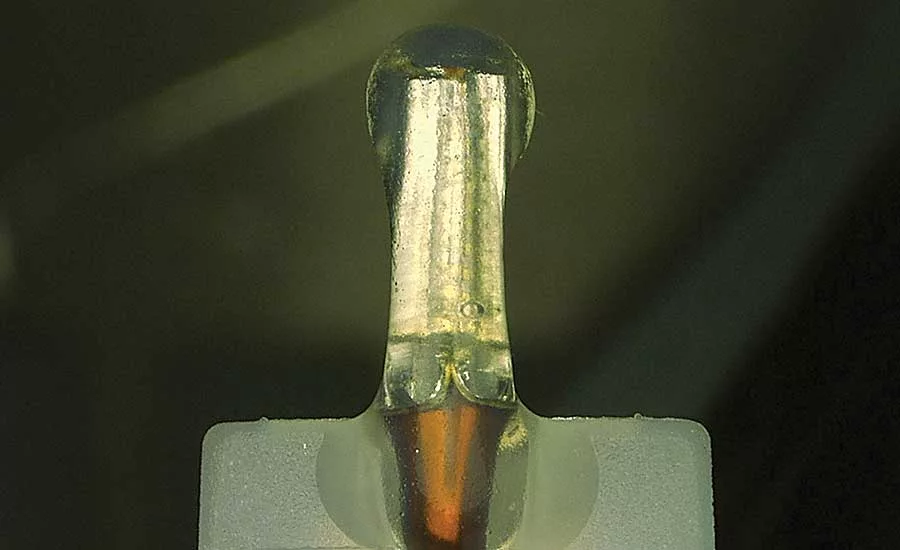
Miele seals aluminum crimped contacts (top) and copper cables (bottom) with a dual-curing acrylate adhesive to protect the assembly from corrosion. Photo courtesy The Miele Group
Sealing Crimped Contacts Avoids Corrosion

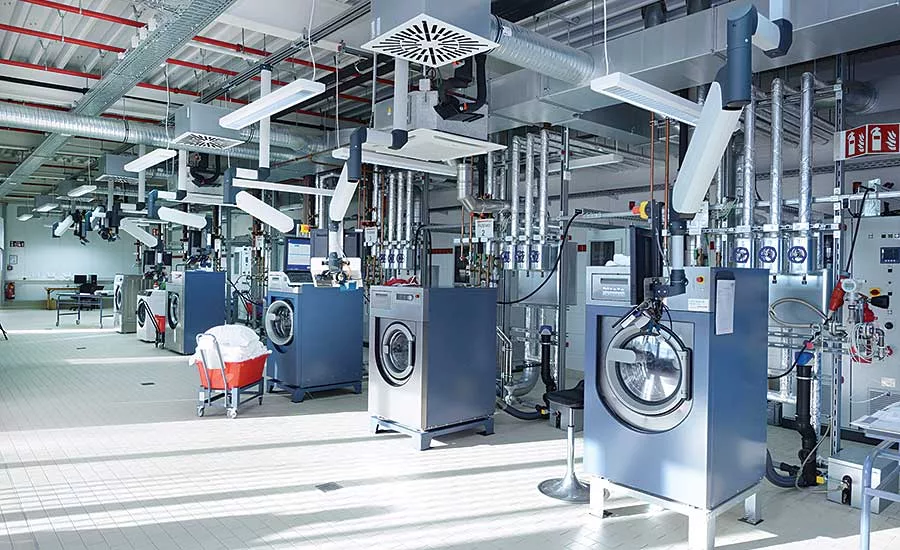
Miele appliances, particularly washing machines, are known for their durability. The company tests appliances for a service life of 20 years. Photo courtesy The Miele Group

Sealing Crimped Contacts Avoids Corrosion
January 16, 2018

Based in Gütersloh, Germany, the Miele Group is one of the world’s leading manufacturers of commercial and residential appliances. However, it didn’t start out that way. Founded in 1899 by Carl Miele and Reinhard Zinkann, the company initially made cream separators for the dairy industry. Over the years, the company has manufactured butter churns, hand carts, bicycles and even automobiles.

Today, the company is still family-owned and operated, but its focus is strictly on appliances: stoves, ovens, range hoods, refrigerators, freezers, dishwashers, washing machines, dryers, vacuum cleaners and coffee makers. The company also makes machines for cleaning and sterilizing medical instruments and laboratory equipment.

During its 2016-17 fiscal year, which ended June 30, 2017, Miele tallied sales of more than $4.6 billion, a 5.9 percent increase from the previous year. Miele operates 11 manufacturing facilities throughout Europe and one in China. It employs 19,465 people worldwide, more than half of which are in Germany.

Miele’s products, in particular its washing machines, are known for their durability. The company tests its appliances for a service life of 20 years, so the motors, belts and other components used in them must meet high standards. The company’s reliability testing program includes humidity and salt spray tests, so preventing corrosion is a top priority.


Protecting Contacts With Adhesives

Miele uses a dual-curing adhesive to seal and protect the electrical contacts on its washing machine motors. The purpose of sealing crimped contacts is to prevent contact corrosion of the aluminum-copper assembly. This is particularly important if washing machines will be used in high-humidity environments.

Crimped connections are mainly used in large-scale production, where single wires must be assembled. Crimping is fast and a good alternative to soldering. It can create a strong, reliable connection between a conductor and connecting element. With the right tools, cable and plug wires can be connected in a form-closed manner.

Miele seals crimped contacts with a one-component acrylate, Dualbond AD4950 from DELO Industrial Adhesives. This adhesive offers high elongation at tear, and is able to equalize tensions, which is important for this type of application. The adhesive also resists aging for long-term stability.

Looking for quick answers on assembly and manufacturing topics? Try Ask ASM, our new smart AI search tool. Ask ASM →

When validating the adhesive, Miele ran different tests to ensure that both the sealing and corrosion protection were high quality. Simulating the lifetime of the adhesive bond, the components were sprayed with salt solution and exposed to different temperatures and humidity conditions for a given period of time.

When cured, the product can be used at temperatures ranging from -40 to 120 C. It also offers a dual-curing mechanism based on light and humidity. This means that after short exposure to UV radiation, no additional processing step is needed for final curing of the adhesive.

In shadowed areas, the ambient air humidity is sufficient for curing. This curing system is typically used for applications where the adhesive is transported by capillary forces into small shadowed areas and ensures that the liquid adhesive is fully cured in the final product.

In its assembly line, Miele uses a screw dispenser for fully automatic dispensing of the adhesive. Every step of the process is monitored by a camera system. This allows for control of the dispensing operation and detection of any bubble formations. In the subsequent curing step, the adhesive is shortly exposed to high-intensity UV light from an LED spot lamp. This lamp is the ideal for curing of very small adhesive drops or bonding areas within seconds.

Miele has successfully used this adhesive since 2013.

For more information on UV-curing adhesives, call DELO at 978-254-5275 or visit www.delo-adhesives.com/us.

KEYWORDS: UV cure adhesives wire harness assembly wire seals

Share This Story

Looking for a reprint of this article?
From high-res PDFs to custom plaques, order your copy today!

Alexander Woerner, Deputy Head of Sales, DELO Industrial Adhesives, Windach, Germany

Recommended Content

JOIN TODAY
To unlock your recommendations.

Already have an account? Sign In

  • Made in the U.S.A.

    Consumer Products Manufacturing: Made in the USA

    Supply chain lessons learned during the coronavirus...
    Automated Assembly Systems
    By: Austin Weber
  • Best Practices for Press-Fit Assembly

    Best Practices for Press-Fit Assembly

    In manufacturing, ironclad formulas for success are hard...
    Assembly Presses
    By: Jim Camillo
  • aem0523leader-tesla1.jpg

    Tesla Rethinks the Assembly Line

    Engineers at Tesla Inc. have developed a new process that...
    Assembly and Testing
    By: Austin Weber
Manage My Account
  • eMagazine Subscription
  • Assembly Newsletters
  • Online Registration
  • Subscription Customer Service
  • Manage My Preferences

More Videos

Sponsored Content

Sponsored Content is a special paid section where industry companies provide high quality, objective, non-commercial content around topics of interest to the ASSEMBLY audience. All Sponsored Content is supplied by the advertising company and any opinions expressed in this article are those of the author and not necessarily reflect the views of ASSEMBLY or its parent company, BNP Media. Interested in participating in our Sponsored Content section? Contact your local rep!

close
  • ultrasonic welding
    Sponsored bySonobond Ultrasonics

    Engineering Efficiency in High-Performance Assembly: How Ultrasonic Welding Enhances Throughput, Reliability and Quality

  • UV curing system
    Sponsored byDymax

    Why UV Intensity Alone Doesn’t Define Curing Performance

  • wooden pallets
    Sponsored byLEAN Manufacturing Products

    Eliminating Waste on the Shop Floor: Applying Lean Principles to Improve Manufacturing Efficiency

Popular Stories

ASSEMBLY News Now, episode-30: Volvo Redesigns EV Manufacturing

Volvo Redesigns EV Manufacturing

Boeing CEO Kelly Ortberg announces 1 billion investment

Boeing Plans $1 Billion Wichita Investment, Workforce Training Center

GE Appliances Worker on Line

GE Appliances Expands Factory AI With 800 Gemini Enterprise Agents

Watch the latest episode of ANN now!

Events

July 24, 2025

From Shop Floor to CFO: How Manufacturers Are Closing the Loop Between Operations and Finance

On Demand Learn how manufacturers are bridging the gap between the shop floor and ERP systems to gain real-time visibility, streamline operations, and kick-start digital transformation—without waiting years.

Sponsored by:

PicoStratusGreen
July 30, 2025

Buffer Analysis and Design Fundamentals for Manufacturing Excellence

On Demand In this presentation, Dr. Herman Tang shares practical insights from his industry experience and research on buffer management in manufacturing operations.

View All Submit An Event

Poll

Difficult Assembly Processes

Which assembly process gives you the most difficulty?
View Results Poll Archive

Products

Manufacturing Cost Policy Deployment (MCPD) Profitability Scenarios: Systematic and Systemic Improvement of Manufacturing Costs

Manufacturing Cost Policy Deployment (MCPD) Profitability Scenarios: Systematic and Systemic Improvement of Manufacturing Costs

See More Products
Register for webinar - Modernizing Automotive Assembly: Why Upgrading Legacy MES is a Business Imperative

Related Articles

  • Choosing Wire Terminals and Contacts

    See More
  • Wire Processing: Crimping Loose-Piece Contacts

    See More
  • New Process Assembles Contacts Fast

    See More

Related Products

See More Products
  • 0001349.jpeg

    Adhesion and Adhesives Technology 4e

  • characterization.jpg

    Characterization, Testing, Measurement, and Metrology

  • Joining and Assembly of Medical Materials and Devices, 1st Edition

See More Products

Related Directories

  • Phoenix Contact

    Phoenix Contact produces future-oriented components, systems, and solutions for electrical controls, networking, and automation. With a worldwide network reaching 100+ countries and with over 22,000 employees, Phoenix Contact maintains close relationships with its customers. The company's wide variety of products makes it easy for engineers to implement the latest technology.
  • Phoenix Contact

×

Never miss the latest news and trends driving the manufacturing industry

Stay in the know on the latest assembly trends.

JOIN TODAY!
  • RESOURCES
    • Advertise
    • Contact Us
    • Directories
    • Manufacturing Division
    • Store
    • Want More?
  • SIGN UP TODAY
    • Create Account
    • eMagazine
    • Newsletters
    • Customer Service
    • Manage Preferences
  • SERVICES
    • Marketing Services
    • Reprints
    • Market Research
    • List Rental
    • Survey/Respondent Access
  • STAY CONNECTED
    • LinkedIn
    • Facebook
    • Instagram
    • YouTube
    • X (Twitter)
  • PRIVACY
    • PRIVACY POLICY
    • TERMS & CONDITIONS
    • DO NOT SELL MY PERSONAL INFORMATION
    • PRIVACY REQUEST
    • ACCESSIBILITY

Copyright ©2026. All Rights Reserved BNP Media, Inc. and BNP Media II, LLC.

Design, CMS, Hosting & Web Development :: ePublishing