Assembly Magazine logo
search
Ask ASSEMBLY AI
cart
facebook twitter linkedin youtube
  • Sign In
  • Create Account
  • Sign Out
  • My Account
Assembly Magazine logo
  • TRENDS
    • Ask ASSEMBLY AI
    • Trends
    • News
    • New Products
  • INDUSTRIES
    • Aerospace
    • Appliance
    • DFMA Assembly
    • Medical Devices
    • Green Manufacturing
    • Lean Manufacturing
    • Machinery Assembly
    • Electronics Assembly
    • Automotive
  • TECHNOLOGIES
    • Adhesives & Dispensing
    • Assembly Presses
    • Automated Assembly Systems
    • Manufacturing Management
    • Manufacturing Software
    • Motion Control
    • Screwdriving & Riveting
    • Robotics
    • Test & Inspection
    • Plastics & Metal Welding
    • Wire Processing
    • Workstations
  • AUTONOMOUS & ELECTRIC MOBILITY
    • AEM Magazine Archives
    • Autonomy
    • Electrification
    • Mobility Services
    • Assembly & Testing
    • AV/EM News
  • MEDIA
    • Ask ASSEMBLY AI
    • Podcasts
    • Assembly News Now
    • Assembly TV
    • Webinars
    • eBooks
  • EVENTS
    • Calendar
    • The ASSEMBLY Show
  • MORE
    • Exclusives >
      • Plant of the Year
      • Capital Spending
    • Buyers Guide >
      • Supplier Insights
    • Classifieds
    • Featured Products
    • Newsletters
    • Store
    • White Papers
    • Columns
    • Sponsor Insights
  • INFOCENTER
    • Assembly & Test Solutions
  • EMAGAZINE
    • eMagazine
    • Archive Issues
    • Advertise
    • Contact Us
    • Sign Up
Wire Processing Assembly

How Well Do You Know Your Crimping Process?

Engineers need objective evidence to determine if their equipment and operators are producing quality terminations
By Terry Curtis
How Well Do You Know Your Crimping Process?
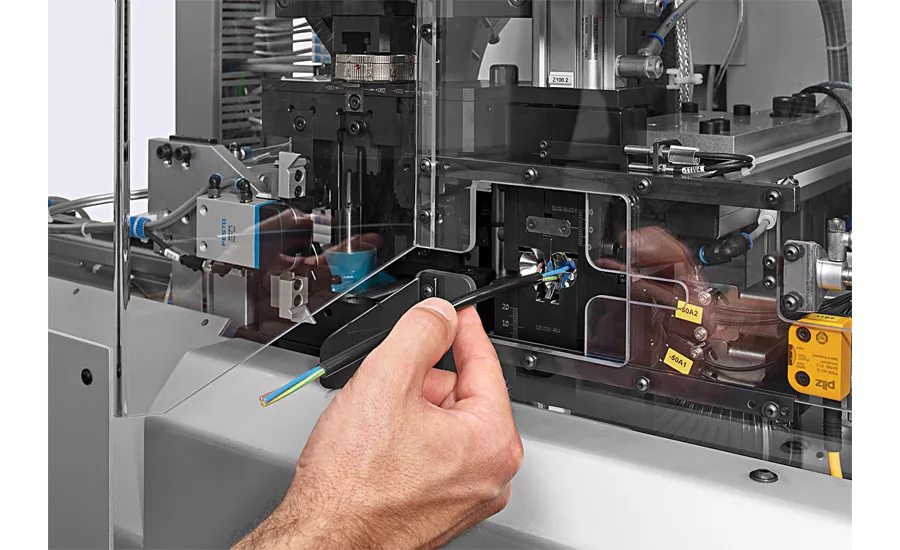
Surprisingly, introducing the wrong materials into the production stream is a common cause of defects and rework. Is your system set up to eliminate the possibility of employee error? Photo courtesy Schäfer Group
How Well Do You Know Your Crimping Process?
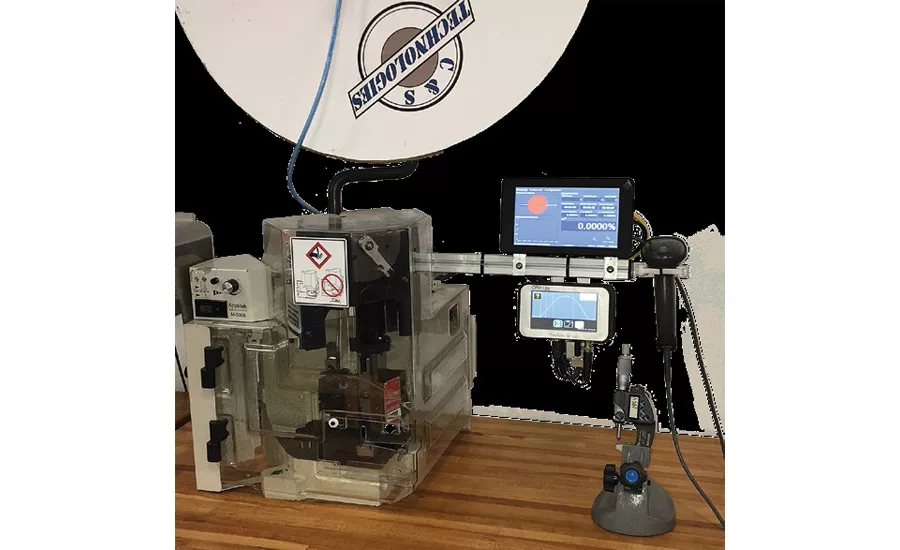
Crimp force monitoring, crimp height measurement and pull force testing are the primary tools in a harness assembler’s quality assurance program. Photo courtesy C&S Technologies
How Well Do You Know Your Crimping Process?
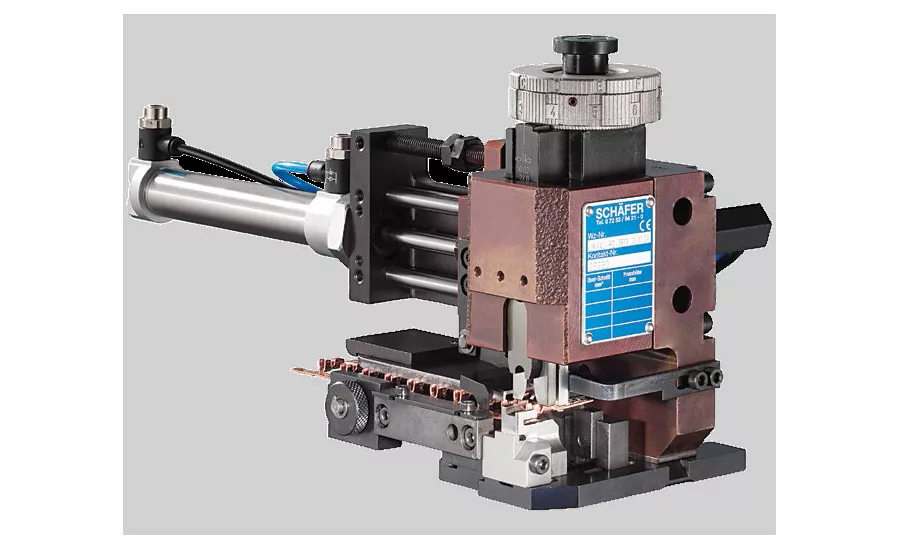
Applicator setup is critical for producing quality crimps. Has the applicator been prepared for production? Was it inspected after the last production run? Photo courtesy Schäfer Group
How Well Do You Know Your Crimping Process?
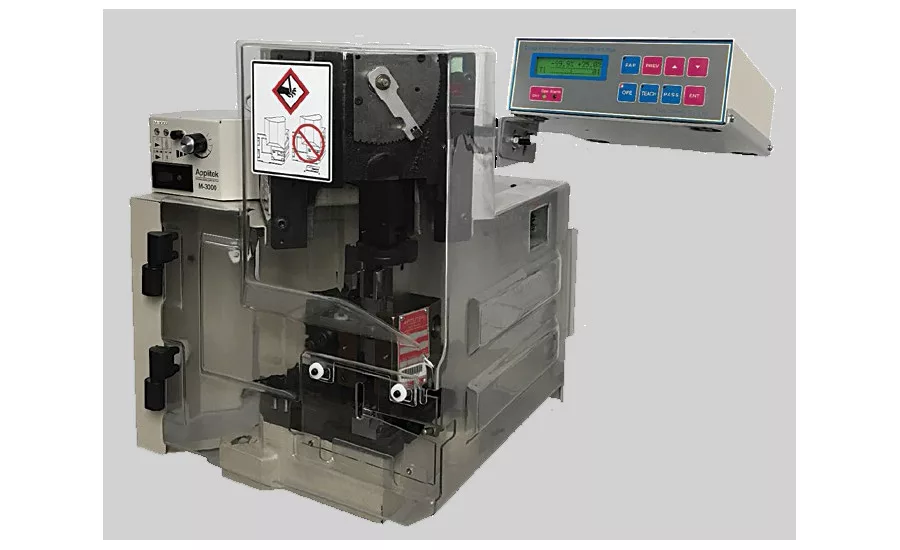
By itself, a crimpforce monitor will not solve your crimping problems nor will it guarantee nonconforming crimps. Photo courtesy Applitek
How Well Do You Know Your Crimping Process?
July 22, 2019

Companies make countless decisions every day. There are micro decisions affecting short-term operations and macro decisions affecting the company’s big picture over the long term. Whether micro or macro, good business decisions are made using factual information. They should be based on objective analysis and free of subjective influence.

That advice is no less valid when assessing the performance of your terminal crimping process. You need objective evidence to determine if your equipment and operators are producing quality terminations. “Objective evidence” can apply to a wide range of situations and will serve a basis for effective decisions. “Objective evidence” is defined as: “Information based on facts that can be proved through analysis, observation and other such means of research.” Objective evidence will ensure that the actions taken from decisions will cause positive results.

How can you gather objective evidence about the performance of your wire termination process? Here are some questions to start with:

Material verification. Surprisingly, introducing the wrong materials into the production stream is a common cause of defects and rework. Hopefully, such a mistake is caught before the finished product leaves your facility. It’s a major issue if it’s caught by the customer. Is your system set up to eliminate the possibility of employee error when picking materials for production?

Applicator setup. Has the applicator been prepared for production? Was the applicator inspected after the last production run? Is the tooling capable of producing crimps that meet quality specifications? Has the applicator been installed correctly?

Press setup. Is the press set to the proper shut height? Variation in press force and shut-height can effect crimp quality. Dynamic measurement of these variables provides an accurate method of analysis for press capability.

Crimp measurements. Are you following the “recipe” for each terminal and wire combination? The recipe, or defined measurements, for crimp validation include wire crimp height, crimp width, pull force and visual factors. Pull force data alone is not enough to verify crimp quality. A crimp that passes the pull force test can still have unacceptably high electrical resistance. Crimp height is the primary method terminal suppliers specify to measure crimp quality.

Remember, it’s not enough to ask good questions. Acting on the answers to those questions is critical for managing a system of people, processing equipment and process monitoring tools.

Looking for quick answers on assembly and manufacturing topics? Try Ask ASM, our new smart AI search tool. Ask ASM →


Never Assume

Ensuring that your preproduction validation process continues into production will effectively reduce the chances of nonconforming assemblies leaving your production facility. However, assuming that everything is working merely because you implemented a new monitoring process can lead to unacceptable outcomes, including rework, customer returns and product recalls. Such outcomes can be costly, in both monetary and non-monetary ways.

By itself, a crimp-force monitor (CFM) will not solve your crimping problems nor will it guarantee nonconforming crimps. It can only go by the tolerance thresholds you input. Set the tolerances too wide, and you’ll run the risk of producing nonconforming crimps. Set them too narrow, and you could scrap otherwise good parts.

Several factors can affect a CFM’s ability to keep an eye on your crimping process. The terminal-to-wire match is one factor; head room can influence the sensitivity of a CFM. Equipment condition is another.

To determine if the thresholds for crimp defect detection are acceptable, test the CFM with sample errors, such as missing strands. If it can’t detect a known error, you know you have work to do.

It’s also a good idea to take visual and physical measurements. Take a batch of processed wires and fan them out. Check wire position in the crimp to ensure insulation is not in the wire crimp, the bell mouth and brush positions are correct. Measure wire crimp height and pull force and confirm they meet the manufacturer’s specs.


Removing Operator Bias

Let’s face it. After a long period of time, operators and setup people can form their own bias towards quality. Left unchecked, this bias can be a problem in improving process quality. It can even be a process variation itself.

Lock down the validation and monitoring process. Connect your bench and automated crimp machines into a network. Process parameters do not change over time and should be stored in a central database. Create a process where validation of process parameters is required before machines are released for production. Then monitor the process to ensure ongoing conformity to the validated process
parameters.

The stakes are never higher than they are today. Exposure to liability from nonconforming products can be reduced by following a repeatable process. 


Putting Pull Force Testing Into Perspective

Pull force testing—measuring the tensile strength of a wire-to-terminal crimp—has been a quality measurement since the advent of pressing a wire to a terminal for electrical assembly.

Test methods have varied from weights and fish scales, to portable manual testers, to benchtop, motorized digital instruments. I have even heard stories of an acceptable pull force test being performed by pulling on a terminal with one’s teeth. A dentist’s nightmare!

Given today’s demands for higher reliability and failure rates approaching zero, how does the pull test process fit in with other testing methods? Are you even performing pull tests properly?

The pull force test is a destructive test to determine the mechanical strength of a terminal crimp. A good mechanical crimp assures the crimp can withstand the normal handling and installation process.

Typical process parameters for pull force testing include:

  • Disengaging the insulation support, so the pull force reading is based on the wire crimp alone.
  • Pulling at a constant rate of 50 to 250 millimeters per minute.
  • Ensuring the wire is taut prior to applying pull force.

Pull testing does not measure electrical performance. It measures the strength of the mechanical connection. However, low electrical resistance results from a crimp with a wire under compression.

Terminal suppliers validate crimps by optimizing the crimp barrel size to match the wire. The crimp tool profile is also a critical factor. Using the proper crimp tool profile, the wire and terminal are compressed together. Pull force and electrical resistance readings are made, and the recommended conductor crimp height is established.

Engineers must follow those guidelines to ensure an optimum crimp. Conductor crimp height should be your primary measurement, and a mechanical pull test should be your secondary standard.

Pull force and electrical resistance measurements rarely follow in tandem. Typically, pull strength peaks before electrical resistance. Therefore, it is possible to meet a minimal pull test without optimizing electrical resistance. There will always be a compromise between electrical resistance and tensile strength.

Pay attention to how the wire separated from the terminal. This is an indication of the wire compression. Strands completely broken at the wire crimp indicate overcompression. Conversely, strands that completely pull out of the wire crimp still in a round shape indicate severe undercompression. Crimps with good compression should primarily break outside of the wire crimp.

Depending on mechanical strength as your primary crimp quality measurement leaves you open for premature crimp failure. But, as part of an overall regimen of crimp measurements, pull force testing can be a valuable part of your quality assurance process.

KEYWORDS: crimping pull-force measurement

Share This Story

Looking for a reprint of this article?
From high-res PDFs to custom plaques, order your copy today!

Terry Curtis is President of Wire Process Specialties and can be reached at tcurtis@wireprocess.com.

Recommended Content

JOIN TODAY
To unlock your recommendations.

Already have an account? Sign In

  • Made in the U.S.A.

    Consumer Products Manufacturing: Made in the USA

    Supply chain lessons learned during the coronavirus...
    Automated Assembly Systems
    By: Austin Weber
  • Best Practices for Press-Fit Assembly

    Best Practices for Press-Fit Assembly

    In manufacturing, ironclad formulas for success are hard...
    Assembly Presses
    By: Jim Camillo
  • aem0523leader-tesla1.jpg

    Tesla Rethinks the Assembly Line

    Engineers at Tesla Inc. have developed a new process that...
    Industries
    By: Austin Weber
Manage My Account
  • eMagazine Subscription
  • Assembly Newsletters
  • Online Registration
  • Subscription Customer Service
  • Manage My Preferences

More Videos

Sponsored Content

Sponsored Content is a special paid section where industry companies provide high quality, objective, non-commercial content around topics of interest to the ASSEMBLY audience. All Sponsored Content is supplied by the advertising company and any opinions expressed in this article are those of the author and not necessarily reflect the views of ASSEMBLY or its parent company, BNP Media. Interested in participating in our Sponsored Content section? Contact your local rep!

close
  • ultrasonic welding
    Sponsored bySonobond Ultrasonics

    Engineering Efficiency in High-Performance Assembly: How Ultrasonic Welding Enhances Throughput, Reliability and Quality

  • UV curing system
    Sponsored byDymax

    Why UV Intensity Alone Doesn’t Define Curing Performance

  • wooden pallets
    Sponsored byLEAN Manufacturing Products

    Eliminating Waste on the Shop Floor: Applying Lean Principles to Improve Manufacturing Efficiency

Popular Stories

ASSEMBLY News Now, episode-30: Volvo Redesigns EV Manufacturing

Volvo Redesigns EV Manufacturing

Boeing CEO Kelly Ortberg announces 1 billion investment

Boeing Plans $1 Billion Wichita Investment, Workforce Training Center

GE Appliances Worker on Line

GE Appliances Expands Factory AI With 800 Gemini Enterprise Agents

Watch the latest episode of ANN now!

Events

July 24, 2025

From Shop Floor to CFO: How Manufacturers Are Closing the Loop Between Operations and Finance

On Demand Learn how manufacturers are bridging the gap between the shop floor and ERP systems to gain real-time visibility, streamline operations, and kick-start digital transformation—without waiting years.

Sponsored by:

PicoStratusGreen
July 30, 2025

Buffer Analysis and Design Fundamentals for Manufacturing Excellence

On Demand In this presentation, Dr. Herman Tang shares practical insights from his industry experience and research on buffer management in manufacturing operations.

View All Submit An Event

Poll

Difficult Assembly Processes

Which assembly process gives you the most difficulty?
View Results Poll Archive

Products

Manufacturing Cost Policy Deployment (MCPD) Profitability Scenarios: Systematic and Systemic Improvement of Manufacturing Costs

Manufacturing Cost Policy Deployment (MCPD) Profitability Scenarios: Systematic and Systemic Improvement of Manufacturing Costs

See More Products
Register for webinar - Modernizing Automotive Assembly: Why Upgrading Legacy MES is a Business Imperative

Related Articles

  • EPSON on Robotics: How Well Do You Know Your Process?

    See More
  • How well do you know your parts?

    See More
  • Do You Know Your Carbon Footprint?

    See More

Related Products

See More Products
  • leaner

    Leaner Manufacturing: How to Make the Lean Production Process Easier, Faster, and More Cost-Effective

  • processind.jpg

    Digital Transformation for the Process Industries

  • reducing.jpg

    Reducing Process Costs with Lean, Six Sigma, and Value Engineering Techniques

See More Products

Events

View AllSubmit An Event
  • November 6, 2025

    Designing Fastened Parts for Automation: What You Need to Know

    On Demand Designing parts with automation in mind is crucial for efficient production and cost-effective manufacturing.Sponsored by:
View AllSubmit An Event

Related Directories

  • HowToRobot

  • Virtual Process

×

Never miss the latest news and trends driving the manufacturing industry

Stay in the know on the latest assembly trends.

JOIN TODAY!
  • RESOURCES
    • Advertise
    • Contact Us
    • Directories
    • Manufacturing Division
    • Store
    • Want More?
  • SIGN UP TODAY
    • Create Account
    • eMagazine
    • Newsletters
    • Customer Service
    • Manage Preferences
  • SERVICES
    • Marketing Services
    • Reprints
    • Market Research
    • List Rental
    • Survey/Respondent Access
  • STAY CONNECTED
    • LinkedIn
    • Facebook
    • Instagram
    • YouTube
    • X (Twitter)
  • PRIVACY
    • PRIVACY POLICY
    • TERMS & CONDITIONS
    • DO NOT SELL MY PERSONAL INFORMATION
    • PRIVACY REQUEST
    • ACCESSIBILITY

Copyright ©2026. All Rights Reserved BNP Media, Inc. and BNP Media II, LLC.

Design, CMS, Hosting & Web Development :: ePublishing