Assembly Magazine logo
search
Ask ASSEMBLY AI
cart
facebook twitter linkedin youtube
  • Sign In
  • Create Account
  • Sign Out
  • My Account
Assembly Magazine logo
  • TRENDS
    • Ask ASSEMBLY AI
    • Trends
    • News
    • New Products
  • INDUSTRIES
    • Aerospace
    • Appliance
    • DFMA Assembly
    • Medical Devices
    • Green Manufacturing
    • Lean Manufacturing
    • Machinery Assembly
    • Electronics Assembly
    • Automotive
  • TECHNOLOGIES
    • Adhesives & Dispensing
    • Assembly Presses
    • Automated Assembly Systems
    • Manufacturing Management
    • Manufacturing Software
    • Motion Control
    • Screwdriving & Riveting
    • Robotics
    • Test & Inspection
    • Plastics & Metal Welding
    • Wire Processing
    • Workstations
  • AUTONOMOUS & ELECTRIC MOBILITY
    • AEM Magazine Archives
    • Autonomy
    • Electrification
    • Mobility Services
    • Assembly & Testing
    • AV/EM News
  • MEDIA
    • Ask ASSEMBLY AI
    • Podcasts
    • Assembly News Now
    • Assembly TV
    • Webinars
    • eBooks
  • EVENTS
    • Calendar
    • The ASSEMBLY Show
  • MORE
    • Exclusives >
      • Plant of the Year
      • Capital Spending
    • Buyers Guide >
      • Supplier Insights
    • Classifieds
    • Featured Products
    • Newsletters
    • Store
    • White Papers
    • Columns
    • Sponsor Insights
  • INFOCENTER
    • Assembly & Test Solutions
  • EMAGAZINE
    • eMagazine
    • Archive Issues
    • Advertise
    • Contact Us
    • Sign Up
Wire Processing Assembly

Wiring Harness Manufacturers Face Three Big Challenges in 2022

wire harness.jpg
February 1, 2022
Automation, digitalization and standardization are the key trends affecting the wire harness industry in 2022, according to DiIT GmbH, a division of the Schleuniger Group that specializes in software.
Today, increasing demand for electric cars is making wiring harnesses more important and system-critical than ever before. This is creating great opportunities, but also new challenges for manufacturers.
“Electromobility is promising wiring harness manufacturers a bright future,” explains Bernd Jost, managing director of DiIT. “But, to participate, they must do their homework. Without further automation, standardization and digitalization, the sector will not be able to meet the increasing requirements which go hand in hand with this change in importance of their products.”
According to Jost, the following trends will impact the wiring harness sector in the months ahead:
*Wiring harness manufacturers rely on high-voltage wires for automation.
*Interface standardization is finally gaining momentum.
*The sector is paving the way for consistent digital twins.
“The breakthrough of e-mobility has led to a rapidly increasing requirement for high-voltage wires,” says Jost. “Productronica 2021, the world’s leading trade fair for the development and manufacture of electronics, demonstrated that wiring harness manufacturers are looking for ways to automate the processing of these complex multiple-core wires with additional shields.
“Relevant systems with several interlinked processing stations generated great interest,” explains Jost. “In addition to throughput, automated quality control—for example, with vision systems—has an important role to play in these systems. It must also be possible to connect [with] manufacturing execution systems (MES) to supply them efficiently with orders and provide quality data transparently.”
According to Jost, manufacturers of wire processing machines are still continuing to define their own interface specifications. This means that the integration of machines into a MES system frequently incurs considerable expense. In the past, this could still be tolerated given that to date only a few machine types are being used in the wire processing sector.
However, with increasing automation, this situation is not sustainable over the long term. The era of proprietary interfaces in the wire processing industry must finally be consigned to the past. That’s why a  VDMA working group was recently formed to develop a standard on the basis of the OPC/UA industry standard.
Many large wiring harness manufacturers are already working with digital twins in almost every step of the engineering and manufacturing process. “However, what has been lacking up to now, is consistency,” says Jost. “Every step uses its own digital twin that operates independently from others. However, to enable consistent traceability and quality assurance, the information model of a wiring harness must be usable across and throughout all these steps—from engineering through installation and ideally even to the use of the wiring harness in the vehicle.”
At the University of Stuttgart, a research consortium called ARENA2036 (Active Research Environment for the Next Generation of Automobiles) has been set up to develop digital twin technology. It involves a variety of leading automakers and suppliers, including Altair, Balluff, Bosch, BMW, Daimler, Draxlmaier, Intel, Komax, Kuka, Schaeffler, Schunk, Schleuniger, Siemens, TE, Trumpf, TOX Pressotechnik and Yazaki.
KEYWORDS: electric vehicles wire harness assembly

Share This Story

Looking for a reprint of this article?
From high-res PDFs to custom plaques, order your copy today!

Recommended Content

JOIN TODAY
To unlock your recommendations.

Already have an account? Sign In

  • Made in the U.S.A.

    Consumer Products Manufacturing: Made in the USA

    Supply chain lessons learned during the coronavirus...
    Automated Assembly Systems
    By: Austin Weber
  • Best Practices for Press-Fit Assembly

    Best Practices for Press-Fit Assembly

    In manufacturing, ironclad formulas for success are hard...
    Assembly Presses
    By: Jim Camillo
  • aem0523leader-tesla1.jpg

    Tesla Rethinks the Assembly Line

    Engineers at Tesla Inc. have developed a new process that...
    Industries
    By: Austin Weber
Manage My Account
  • eMagazine Subscription
  • Assembly Newsletters
  • Online Registration
  • Subscription Customer Service
  • Manage My Preferences

More Videos

Sponsored Content

Sponsored Content is a special paid section where industry companies provide high quality, objective, non-commercial content around topics of interest to the ASSEMBLY audience. All Sponsored Content is supplied by the advertising company and any opinions expressed in this article are those of the author and not necessarily reflect the views of ASSEMBLY or its parent company, BNP Media. Interested in participating in our Sponsored Content section? Contact your local rep!

close
  • ultrasonic welding
    Sponsored bySonobond Ultrasonics

    Engineering Efficiency in High-Performance Assembly: How Ultrasonic Welding Enhances Throughput, Reliability and Quality

  • UV curing system
    Sponsored byDymax

    Why UV Intensity Alone Doesn’t Define Curing Performance

  • wooden pallets
    Sponsored byLEAN Manufacturing Products

    Eliminating Waste on the Shop Floor: Applying Lean Principles to Improve Manufacturing Efficiency

Popular Stories

Ferrari

Ferrari Unveils Four-Door EV

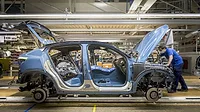
ASSEMBLY News Now, episode-30: Volvo Redesigns EV Manufacturing

Volvo Redesigns EV Manufacturing

Robots working at Toyota Plant in Japan

Toyota Deploys Geekplus Robots for Factory Material Handling

Watch the latest episode of ANN now!

Events

July 24, 2025

From Shop Floor to CFO: How Manufacturers Are Closing the Loop Between Operations and Finance

On Demand Learn how manufacturers are bridging the gap between the shop floor and ERP systems to gain real-time visibility, streamline operations, and kick-start digital transformation—without waiting years.

Sponsored by:

PicoStratusGreen
July 30, 2025

Buffer Analysis and Design Fundamentals for Manufacturing Excellence

On Demand In this presentation, Dr. Herman Tang shares practical insights from his industry experience and research on buffer management in manufacturing operations.

View All Submit An Event

Poll

Difficult Assembly Processes

Which assembly process gives you the most difficulty?
View Results Poll Archive

Products

Manufacturing Cost Policy Deployment (MCPD) Profitability Scenarios: Systematic and Systemic Improvement of Manufacturing Costs

Manufacturing Cost Policy Deployment (MCPD) Profitability Scenarios: Systematic and Systemic Improvement of Manufacturing Costs

See More Products
ebook

Related Articles

  • Volvo.jpg

    Big Challenges Face EV Automakers and Suppliers

    See More
  • Toy Manufacturers Tackle Big Challenges

    See More
  • Wiring Harness Manufacturer’s Association Launches Spanish-Language Website

    See More

Related Products

See More Products
  • handbook of digital.jpg

    Handbook of Digital Innovation, Transformation, and Sustainable Development in a Post-Pandemic Era

  • digital.jpg

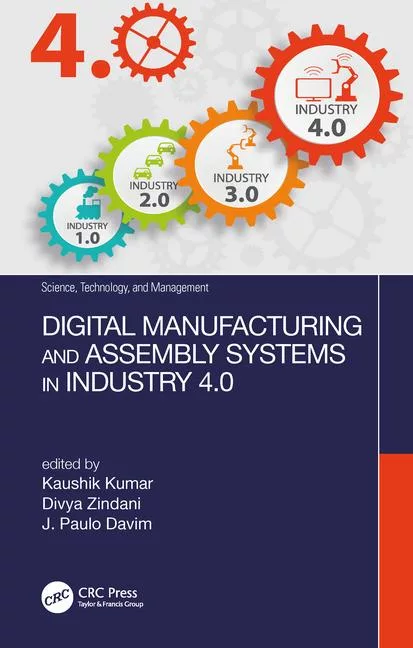
    Digital Manufacturing and Assembly Systems in Industry 4.0

  • strong.jpg

    Strong Supply Chains Through Resilient Operations: Five Principles for Leaders to Win in a Volatile World

See More Products
×

Never miss the latest news and trends driving the manufacturing industry

Stay in the know on the latest assembly trends.

JOIN TODAY!
  • RESOURCES
    • Advertise
    • Contact Us
    • Directories
    • Manufacturing Division
    • Store
    • Want More?
  • SIGN UP TODAY
    • Create Account
    • eMagazine
    • Newsletters
    • Customer Service
    • Manage Preferences
  • SERVICES
    • Marketing Services
    • Reprints
    • Market Research
    • List Rental
    • Survey/Respondent Access
  • STAY CONNECTED
    • LinkedIn
    • Facebook
    • Instagram
    • YouTube
    • X (Twitter)
  • PRIVACY
    • PRIVACY POLICY
    • TERMS & CONDITIONS
    • DO NOT SELL MY PERSONAL INFORMATION
    • PRIVACY REQUEST
    • ACCESSIBILITY

Copyright ©2026. All Rights Reserved BNP Media, Inc. and BNP Media II, LLC.

Design, CMS, Hosting & Web Development :: ePublishing