Motion Control
Five Trends Driving the Use of Electric Linear Actuators
Electric linear actuators can help assemblers increase flexibility, productivity and sustainability.
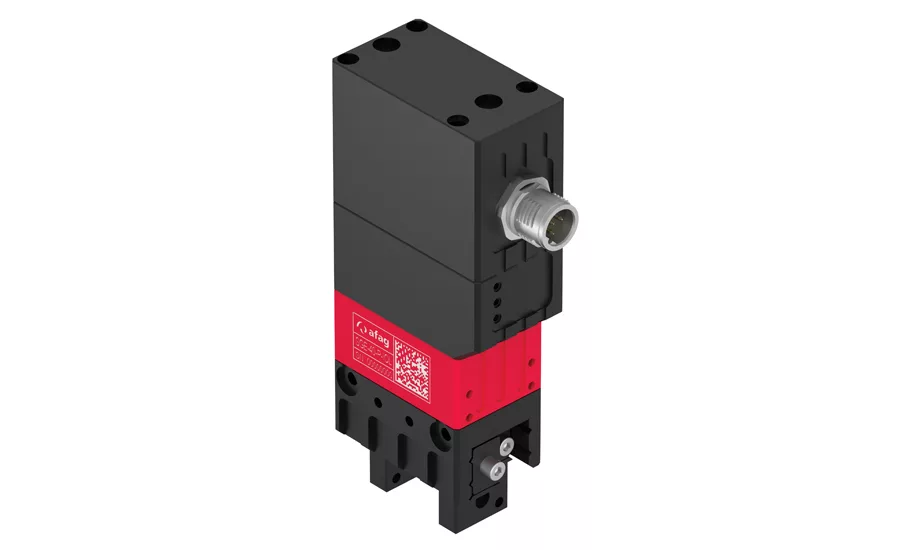
The new SGE-40-P-IOL electric smart gripper provides two adjustable gripping modes: FastGrip and SoftGrip. Control via IO-Link allows engineers to pre-position the fingers, evaluate the status of the device, and set the gripping mode. Photo courtesy Afag Automation AG
The demand for electric linear actuators continues to grow. In 2022, the worldwide electric linear actuator market was valued at $20.5 billion and is expected to grow at a cumulative annual rate of 5.3 percent over the next decade to reach $34.3 billion. Corporate focus on sustainability, aggressive market competition, as well as the acceleration of digital transformation, automation and electrification in manufacturing are primary factors driving this growth.
According to an Emerson customer survey, 78 percent of all the future projects will be based on automation, with automation investments predicted to more than triple previous investment amounts over the next five years. It’s easy to see why more manufacturers are incorporating belt axes, spindle axes, linear motor axes and multiaxis systems in equipment designs to move parts in a machine or apply forces in a process. From electronics and semiconductors to automotive assembly, automation systems that use electric linear motion are considered energy-efficient, with excellent accuracy, precision and flexibility. All of these attributes can help manufacturers overcome the challenges and achieve ambitious goals today’s evolving trends present.
Sustainability
Sustainability continues to be a top priority in just about every industry, driven by customer demand, regulations, personal responsibility and stakeholders. To reduce their environmental footprint and meet corporate sustainability initiatives, many manufacturers are considering how their machines and lines use energy. As a result, many are adopting energy-efficient technologies across their factories, and many of these include electric actuators.
Electric actuators tend to be more efficient than other motion control technologies, with longer lifetimes that result in less waste. They only use energy when parts are in motion, and systems can reuse electrical energy when actuators decelerate. In this way, electric actuators can help optimize the overall energy consumption of the machines that use them, resulting in more energy-efficient equipment. This characteristic is one reason that machine designers are increasingly specifying them.
Electrification
Decarbonization is a pillar for a more sustainable future, and governments around the world are setting ambitious net-zero targets and, in some cases, climate change regulations. This, in turn, is influencing corporate net-zero commitments. A crucial step on the path to carbon neutrality is electrification. Electrification makes it possible for manufacturers to use renewable resources, such as wind and solar, to power equipment across factories and reduce carbon emissions.
As a net-zero target is a central part of many companies’ corporate sustainability strategies, many organizations are converting the use of other power sources to electric. Electric motion is produced by closed-loop systems that usually include electric actuators, a motion controller, a servo drive, a motor and a feedback sensor. These servo systems convert electricity to perform motion functions with accurate positioning, precise velocities and variable acceleration profiles.
Machines that use electric motion control systems can allow for widespread electrification across a plant, while also providing advanced capabilities and enhanced performance.
Looking for quick answers on assembly and manufacturing topics? Try Ask ASM, our new smart AI search tool. Ask ASM
Greater Demand for Automation
As the skilled labor shortage continues, many manufacturers are automating more tasks and functions. At the same time, customers expect customized products and greater product variety. To meet demand, manufacturers must find ways to improve production flexibility, increase output and reduce downtime using fewer personnel.
To achieve this, more manufacturers are fully automating production, incorporating robots and operating lights-out shifts. Servo-driven motion control systems are a key part of such systems.
Other manufacturers must maximize the space and talent they already have, which is also influencing machine designs. OEMs are designing more compact, advanced machines that incorporate electric motion control technology. The higher accuracy of such systems helps to prevent waste. Their higher speeds help to increase output. Their greater positional flexibility allows operators to switch machine programs with a push of a button, reducing changeover times.
Electric motion control systems are also more compact. This allows manufacturers to fit more machines with greater capability within the same space and to automate higher-precision tasks.
Digital Transformation and Machine Self-Optimization
Many manufacturers are seeing the benefits of digitally transforming their machines, lines and factories. As they realize return on investment from digital transformation projects, many are beginning new projects or scaling up existing ones.
Digital transformation can provide access to real-time visibility and control that help manufacturers make informed decisions that continuously improve operations. Connected motion control systems make it possible for operators to analyze key parameters in real time and quickly make adjustments that can optimize performance, reliability and energy use.
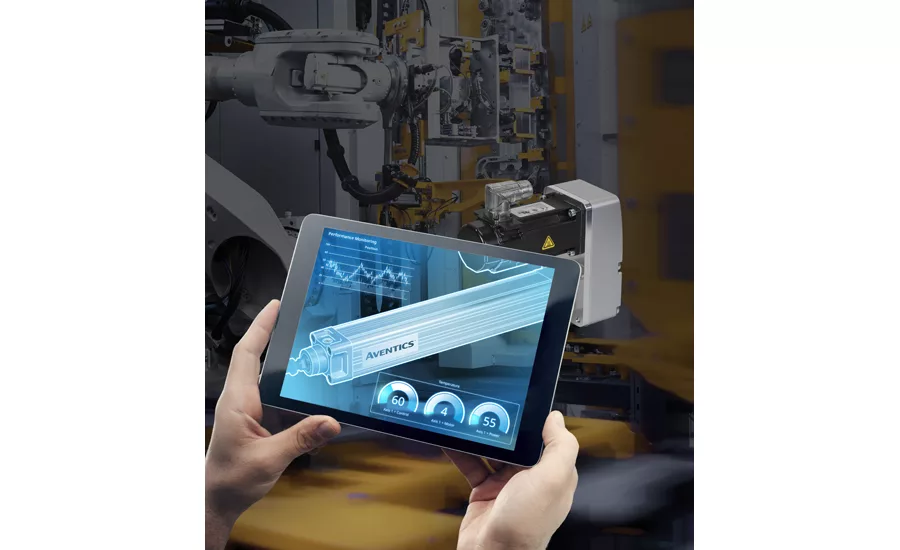
Sensors embedded in devices can continually monitor temperature, position, load and wear. Operators can view automatic configuration and diagnostics, as well as process data, and use these insights to make decisions that improve operations.
Servo drives and controllers are microprocessor devices that have high levels of innate, on-board functionality. Servo controls can offer deeper analytical capabilities than other motion control technologies for data-intensive applications and directly provide local and remote diagnostics, as well as log data for dashboards.
For instance, electric motion control systems can give operators greater clarity about component performance and health. Systems can calculate precise actuator life expectancy using motor temperature and electrical current values and display it on a dashboard for easy operator access. Using this information, operators can order new parts in advance, schedule maintenance during planned downtime, and help prevent machine failure. By allowing factories to shift from reactive to preventive maintenance models, intelligent motion control can help manufacturers improve overall equipment effectiveness, reduce downtime and increase productivity.
As technology advances and factories digitally transform, automation systems are even becoming self-optimizing through machine learning. Controllers can use data from multiple data streams to learn about a process, machine health, and the environment and use it to automatically improve system performance. This means that on a production line, the system can calculate adjustments for factors such as stroke and accuracy and change the routine accordingly. This level of self-learning is only possible with electric actuators.
For example, consider a three-axis system that moves an object from point A to point B. A vision system could be used to provide the system with information about its environment. The system can then calculate the most efficient way to move from A to B without colliding with any obstacles.
If this system is part of a bigger machine with multiple elements, it can adjust its cycle time to align with the overall cycle time. Doing this can significantly improve overall machine energy consumption, since the actuators are not running at maximum performance but instead at optimum performance.
Or, consider a line where parts are bonded with an adhesive. The temperature of the adhesive varies over time. To ensure consistent product quality, the force applied to dispense the adhesive must change according to the temperature. A self-optimizing system can detect the temperature fluctuations and automatically adjust force applied by the electric actuator to achieve consistent dispensing.
Decentralized Control
A shift to decentralized control technology is also driving the adoption of electric linear motion. In decentralized systems, the controller is installed in the modules and not in the control cabinet. With decentralized control, manufacturers save time during installation and commissioning. Less cabling is needed in the machine, and less space is needed in the control cabinet.
Best of Both Worlds
Today’s trends reveal the many competing pressures that manufacturers face. To maintain market position within an evolving landscape, it’s critical for manufacturers to maximize production while remaining agile. Automation systems that incorporate hybrid motion control make it possible to improve flexibility, energy-efficiency and reliability.
With a hybrid system, OEMs use the motion control technology that is most appropriate for each function. These systems combine servo drives, motors, electric actuators and pneumatics, allowing manufacturers to benefit from the strengths of each technology. In this way, machine designs that include hybrid automation systems can align more closely with customer challenges.
ASSEMBLY ONLINE
For more information on motion control, visit www.assemblymag.com to read these articles:
Looking for a reprint of this article?
From high-res PDFs to custom plaques, order your copy today!