Assembly Magazine logo
search
Ask ASSEMBLY AI
cart
facebook twitter linkedin youtube
  • Sign In
  • Create Account
  • Sign Out
  • My Account
Assembly Magazine logo
  • TRENDS
    • Ask ASSEMBLY AI
    • Trends
    • News
    • New Products
  • INDUSTRIES
    • Aerospace
    • Appliance
    • DFMA Assembly
    • Medical Devices
    • Green Manufacturing
    • Lean Manufacturing
    • Machinery Assembly
    • Electronics Assembly
    • Automotive
  • TECHNOLOGIES
    • Adhesives & Dispensing
    • Assembly Presses
    • Automated Assembly Systems
    • Manufacturing Management
    • Manufacturing Software
    • Motion Control
    • Screwdriving & Riveting
    • Robotics
    • Test & Inspection
    • Plastics & Metal Welding
    • Wire Processing
    • Workstations
  • AUTONOMOUS & ELECTRIC MOBILITY
    • AEM Magazine Archives
    • Autonomy
    • Electrification
    • Mobility Services
    • Assembly & Testing
    • AV/EM News
  • MEDIA
    • Ask ASSEMBLY AI
    • Podcasts
    • Assembly News Now
    • Assembly TV
    • Webinars
    • eBooks
  • EVENTS
    • Calendar
    • The ASSEMBLY Show
  • MORE
    • Exclusives >
      • Plant of the Year
      • Capital Spending
    • Buyers Guide >
      • Supplier Insights
    • Classifieds
    • Featured Products
    • Newsletters
    • Store
    • White Papers
    • Columns
    • Sponsor Insights
  • INFOCENTER
    • Assembly & Test Solutions
  • EMAGAZINE
    • eMagazine
    • Archive Issues
    • Advertise
    • Contact Us
    • Sign Up
Autonomous & Electric MobilityAV/EM NewsElectrification

Copper Can’t Be Mined Fast Enough to Electrify U.S. Auto Industry
By Austin Weber
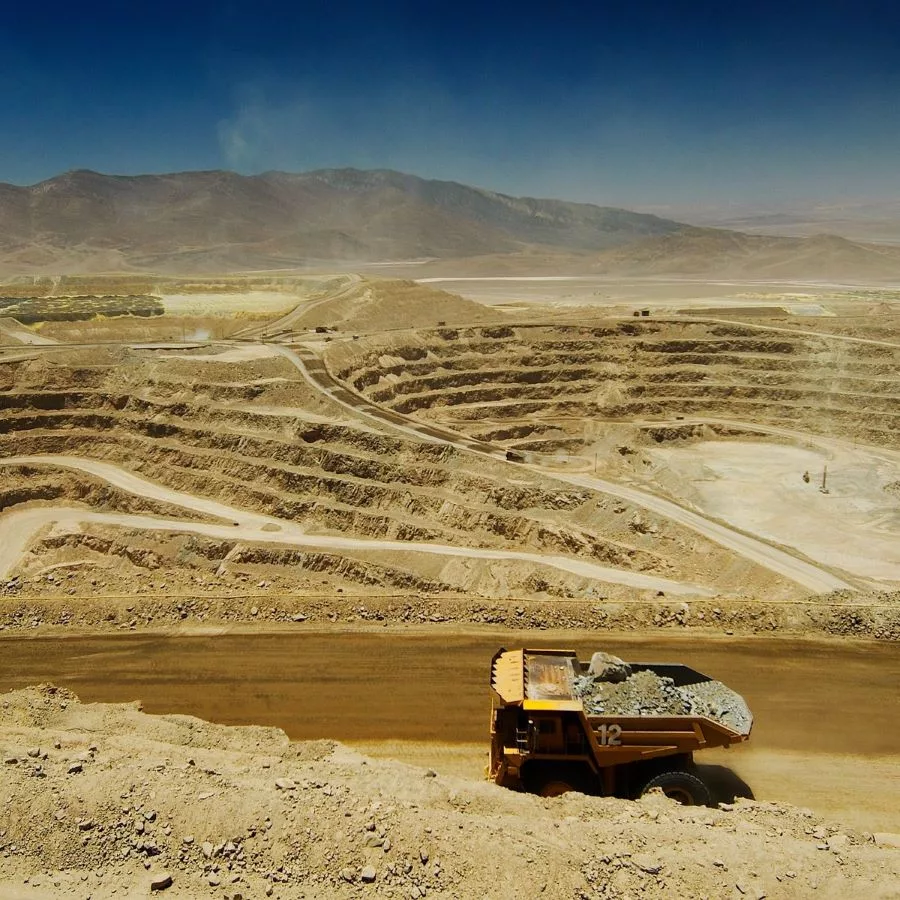
Copper Glencore International AG.jpg

Photo courtesy Glencore International AG

July 1, 2024

Demand for electric vehicle cable and wire is outstripping copper supply, according to a recent study conducted by the University of Michigan. The shortfall could have serious consequences for the U.S. auto industry’s ability to electrify.

“Copper cannot be mined quickly enough to keep up with current U.S. policy guidelines to transition the country’s electricity and vehicle infrastructure to renewable energy,” warns Adam Simon, Ph.D., a professor of earth and environmental sciences at the University of Michigan who conducted the study algong with Lawrence Cathles, Ph.D., professor emeritus of earth and atmospheric sciences at Cornell University.

According to Simon, current EV projections are unrealistic. He says that’s because battery-powered cars require three to five times as much copper as an internal combustion engine (ICE) vehicle—not to mention the copper required for upgrades to the electric grid.

“A normal Honda Accord needs about 40 pounds of copper,” says Simon, who specializes in how copper deposites form and how to find replacements. “The same battery electric Honda Accord needs almost 200 pounds of copper. The amount of copper needed is essentially impossible for mining companies to produce.”

The study examined 120 years of global data from copper mining companies, and calculated how much copper the U.S. fleet of cars would need to upgrade to renewable energy. It found that renewable energy’s copper needs would outstrip what copper mines can produce at the current rate.

“Mining companies will not provide the amount of copper necessary to achieve vehicle electrification goals,” warns Simon.

The shortfall is in part because of the permitting process for mining companies. The average time between discovering a new copper mineral deposit and getting a permit to build a mine is about 20 years.

Looking for quick answers on assembly and manufacturing topics? Try Ask ASM, our new smart AI search tool. Ask ASM →

“Mining companies have to fully characterize the local environment and ecosystem around any proposed mine,” says Simon. “They have to describe how mning activities could potentially impact the local ecosystem and have mitigation strategies in place in case something goes wrong. And, in the U.S., the National Enivironmental Policy Act allows any person to sue to prevent a mining operation from starting.”

Copper is mined by more than 100 companies operating mines on six continents. Cathles and Simon examined data for global copper production back to the year 1900, which told them the global amount of copper mining companies had produced over 120 years. They then modeled how much copper mining companies are likely to produce for the rest of this century.

Between now and 2050, the world will need to mine 115 percent more copper than has been mined in all of human history up until 2018 just to meet “business as usual,” claims Simon. “This would meet our current copper needs and support the developing world without considering the green energy transition.’

To meet the copper needs of electrifying the global vehicle fleet, Simon says as many as six new large copper mines must be brought online annually over the next several decades. About 40 percent of the production from new mines will be required for electric vehicle-related grid upgrades.

To address this future shortfall, Simon believes the auto industry should focus it attention on producing hybrid vehicles.

“The amount of copper required for EVs is significantly greater than hybrids,” notes Simon. “The average ICE vehicle contains an average of 53 pounds of copper vs. 64 pounds for a hybrid vehicle and 132 pounds for an EV.

“A global fleet of hybrid vehicles woulds require mining 275 million tons of copper from now to 2050 vs. 404 million tons for EVs,” explains Simon.

“Policymakers should consider copper as the limiting factor for the energy transition, and think about how copper is allocated,” Simon points out. “We know, for example, that a Toyota Prius actually has a slightly better impact on climate than a Tesla. Instead of producing 20 million electric vehicles in the United States and globally, 100 million battery electric vehicles each year, [it might be] more feasible to focus on building 20 million hybrid vehicles.

“We think our study highlights that significant progress can be made to reduce emissions in the United States,” says Simon. “However, the current—almost singular—emphasis on downstream manufacture of renewable energy technologies cannot be met by upstream mine production of copper and other metals without a complete mindset change about mining among environmental groups and policymakers.”

KEYWORDS: copper copper wire electric cars electric vehicles wire harness assembly

Share This Story

Looking for a reprint of this article?
From high-res PDFs to custom plaques, order your copy today!

Austinweber headshot
Austin has been senior editor for ASSEMBLY Magazine since September 1999. He has more than 21 years of b-to-b publishing experience and has written about a wide variety of manufacturing and engineering topics. Austin is a graduate of the University of Michigan.

Recommended Content

JOIN TODAY
To unlock your recommendations.

Already have an account? Sign In

  • Made in the U.S.A.

    Consumer Products Manufacturing: Made in the USA

    Supply chain lessons learned during the coronavirus...
    Automated Assembly Systems
    By: Austin Weber
  • Best Practices for Press-Fit Assembly

    Best Practices for Press-Fit Assembly

    In manufacturing, ironclad formulas for success are hard...
    Assembly Presses
    By: Jim Camillo
  • aem0523leader-tesla1.jpg

    Tesla Rethinks the Assembly Line

    Engineers at Tesla Inc. have developed a new process that...
    Assembly and Testing
    By: Austin Weber
Manage My Account
  • eMagazine Subscription
  • Assembly Newsletters
  • Online Registration
  • Subscription Customer Service
  • Manage My Preferences

More Videos

Sponsored Content

Sponsored Content is a special paid section where industry companies provide high quality, objective, non-commercial content around topics of interest to the ASSEMBLY audience. All Sponsored Content is supplied by the advertising company and any opinions expressed in this article are those of the author and not necessarily reflect the views of ASSEMBLY or its parent company, BNP Media. Interested in participating in our Sponsored Content section? Contact your local rep!

close
  • ultrasonic welding
    Sponsored bySonobond Ultrasonics

    Engineering Efficiency in High-Performance Assembly: How Ultrasonic Welding Enhances Throughput, Reliability and Quality

  • UV curing system
    Sponsored byDymax

    Why UV Intensity Alone Doesn’t Define Curing Performance

  • wooden pallets
    Sponsored byLEAN Manufacturing Products

    Eliminating Waste on the Shop Floor: Applying Lean Principles to Improve Manufacturing Efficiency

Popular Stories

ASSEMBLY News Now, episode 30: Volvo Redesigns EV Manufacturing

Volvo Redesigns EV Manufacturing

ASSEMBLY News Now, Episode 29: Mercedes-Benz to Invest $4 billion in Alabama Assembly Plant

Mercedes-Benz to Invest $4 billion in Alabama Assembly Plant

Boeing CEO Kelly Ortberg announces 1 billion investment

Boeing Plans $1 Billion Wichita Investment, Workforce Training Center

Watch the latest episode of ANN now!

Events

July 24, 2025

From Shop Floor to CFO: How Manufacturers Are Closing the Loop Between Operations and Finance

On Demand Learn how manufacturers are bridging the gap between the shop floor and ERP systems to gain real-time visibility, streamline operations, and kick-start digital transformation—without waiting years.

Sponsored by:

PicoStratusGreen
July 30, 2025

Buffer Analysis and Design Fundamentals for Manufacturing Excellence

On Demand In this presentation, Dr. Herman Tang shares practical insights from his industry experience and research on buffer management in manufacturing operations.

View All Submit An Event

Poll

Difficult Assembly Processes

Which assembly process gives you the most difficulty?
View Results Poll Archive

Products

Manufacturing Cost Policy Deployment (MCPD) Profitability Scenarios: Systematic and Systemic Improvement of Manufacturing Costs

Manufacturing Cost Policy Deployment (MCPD) Profitability Scenarios: Systematic and Systemic Improvement of Manufacturing Costs

See More Products
Register for webinar - Modernizing Automotive Assembly: Why Upgrading Legacy MES is a Business Imperative

Related Articles

  • U.S. Auto Industry Goes Metric

    See More
  • Assembly and EV Plants in the South.jpg

    U.S. Auto Industry Growth Accelerates in the South

    See More
  • U.S. Auto Industry on Pace for Best Year Since '08

    See More

Related Products

See More Products
  • 4 perspective.jpg

    Handbook of Manufacturing Systems and Design: An Industry 4.0 Perspective

  • 4 apps.jpg

    Intelligent Analytics for Industry 4.0 Applications

  • digital.jpg

    Digital Manufacturing and Assembly Systems in Industry 4.0

See More Products

Related Directories

  • U.S. Heatstake

×

Never miss the latest news and trends driving the manufacturing industry

Stay in the know on the latest assembly trends.

JOIN TODAY!
  • RESOURCES
    • Advertise
    • Contact Us
    • Directories
    • Manufacturing Division
    • Store
    • Want More?
  • SIGN UP TODAY
    • Create Account
    • eMagazine
    • Newsletters
    • Customer Service
    • Manage Preferences
  • SERVICES
    • Marketing Services
    • Reprints
    • Market Research
    • List Rental
    • Survey/Respondent Access
  • STAY CONNECTED
    • LinkedIn
    • Facebook
    • Instagram
    • YouTube
    • X (Twitter)
  • PRIVACY
    • PRIVACY POLICY
    • TERMS & CONDITIONS
    • DO NOT SELL MY PERSONAL INFORMATION
    • PRIVACY REQUEST
    • ACCESSIBILITY

Copyright ©2026. All Rights Reserved BNP Media, Inc. and BNP Media II, LLC.

Design, CMS, Hosting & Web Development :: ePublishing