Assembly Magazine logo
search
Ask ASSEMBLY AI
cart
facebook twitter linkedin youtube
  • Sign In
  • Create Account
  • Sign Out
  • My Account
Assembly Magazine logo
  • TRENDS
    • Ask ASSEMBLY AI
    • Trends
    • News
    • New Products
  • INDUSTRIES
    • Aerospace
    • Appliance
    • DFMA Assembly
    • Medical Devices
    • Green Manufacturing
    • Lean Manufacturing
    • Machinery Assembly
    • Electronics Assembly
    • Automotive
  • TECHNOLOGIES
    • Adhesives & Dispensing
    • Assembly Presses
    • Automated Assembly Systems
    • Manufacturing Management
    • Manufacturing Software
    • Motion Control
    • Screwdriving & Riveting
    • Robotics
    • Test & Inspection
    • Plastics & Metal Welding
    • Wire Processing
    • Workstations
  • AUTONOMOUS & ELECTRIC MOBILITY
    • AEM Magazine Archives
    • Autonomy
    • Electrification
    • Mobility Services
    • Assembly & Testing
    • AV/EM News
  • MEDIA
    • Ask ASSEMBLY AI
    • Podcasts
    • Assembly News Now
    • Assembly TV
    • Webinars
    • eBooks
  • EVENTS
    • Calendar
    • The ASSEMBLY Show
  • MORE
    • Exclusives >
      • Plant of the Year
      • Capital Spending
    • Buyers Guide >
      • Supplier Insights
    • Classifieds
    • Featured Products
    • Newsletters
    • Store
    • White Papers
    • Columns
    • Sponsor Insights
  • INFOCENTER
    • Assembly & Test Solutions
  • EMAGAZINE
    • eMagazine
    • Archive Issues
    • Advertise
    • Contact Us
    • Sign Up
Autonomous & Electric MobilityAssembly and TestingAV/EM NewsElectrification

Ford Reveals Short-Term EV Strategy
By Austin Weber
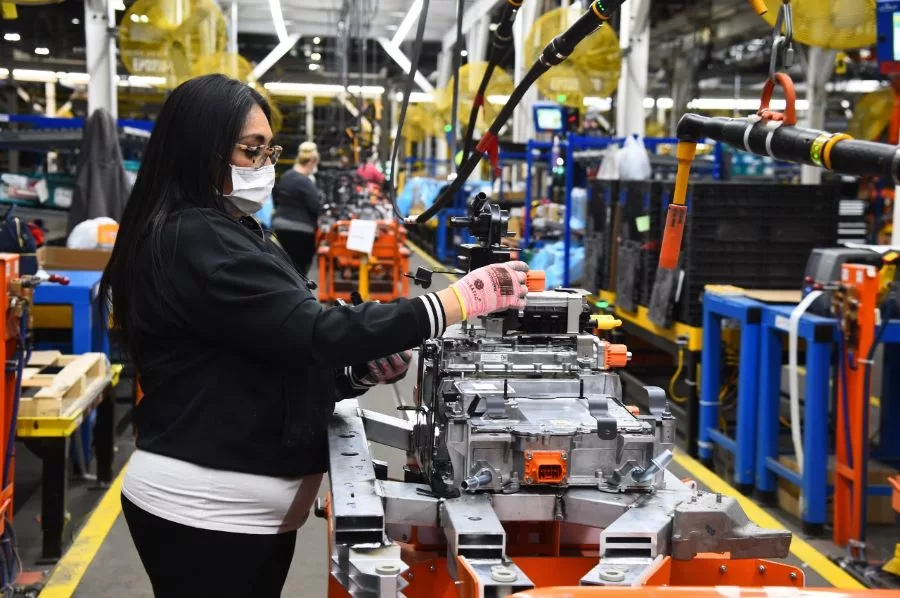
KC E-Transit Kaup_229.jpg
August 23, 2024

DEARBORN, MI—Ford Motor Co. has adjusted its domestic electrification strategy to meet changing market conditions. The three-year strategic plan includes a range of electrification options designed to entice customers, such as lower prices and longer ranges.

Ford’s future EV portfolio will include a commercial van and two new pickup trucks. The automaker also plans to realign its U.S. battery sourcing plan to reduce costs, maximize capacity utilization, and support current and future electric vehicle production.

“An affordable electric vehicle starts with an affordable battery,” claims Jim Farley, president and CEO of Ford Motor Co. “If you are not competitive on battery cost, you are not competitive.

“We are committed to innovating in America, creating jobs and delivering incredible new electric and hybrid vehicles that make a real difference in CO2 reduction,” says Farley. “We learned a lot as the No. 2 U.S. electric vehicle brand about what customers want and value, and what it takes to match the best in the world with cost-efficient design, and we have built a plan that gives our customers maximum choice and plays to our strengths.” 

According to Farley, the EV vehicle market is rapidly evolving as Chinese competitors leverage advantaged cost structures including vertical integration, low-cost engineering, multi-energy advanced battery technology and digital experiences to expand their global market share. 

In addition, Farley says that today’s consumers are more cost-conscious than early adopters, looking to EVs as a practical way to save money on fuel and maintenance, as well as time by charging at home. This, coupled with scores of new electric vehicle choices hitting the market over the next 12 months and rising compliance requirements, has amplified pricing pressures. These dynamics underscore the necessity of a globally competitive cost structure while being selective about customer and product segments to ensure profitable growth and capital efficiency.

“We’re committed to creating long-term value by building a competitive and profitable business,” says John Lawler, vice chair and chief financial officer at Ford. “With pricing and margin compression, we’ve made the decision to adjust our product and technology roadmap and industrial footprint to meet our goal of reaching positive EBIT (earnings before interest and taxes) within the first 12 months of launch for all new models.”  

Lawler believes that an important enabler to improve profitability is accelerating the mix of battery production in the U.S. that will qualify for the Advanced Manufacturing Tax Credit. Due to increasing demand for hybrids over the next three years, Ford’s mix of annual capital expenditures dedicated to pure electric vehicles will decline from 40 percent to 30 percent.

Looking for quick answers on assembly and manufacturing topics? Try Ask ASM, our new smart AI search tool. Ask ASM →

KEYWORDS: electric car manufacturing electric vehicle manufacturing Ford Motor Co.

Share This Story

Looking for a reprint of this article?
From high-res PDFs to custom plaques, order your copy today!

Austinweber headshot
Austin has been senior editor for ASSEMBLY Magazine since September 1999. He has more than 21 years of b-to-b publishing experience and has written about a wide variety of manufacturing and engineering topics. Austin is a graduate of the University of Michigan.

Recommended Content

JOIN TODAY
To unlock your recommendations.

Already have an account? Sign In

  • Made in the U.S.A.

    Consumer Products Manufacturing: Made in the USA

    Supply chain lessons learned during the coronavirus...
    Automated Assembly Systems
    By: Austin Weber
  • Best Practices for Press-Fit Assembly

    Best Practices for Press-Fit Assembly

    In manufacturing, ironclad formulas for success are hard...
    Assembly Presses
    By: Jim Camillo
  • aem0523leader-tesla1.jpg

    Tesla Rethinks the Assembly Line

    Engineers at Tesla Inc. have developed a new process that...
    Industries
    By: Austin Weber
Manage My Account
  • eMagazine Subscription
  • Assembly Newsletters
  • Online Registration
  • Subscription Customer Service
  • Manage My Preferences

More Videos

Sponsored Content

Sponsored Content is a special paid section where industry companies provide high quality, objective, non-commercial content around topics of interest to the ASSEMBLY audience. All Sponsored Content is supplied by the advertising company and any opinions expressed in this article are those of the author and not necessarily reflect the views of ASSEMBLY or its parent company, BNP Media. Interested in participating in our Sponsored Content section? Contact your local rep!

close
  • ultrasonic welding
    Sponsored bySonobond Ultrasonics

    Engineering Efficiency in High-Performance Assembly: How Ultrasonic Welding Enhances Throughput, Reliability and Quality

  • UV curing system
    Sponsored byDymax

    Why UV Intensity Alone Doesn’t Define Curing Performance

  • wooden pallets
    Sponsored byLEAN Manufacturing Products

    Eliminating Waste on the Shop Floor: Applying Lean Principles to Improve Manufacturing Efficiency

Popular Stories

ASSEMBLY News Now, episode-30: Volvo Redesigns EV Manufacturing

Volvo Redesigns EV Manufacturing

automated consumer goods assembly system

Best Practices for Cycle Time Optimization

Toyota factory workers assembling vehicles on an automotive production line using advanced manufacturing automation and Factory of the Future technologies in a high-volume assembly plant

Tariffs, AI and Automation Reshape Global Manufacturing Strategy

Watch the latest episode of ANN now!

Events

July 24, 2025

From Shop Floor to CFO: How Manufacturers Are Closing the Loop Between Operations and Finance

On Demand Learn how manufacturers are bridging the gap between the shop floor and ERP systems to gain real-time visibility, streamline operations, and kick-start digital transformation—without waiting years.

Sponsored by:

PicoStratusGreen
July 30, 2025

Buffer Analysis and Design Fundamentals for Manufacturing Excellence

On Demand In this presentation, Dr. Herman Tang shares practical insights from his industry experience and research on buffer management in manufacturing operations.

View All Submit An Event

Poll

Difficult Assembly Processes

Which assembly process gives you the most difficulty?
View Results Poll Archive

Products

Manufacturing Cost Policy Deployment (MCPD) Profitability Scenarios: Systematic and Systemic Improvement of Manufacturing Costs

Manufacturing Cost Policy Deployment (MCPD) Profitability Scenarios: Systematic and Systemic Improvement of Manufacturing Costs

See More Products
Register for webinar - Modernizing Automotive Assembly: Why Upgrading Legacy MES is a Business Imperative

Related Articles

  • Ford Motor Co.

    Ford Outlines Next-Generation EV Strategy

    See More
  • ToyotaArea35.jpg

    Toyota Reveals Future EV Production Strategy

    See More
  • BorgWarner.jpg

    BorgWarner Shifts EV Strategy Into High Gear

    See More

Related Directories

  • Panduit Corp.

    As a customer-focused company, we pride ourselves on creating a continuous flow of new products, software, and solutions designed to help you achieve your business goals. By partnering with Panduit, you can develop your connectivity strategy on a foundation that ensures scalability, accuracy, security, and reliability, so you can build for long-term growth.
×

Never miss the latest news and trends driving the manufacturing industry

Stay in the know on the latest assembly trends.

JOIN TODAY!
  • RESOURCES
    • Advertise
    • Contact Us
    • Directories
    • Manufacturing Division
    • Store
    • Want More?
  • SIGN UP TODAY
    • Create Account
    • eMagazine
    • Newsletters
    • Customer Service
    • Manage Preferences
  • SERVICES
    • Marketing Services
    • Reprints
    • Market Research
    • List Rental
    • Survey/Respondent Access
  • STAY CONNECTED
    • LinkedIn
    • Facebook
    • Instagram
    • YouTube
    • X (Twitter)
  • PRIVACY
    • PRIVACY POLICY
    • TERMS & CONDITIONS
    • DO NOT SELL MY PERSONAL INFORMATION
    • PRIVACY REQUEST
    • ACCESSIBILITY

Copyright ©2026. All Rights Reserved BNP Media, Inc. and BNP Media II, LLC.

Design, CMS, Hosting & Web Development :: ePublishing