EV Industry Is at a Crossroads
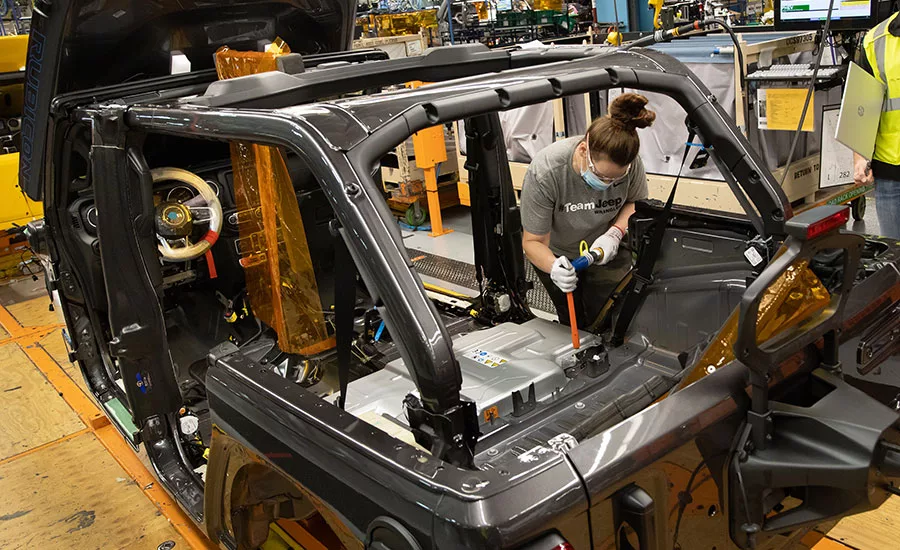
Both legacy and start-up automakers are facing a variety of challenges associated with electric vehicles. Photo courtesy Stellantis
The U.S. automotive industry stands at a crossroads, facing a future where electrification is both an urgent goal and a moving target. As internal combustion engine (ICE) manufacturers grapple with ambitious deadlines to reduce or eliminate emissions and pivot to battery-powered electric vehicles, they face ongoing and complex challenges.
With rapidly evolving technology, fluctuating market conditions and an ever-changing regulatory landscape, the path to achieving widespread EV adoption by ambitious regulatory deadlines is anything but straightforward. It requires a thorough understanding of the current market, infrastructure hurdles, and strategic principles to overcome these obstacles and embrace the future of the auto industry’s electrification efforts.
Moving Targets
Automotive manufacturers, regulatory bodies, technology leaders and consumers all have a stake in reducing emissions and achieving net-zero goals. Achieving these goals, however, is complicated.
Pinning down a specific deadline for these objectives has been a widespread objective to incentivize innovation. The International Energy Agency projects that by 2030, EVs will represent more than 60 percent of vehicles sold globally. The U.S. Environmental Protection Agency has set 2040 as a deadline for reducing emissions by 60 percent through a greater emphasis on EVs. However, those controversial timetables may not be realistic.
For the world to achieve a zero-emission vehicle fleet by 2050, sales of combustion vehicles will need to stop around 2038. However, this phase-out goal will be unreachable in most parts of the world.
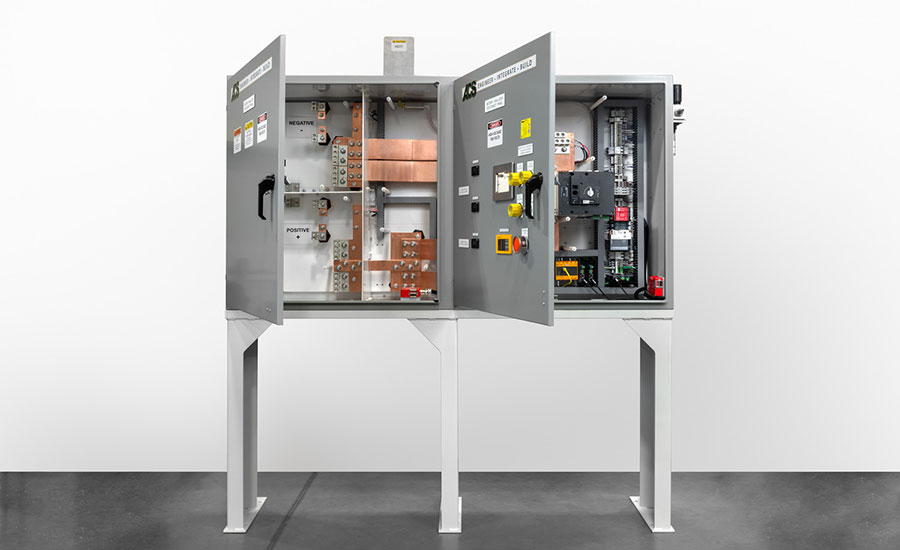
This battery simulator disconnect panel is designed for high-voltage DC equipment testing applications. Photo courtesy ACS Inc.
Sales growth of EVs is anticipated to decline due to costs that far exceed traditional ICEs. Another major issue is the power grid for EVs and whether it can be implemented to meet the demand by the proposed deadlines.
That’s why evolving technology and time to market are challenging to forecast. The scenario will not change for some time, as the electrification concept grows unpredictably. Learning about challenges and creating a strategic plan is the best way to combat them.
Looking for quick answers on assembly and manufacturing topics? Try Ask ASM, our new smart AI search tool. Ask ASM
Complex Market Conditions
Automotive manufacturers face a “perfect storm” of conditions that intensify the market challenges. Starting with mass disruption during the pandemic, the industry is still experiencing effects ranging from supply chain limitations and long lead times to geopolitical unrest and ongoing climate impacts.
These factors significantly increase the cost and complexity of widespread EV adoption. Meanwhile, policymakers and the public are pushing for innovation at a rate most manufacturers are unequipped to handle.
The high costs associated with these initiatives are even driving some large players to either drop out of the EV game entirely or consider forming strategic partnerships. For example, Volkswagen recently invested $5 billion in Rivian to share architecture and software for collaborative growth. Honda, Mitsubishi and Nissan have announced plans to collaborate on a framework for “further intelligence and electrification of automobiles.”
These developments highlight a clear-cut line drawn within the industry. It’s important to note that the two distinct EV players—traditional manufacturers and start-ups—face considerably different challenges in a rapidly growing EV market.
Legacy automakers need to better understand the complexity, cost and testing needed to bring battery-powered vehicles to market. Many newer companies have conventionally done everything with in-house staff, however, growing production levels and implementing standardized testing of vehicles and components.
That said, each EV player brings unique expertise necessary to innovate at scale. Collaboration across these groups will be vital to cost-effectively develop new vehicles and achieve long-term goals.
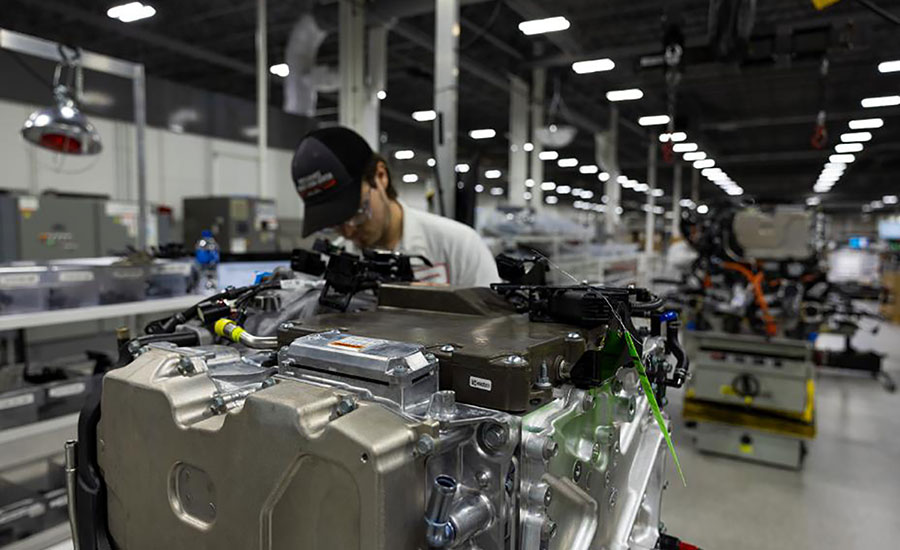
Honda recently formed a strategic partnership with Mitsubishi and Nissan. Photo courtesy Honda Motor Co.
Unique Challenges
To create an achievable EV growth strategy, it’s vital for automotive manufacturers to arm themselves with the knowledge of what is and isn’t possible in today’s competitive landscape. Key challenges include the following:

This battery quick-connect fixture can hold two EV batteries for concurrent testing. Photo courtesy ACS Inc.
- Public perception. Generational mindset differences exist about the value and implementation of EVs, which impacts vehicle adoption and internal company decision making. This includes buyers who hesitate to adopt fully electric vehicles and automotive industry decision makers with traditional approaches that may not appropriately address electrification objectives and problems.
- Infrastructure. Electrification and battery testing require entirely different storage, power and infrastructure needs within and beyond a facility. Power, power regeneration and charging availability also need to rapidly change to address these goals. During the next two decades, recharging infrastructure needs to grow dramatically.
- Safety. Guaranteed safety is a paramount concern that requires a clear understanding of unique and complex battery testing needs from start to finish. EVs and ICEs function differently, often impacting facility systems and equipment. As such, it’s imperative for safety requirements to adapt to maintain unique standards for safely handling and testing batteries.
- Regulatory and compliance standards. The only certainty is that these standards will always adapt and change. This is especially true in an innovative and fast-paced EV market, where regulations are rapidly being implemented to keep up with the speed of innovation.
- Cost and complexity. Legacy manufacturers have tackled ongoing industry innovation for decades, but EVs significantly change the game. The combined complexity and cost of test cells demand expertise and experience that automotive engineers may not have from working with traditional ICE equipment and systems.
Core Principles
Automakers must prioritize collaborative partnerships to achieve EV goals. By following these eight principles, companies can tackle their internal and external objectives now and into the future:
- Utilize an inside-out approach that focuses on core capabilities first, with an emphasis on front-end planning, to define the acceptance criteria upfront. An inside-out approach simultaneously tackles a project’s core concepts and physical aspects. For instance, R&D testing facilities are complex, mainly due to the intricate nature of the tested products. Starting with a clear vision of the project’s end goal helps align everything from design and infrastructure to processes and layout. This enables a seamless design and build that addresses unique EV testing requirements with a custom approach.
- Commit to safety and compliance standards founded on industry knowledge. This includes safely handling and disposing batteries, especially after destructive and abuse testing that intentionally damages the devices. The safety risks associated with batteries are extreme and require strict measures during testing, handling and storage. This includes specific safety strategies such as specialized dunk tanks, burn boxes, ventilation purge, removal and quarantine.
- Data collection and analysis to empower decision-making at every level. This is the primary goal of any testing process. It may seem straightforward, but testing success hinges on detailing a clear and actionable data acquisition method built for repeatability that collects, processes, organizes and analyzes data from start to finish.
- Capable storage, power and utilities. High-voltage demands and increased electricity use make this principle especially paramount with alternative energy systems such as regenerative power or battery recycling techniques. Innovation in this field occurs quickly. While cost-effective solutions are still in development, it’s vital for automotive manufacturers to invest in growth goals now to achieve long-term business and regulation objectives.
- Heightened efficiency and throughput for testing and production to meet policy demands and customer expectations. It’s a balancing act to meet the timeline objectives set by regulatory agencies and get a product to market that meets customer expectations. It requires frequent testing and ongoing iteration. While it’s true that increasing throughput and efficiency are always goals for manufacturers, it’s essential to strike a balance that doesn’t compromise quality or safety.
- Systems integration built on subject matter expertise, skilled, disciplined project management, a proven process and application knowledge. Whether building an entirely new factory or updating or renovating a facility to meet EV goals, systems integration brings all the essential moving parts together to seamlessly achieve testing objectives. Systems integration demands a holistic approach and thorough industry knowledge that automotive manufacturers can garner through valuable partnerships.
- Production equipment that is future-proofed for continuous growth. Investing in new machines and tools or upgrading current equipment is expensive and complicated. By actively considering how goals will change and evolve, it’s possible to future-proof the design to accommodate the inevitable change or growth that will occur. This includes investing in nonproprietary equipment that remains flexible and adaptable.
- Sustainability practices that meet industry and customer standards while achieving cost and efficiency parameters. Overall electrification objectives stem from initiatives that prioritize more sustainable practices among global power use. That said, batteries aren’t entirely void of sustainability challenges. As the adoption and development of EVs and alternative fuels grows, it’s essential for automotive engineers to stay on top of new challenges and green practices.
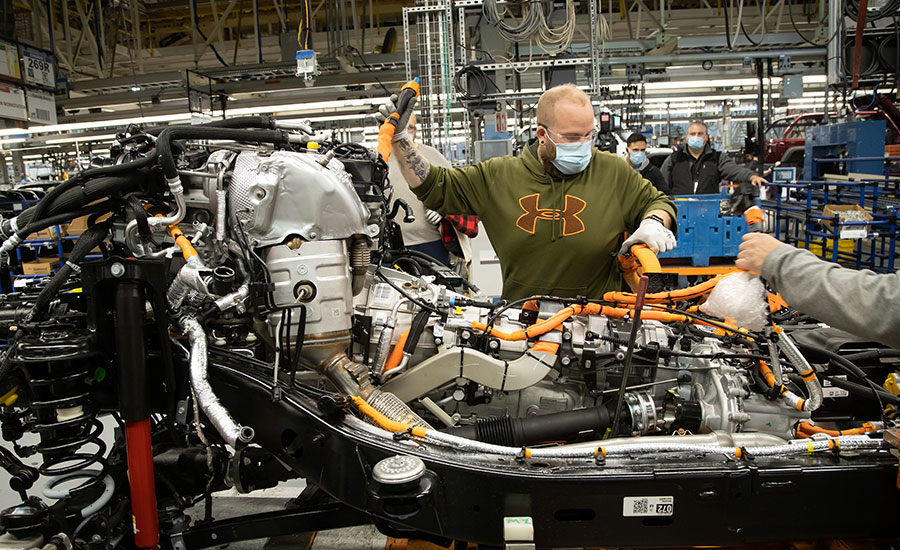
Automakers must prioritize collaborative partnerships to achieve EV goals. Photo courtesy Stellantis
Collaborative Approach
While manufacturers aim to drastically reduce emissions through the adoption of EVs, the timeline is fraught with challenges. The high cost of batteries, current power grid infrastructure limitations and the unpredictable nature of technological advancements create substantial barriers.
Despite these hurdles and uncertainty, the auto industry can continue to thrive and adapt by leveraging expertise beyond internal teams and adopting a culture of innovation. Manufacturers can prime themselves for future growth by committing to an adaptive approach that mirrors this dynamic environment.
Looking for a reprint of this article?
From high-res PDFs to custom plaques, order your copy today!