Vision System Watches Over Swiss Manufacturing Process
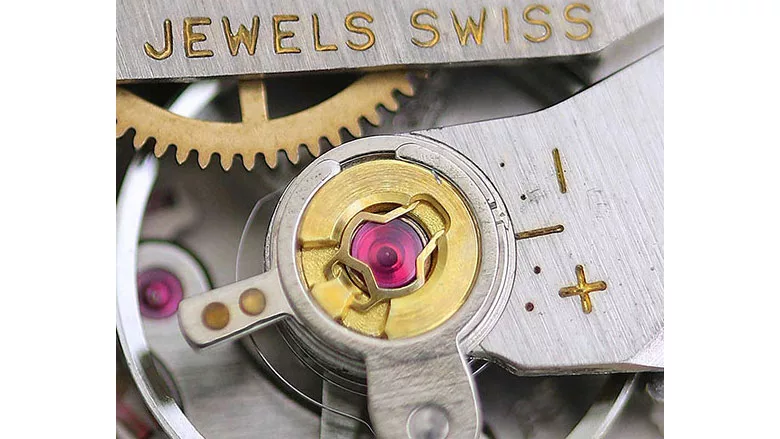
KIF Parechoc has been manufacturing watch components and subassemblies in Vallée-de-Joux, Switzerland since 1944.
Photo courtesy KIF Parechoc
The gears in a Swiss watch are very small. Most are less than a few millimeters in diameter. The smallest parts are just 20 microns thick.
Manufacturing and inspecting such small, precise components is a challenge. It’s also happens to be the business of Swiss company Petitpierre. With offices in Cortaillod and Boudry, Switzerland, Petitpierre manufactures equipment for cleaning, inspecting, handling and assembling tiny parts for watches, jewelry, medical devices and other products. In business since 1973, the family-owned company employs 80 people.
One of Petitpierre’s customers is KIF Parechoc, a manufacturer of watch components and subassemblies in Vallée-de-Joux, Switzerland.
To improve and automate KIF’s processes, Petitpierre developed a noncontact inspection and cleaning system. The system is suitable for a wide range of watch components, such as shock absorbers, index assemblies, wheels, screws, trains and barrels. The objective of the project was to optimize the measurement of these parts.
“Our goal was to carry out the entire measurement process with just one click. We also wanted a wide variety of precision mechanical parts to be detected automatically and the data to be transferred directly to our quality control software,” recalls Yoann Canon, COO at KIF Parechoc. “The major challenge in implementing the project was to perform a highly precise and very fast series of measurements under harsh production conditions, a challenge that could only be overcome by using machine vision.”
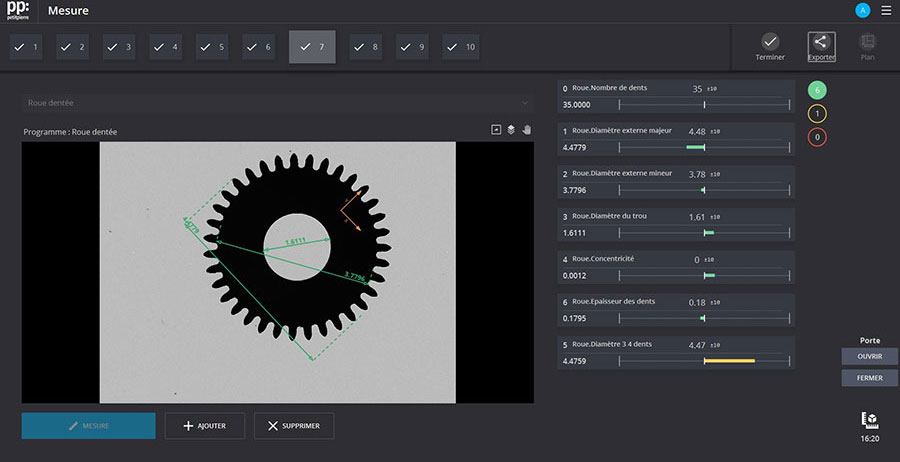
The vision system exports measurement results to quality control software, where they are available for the rest of the process chain. Photo courtesy MVTec Software GmbH
From Clean Room to Production Facility
In the past, KIF used several systems to carry out this process, including contact measurement, in a clean room environment.
“We wanted to move the measurements directly to the production plant to reduce the effort and ensure continuous process chains,” says Canon. “A further objective was to reduce the inspection time compared to conventional means and thus increase productivity substantially. And finally, the required measurement accuracy also needed to be brought into a harsh production environment. Here, it was important to reduce employee intervention in the process to a minimum.”
Looking for quick answers on assembly and manufacturing topics? Try Ask ASM, our new smart AI search tool. Ask ASM
Advanced measurement technology was needed to meet all these requirements. “It quickly became clear to us that there was no way around machine vision in this particular application. Machine vision makes it possible to automate the entire process seamlessly and with minimal effort. In addition, machine vision would be able to provide speed and precision in measurement other technologies could not offer,” explains Thomas Majoulet, head of metrology at Petitpierre.
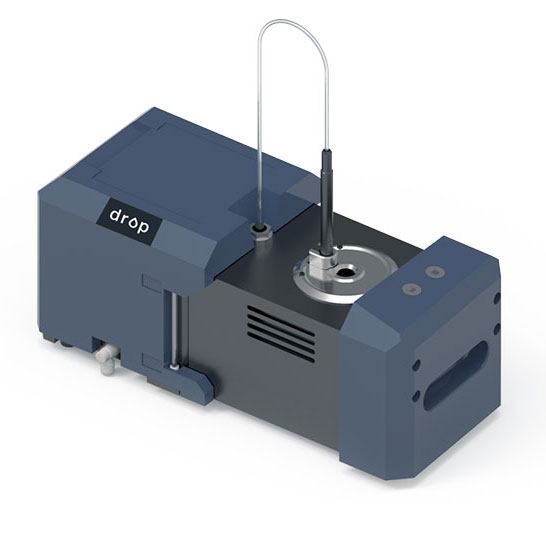
Drop is a device that automatically cleans and dries small, precision parts. Photo courtesy MVTec Software GmbH
The system implemented by Petitpierre combines two of the company’s products, Drop and Lumen, and empowers them with machine vision. Drop is a device that automatically cleans and dries precision parts. Lumen is a telecentric optical device for the intelligent, automatic and accurate measurement of precision micromechanical parts. Compact, lightweight and easy to operate, it was developed specifically for use in production environments.
The combined system cleans and measures micromechanical parts one by one. The operator first places the components into a container in the Drop machine and starts the cleaning processes. The system then cleans both the first part and a vacuum gripper. Once the part is clean and dry, it’s transferred to the Lumen system. Cleaning and drying cycles are configurable: solvent volume, cleaning time, drying time, and the number of cycles can be adjusted by the operator.
Once the part has been transferred to Lumen, the vision system detects it automatically and starts the measuring process. The measuring is performed with just one “start” click by the operator who does not need to make any manual adjustments. The measurement is then repeated with the other components.
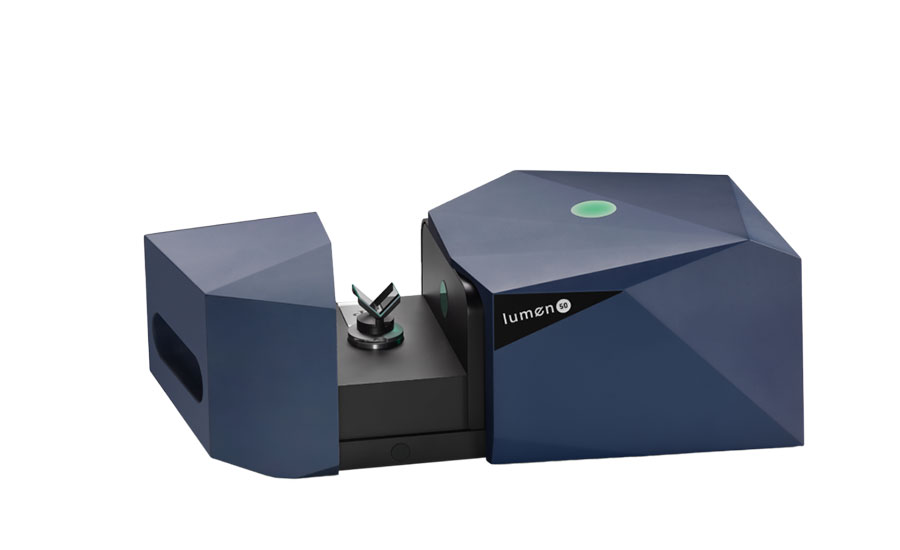
Lumen is a telecentric optical device for the intelligent, automatic and accurate measurement of micromechanical parts. Photo courtesy MVTec Software GmbH
Once all parts have been inspected, the measurement results are exported into KIF’s quality control software, where they are available for the rest of the process chain. The process can now be repeated with additional parts.
The optical measuring line in the Lumen system consists of a telecentric lens, lighting, a V-shaped device for correct placement of the parts, and two prisms for reflecting the image onto a telecentric optical sensor. The setup also includes a motorized drawer to protect the measuring area from dust and oil, as well as an LED to indicate the system is functioning properly.
High-Precision Measurement
Halcon vision software from MVTec Software GmbH in Munich, Germany, is the brain behind the system.
“We opted for Halcon because it offers all the functions we needed for this application,” says Majoulet. “Besides, its features are robust and, in many cases, ahead of other providers.”
For example, its shape-based 2D matching tool can identify and locate the tiny parts precisely so they can be picked up with a vacuum gripper and measured with submicron precision. The software detects even the smallest contours and inspects them reliably. Specifically, the software measures diameters, lengths, concentricity, radiuses and angles with subpixel accuracy, using a technology known as “subpixel threshold.”
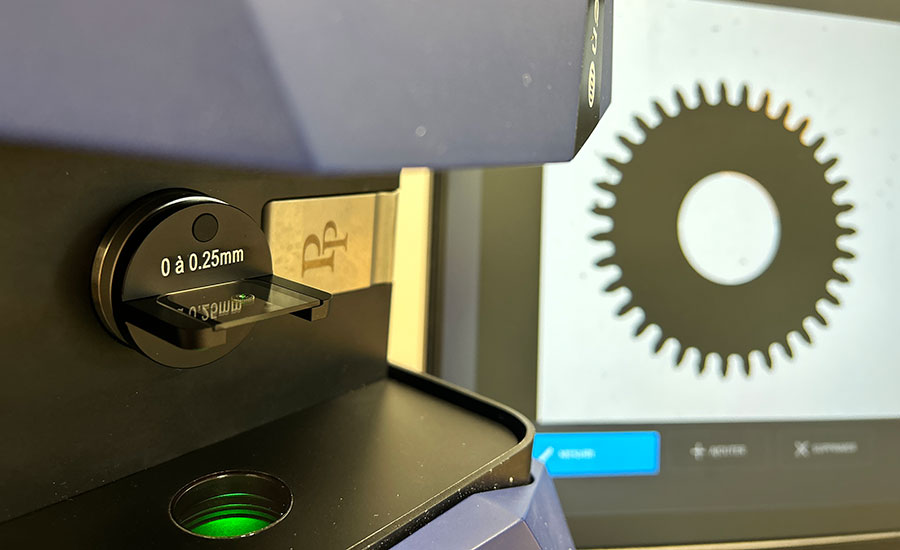
Halcon vision software features a shape-based 2D matching tool that can identify and locate tiny parts precisely so they can be picked up with a vacuum gripper and measured with submicron precision. Photo courtesy MVTec Software GmbH
The Halcon software also facilitates the precise camera calibration of the Lumen system.
Another advantage of the Halcon software is its ability to meet the special requirements of telecentric optics, as used in Petitpierre’s Lumen system, with precision right out of the box. The 360-degree measurement of the object means that there is no perspective distortion that would involve time-consuming corrections afterwards. This paves the way for a particularly high level of measurement accuracy.
“Halcon is the ideal machine vision software to overcome the challenges we were facing,” says Majoulet. “It not only offers the required accuracy and speed of detection, but also makes it possible to perform inspections that are completely noncontact. This provides extra protection for the delicate and highly fragile watch components and prevents micro-contamination.
“We can now fully automate the entire measuring process, including cleaning, drying, and transferring the parts to the Lumen system. This ensures reproducible processes and minimizes manual intervention by personnel. We also reached the goal to make inspection processes much faster, as they are conducted with just one click. As a result, KIF Parechoc has been able to cut costs and raise productivity to a new level.”
For more information on vision systems, click www.mvtec.com.
Looking for a reprint of this article?
From high-res PDFs to custom plaques, order your copy today!