Assembly Magazine logo
search
Ask ASSEMBLY AI
cart
facebook twitter linkedin youtube
  • Sign In
  • Create Account
  • Sign Out
  • My Account
Assembly Magazine logo
  • TRENDS
    • Ask ASSEMBLY AI
    • Trends
    • News
    • New Products
  • INDUSTRIES
    • Aerospace
    • Appliance
    • DFMA Assembly
    • Medical Devices
    • Green Manufacturing
    • Lean Manufacturing
    • Machinery Assembly
    • Electronics Assembly
    • Automotive
  • TECHNOLOGIES
    • Adhesives & Dispensing
    • Assembly Presses
    • Automated Assembly Systems
    • Manufacturing Management
    • Manufacturing Software
    • Motion Control
    • Screwdriving & Riveting
    • Robotics
    • Test & Inspection
    • Plastics & Metal Welding
    • Wire Processing
    • Workstations
  • AUTONOMOUS & ELECTRIC MOBILITY
    • AEM Magazine Archives
    • Autonomy
    • Electrification
    • Mobility Services
    • Assembly & Testing
    • AV/EM News
  • MEDIA
    • Ask ASSEMBLY AI
    • Podcasts
    • Assembly News Now
    • Assembly TV
    • Webinars
    • eBooks
  • EVENTS
    • Calendar
    • The ASSEMBLY Show
  • MORE
    • Exclusives >
      • Plant of the Year
      • Capital Spending
    • Buyers Guide >
      • Supplier Insights
    • Classifieds
    • Featured Products
    • Newsletters
    • Store
    • White Papers
    • Columns
    • Sponsor Insights
  • INFOCENTER
    • Assembly & Test Solutions
  • EMAGAZINE
    • eMagazine
    • Archive Issues
    • Advertise
    • Contact Us
    • Sign Up
TechnologiesRobotics Assembly

Assembly Lines

Smart, Energy-Efficient Robotic Gripper Cuts Production Costs

By Austin Weber
robotic gripper

This robotic gripper requires 90 percent less electricity than conventional devices. 

Photo courtesy Saarland University/ Oliver Dietze

April 4, 2025

SAARBRUCKEN, Germany—Engineers at Saarland University recently used lightweight, shape-memory materials to create a non-pneumatic robotic gripper that can safely hold and manipulate workpieces without requiring a continuous supply of energy. The device consumes 90 percent less electricity than traditional grippers.

The electric gripper is composed of bundles of ultrafine wires made from nickel-titanium shape memory alloy (SMA). The wires act not only as powerful muscles, but as nerve fibers as well. They enable the flexible fingers to quickly adapt to changes in the shape of a workpiece.

The behavior of the wire bundles is due to a special property of nickel-titanium alloy that enables it to switch between two different crystal lattice structures. If an electric current flows through a wire made from nickel-titanium, the material heats up, causing it to adopt a different crystal structure with the result that the wire becomes shorter.

When the current is switched off, the wire cools down and returns to its earlier crystal lattice structure and its original length. The material appears to remember its original shape and to return to it after being deformed. The wires are able to exert remarkably large forces for their size and can be made to trigger tiny, controlled motions in whatever smart technology the engineers have attached to these minute artificial muscles.

“The work we’re doing can help bring about a significant reduction in energy consumption, reducing production costs as well as helping to protect the climate,” says Paul Motzki, Ph.D., professor of smart material systems for innovative production at Saarland University and CEO of the Saarbrücken Center for Mechatronics and Automation Technology. “We can control these gripper systems in real time and whenever needed. All we need to do is apply a short pulse of electric current.

“Nickel-titanium SMA has the highest energy density of all known drive mechanisms, so by using this material, we’re able to exert a substantial tensile force in very small spaces,” Motzki, points out.

A wire with a thickness of only half a millimeter can exert a pull of some 100 newtons. However, Motzki and his colleagues use bundles of much thinner, ultrafine wires, because more wires mean a greater surface area and faster cooling rates. This means that the wire muscles can deliver rapid, high frequency motions and a stable tensile force.

Looking for quick answers on assembly and manufacturing topics? Try Ask ASM, our new smart AI search tool. Ask ASM →

Using a bundle of 20 ultrafine wires, each with a diameter of only 0.025-millimeter, they can exert 5 newtons of force at a frequency of 200 hertz. In some applications, the size of the force delivered is most important, in others it is the frequency with which the force is applied.

Traditional grippers usually rely on feedback from sensors, but Motzki’s technology is self-sensing. The system is controlled by a semiconductor chip.

“The shape-memory wires effectively act as fully integrated sensors providing us with all the necessary data,” says Motzki, “An AI system precisely correlates the electrical resistance data with a particular deformation of the wires. As a result, the system always knows the exact position of each bundle of shape-memory wires.

“The data-trained neural networks are able to calculate positional information efficiently and accurately, even in the face of disruptive influences,” explains Motzki. “[We] can therefore program the system to perform highly precise movements. By specifying the electrical resistance values, we can control the wires as needed.

“Unlike standard industrial robots in use today, reprogramming is quick and easy with our system and can even be done on the fly when necessary,” claims Motzki. “The gripper can adapt to the geometry of different workpieces while operating.”
KEYWORDS: robot grippers shape memory alloys university innovation university research

Share This Story

Looking for a reprint of this article?
From high-res PDFs to custom plaques, order your copy today!

Austinweber headshot
Austin has been senior editor for ASSEMBLY Magazine since September 1999. He has more than 21 years of b-to-b publishing experience and has written about a wide variety of manufacturing and engineering topics. Austin is a graduate of the University of Michigan.

Recommended Content

JOIN TODAY
To unlock your recommendations.

Already have an account? Sign In

  • Made in the U.S.A.

    Consumer Products Manufacturing: Made in the USA

    Supply chain lessons learned during the coronavirus...
    Automated Assembly Systems
    By: Austin Weber
  • Best Practices for Press-Fit Assembly

    Best Practices for Press-Fit Assembly

    In manufacturing, ironclad formulas for success are hard...
    Assembly Presses
    By: Jim Camillo
  • aem0523leader-tesla1.jpg

    Tesla Rethinks the Assembly Line

    Engineers at Tesla Inc. have developed a new process that...
    Assembly and Testing
    By: Austin Weber
Manage My Account
  • eMagazine Subscription
  • Assembly Newsletters
  • Online Registration
  • Subscription Customer Service
  • Manage My Preferences

More Videos

Sponsored Content

Sponsored Content is a special paid section where industry companies provide high quality, objective, non-commercial content around topics of interest to the ASSEMBLY audience. All Sponsored Content is supplied by the advertising company and any opinions expressed in this article are those of the author and not necessarily reflect the views of ASSEMBLY or its parent company, BNP Media. Interested in participating in our Sponsored Content section? Contact your local rep!

close
  • ultrasonic welding
    Sponsored bySonobond Ultrasonics

    Engineering Efficiency in High-Performance Assembly: How Ultrasonic Welding Enhances Throughput, Reliability and Quality

  • UV curing system
    Sponsored byDymax

    Why UV Intensity Alone Doesn’t Define Curing Performance

  • wooden pallets
    Sponsored byLEAN Manufacturing Products

    Eliminating Waste on the Shop Floor: Applying Lean Principles to Improve Manufacturing Efficiency

Popular Stories

ASSEMBLY News Now, episode 30: Volvo Redesigns EV Manufacturing

Volvo Redesigns EV Manufacturing

ASSEMBLY News Now, Episode 29: Mercedes-Benz to Invest $4 billion in Alabama Assembly Plant

Mercedes-Benz to Invest $4 billion in Alabama Assembly Plant

Boeing CEO Kelly Ortberg announces 1 billion investment

Boeing Plans $1 Billion Wichita Investment, Workforce Training Center

Watch the latest episode of ANN now!

Events

July 24, 2025

From Shop Floor to CFO: How Manufacturers Are Closing the Loop Between Operations and Finance

On Demand Learn how manufacturers are bridging the gap between the shop floor and ERP systems to gain real-time visibility, streamline operations, and kick-start digital transformation—without waiting years.

Sponsored by:

PicoStratusGreen
July 30, 2025

Buffer Analysis and Design Fundamentals for Manufacturing Excellence

On Demand In this presentation, Dr. Herman Tang shares practical insights from his industry experience and research on buffer management in manufacturing operations.

View All Submit An Event

Poll

Difficult Assembly Processes

Which assembly process gives you the most difficulty?
View Results Poll Archive

Products

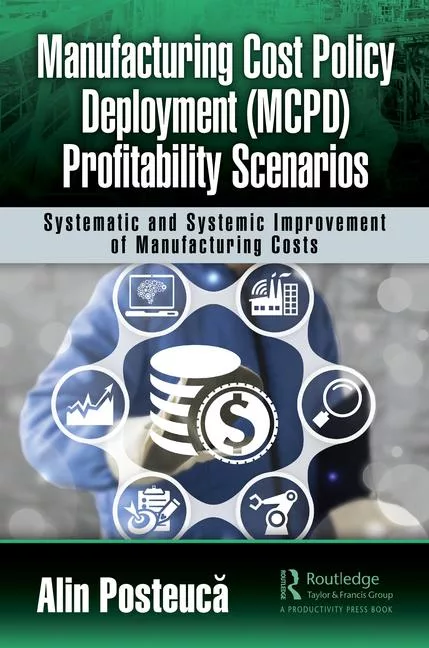
Manufacturing Cost Policy Deployment (MCPD) Profitability Scenarios: Systematic and Systemic Improvement of Manufacturing Costs

Manufacturing Cost Policy Deployment (MCPD) Profitability Scenarios: Systematic and Systemic Improvement of Manufacturing Costs

See More Products
Register for webinar - Modernizing Automotive Assembly: Why Upgrading Legacy MES is a Business Imperative

Related Articles

  • AIA: Conveyor Cuts Car Door Production Costs

    See More
  • Value Engineering Enhances Design and Controls Production Costs

    Value Engineering Enhances Design and Controls Production Costs

    See More

Related Products

See More Products
  • reducing.jpg

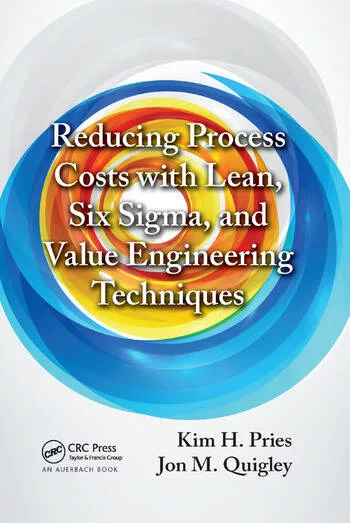
    Reducing Process Costs with Lean, Six Sigma, and Value Engineering Techniques

  • 9781138498730.jpg

    Manufacturing Cost Policy Deployment (MCPD) Profitability Scenarios: Systematic and Systemic Improvement of Manufacturing Costs

  • Robotic Micro-Assembly

See More Products

Related Directories

  • IPR Robotics LLC

    IPR Robotics offers an extensive range of products with innovative systems and components for assembly and handling technology. Our grippers, tool changers, alignment devices and load limiters, 7th-axis and customized solutions are used confidently by customers worldwide. Quality, technical expertise and industry knowledge are our most important factors for success.
×

Never miss the latest news and trends driving the manufacturing industry

Stay in the know on the latest assembly trends.

JOIN TODAY!
  • RESOURCES
    • Advertise
    • Contact Us
    • Directories
    • Manufacturing Division
    • Store
    • Want More?
  • SIGN UP TODAY
    • Create Account
    • eMagazine
    • Newsletters
    • Customer Service
    • Manage Preferences
  • SERVICES
    • Marketing Services
    • Reprints
    • Market Research
    • List Rental
    • Survey/Respondent Access
  • STAY CONNECTED
    • LinkedIn
    • Facebook
    • Instagram
    • YouTube
    • X (Twitter)
  • PRIVACY
    • PRIVACY POLICY
    • TERMS & CONDITIONS
    • DO NOT SELL MY PERSONAL INFORMATION
    • PRIVACY REQUEST
    • ACCESSIBILITY

Copyright ©2026. All Rights Reserved BNP Media, Inc. and BNP Media II, LLC.

Design, CMS, Hosting & Web Development :: ePublishing