According to the International Air Transport Association, the global trade association for airlines, the world’s carriers will fly more than 5.2 billion passengers on 40.3 million flights in 2026.
BIRMINGHAM, Mich. —
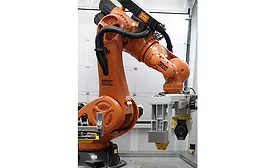
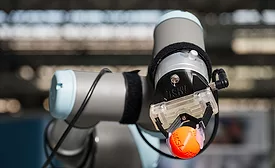
Manufacturers handling large, complex components are increasingly turning to hybrid automation systems that combine robotics with human expertise. At Scania, a new gripping system is helping address that challenge by enabling safe, precise handling of heavy engine components in a human-robot collaborative environment.
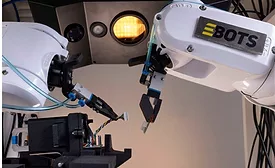
FREMONT, Calif. — Manufacturers have long automated repetitive, high-volume production tasks, but many assembly operations that require dexterity and adaptability have remained difficult to automate. eBots Robotics, a Silicon Valley-based company, is among those focusing on these applications. The company has developed dual-arm robotic systems designed to perform assembly work that traditionally required skilled human operators, particularly in industries such as electronics, semiconductors, medical devices and electric vehicles.
CAMBRIDGE, Mass. — Harvard researchers have developed a 3D-printing method that could make it easier to build soft robots designed to bend, deform and grip in predictable ways.
Mercedes is testing humanoid robots at its assembly plants in Berlin, Germany, and Kecskemét, Hungary, and the automaker plans to bring them to other factories in the near future.



.webp?height=168&t=1743848480&width=275 "Assembly News Now, episode 16: Mercedes Deploys Humanoid Robots on the Assembly Line")


