Automotive Industry
From Birch Bark to Truck Parts: Scania Explores Next-Gen Rubber
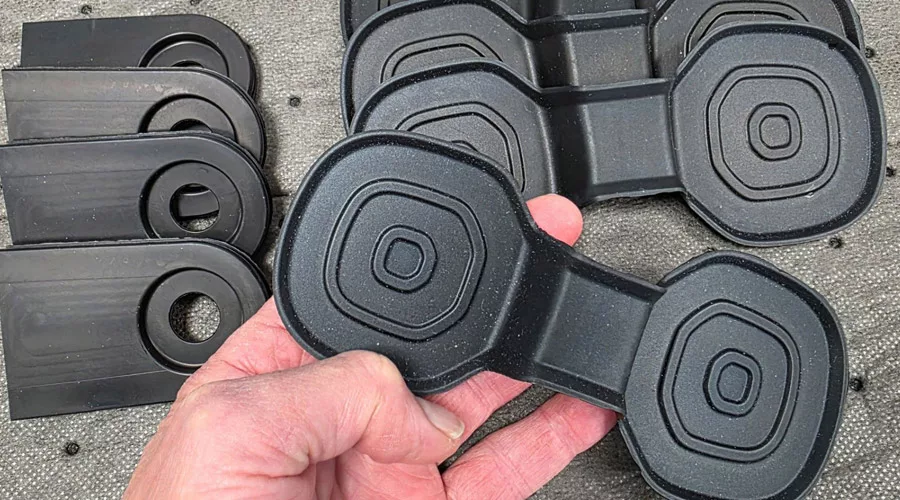
Scania is exploring a new kind of bio-based rubber made from birch bark, a forest industry by-product that’s usually burned as waste. The goal is to evaluate low-carbon materials that could one day replace rubber made from petroleum. Photo courtesy Scania
SÖDERTÄLJE, Sweden—Scania is exploring a new kind of bio-based rubber made from birch bark, a forest industry by-product that’s usually burned as waste. The goal is to evaluate low-carbon materials that could one day replace rubber made from petroleum.
The material was developed by Swedish start-up Reselo. The idea took root after an innovation matchmaking event at Sweden’s KTH Royal Institute of Technology, where Reselo presented its early results.
“This is what our job at R&D is about—to look 10 years ahead,” explains Martin Bellander, technical manager and an expert in rubber materials at Scania R&D. “When we saw a fully bio-based polymer like this, made from renewable waste and showing promising properties, we knew we had to explore it.”
Scania has begun testing the new material’s properties, including temperature resistance, chemical durability and sealing performance. For testing, the truck-maker has created two prototype parts: a rubber seal for cables and holes, and a small rubber mat for the cup holder in the cab.
Rubber may not be the biggest emissions driver in truck production—steel, aluminum and batteries have a larger footprint—but it’s still part of the equation. “If the material performs well, there’s a clear opportunity to use it in a wide range of rubber components,” says Jonas Gustafsson, senior venture collaboration manager at Scania R&D. “And it’s locally sourced from a renewable stream, which perfectly aligns with our sustainability strategy.”
“To decarbonize a truck, you need to look at every single part,” adds Bellander. “And sometimes the biggest shifts start with the smallest details.”
Scania aims to cut its direct and indirect carbon emissions by 50 percent by 2025, compared to 2015 levels. An additional 50 percent reduction is targeted between 2022 and 2032. By 2030, all steel, battery and cast iron purchases for Scania’s European operations must come from green sources.
Looking for quick answers on assembly and manufacturing topics? Try Ask ASM, our new smart AI search tool. Ask ASM
Looking for a reprint of this article?
From high-res PDFs to custom plaques, order your copy today!