Assembly Lines
Improved Indoor Air Climate Can Boost Productivity
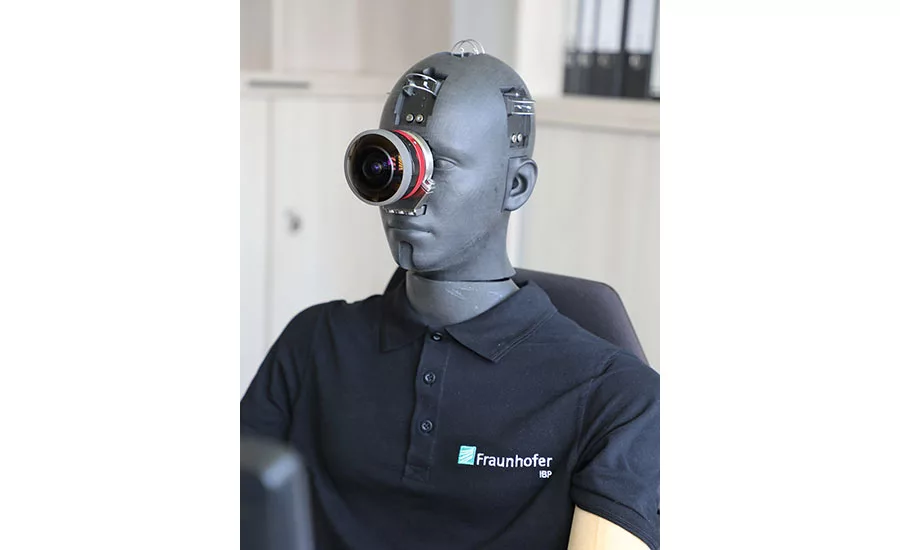
The DressMAN360° measuring system provides insight into the complex interactions between work environments and subjective perceptions.
Illustration courtesy Fraunhofer Institute for Building Physics
STUTTGART—Engineers at the Fraunhofer Institute for Building Physics (IBP) have developed an analytical concept that combines measurements of temperature, air quality, lighting and noise with workers’ subjective perceptions. Ideally, as people become more comfortable, efficiency and productivity should increase.
The goal of the OPTIMA PRO (Optimized Performance in Temperature, Illumination, Movement, Acoustics and Air Quality at Production Workplaces) initiative is to ensure the safety and comfort of manufacturing employees through a pleasant indoor climate and glare-free lighting where overall noise levels and bothersome background noises are minimized.
Physical measurements of work environments are combined with surveys of employees, focusing on their subjective wellbeing. Respondents are asked about factors such as their perception of heat, whether noises are bothersome to them and whether the lighting in the workplace is pleasant.
“This methodology is useful for companies that are building new production sites or optimizing existing work environments and want to design settings that support good performance and health,” says Sabine Giglmeier, head of innovation management at Fraunhofer IBP. “Plus, a work environment with high comfort levels also boosts motivation.
“The environmental conditions on a factory floor are highly changeable,” explains Giglmeier. “Machinery is powered on or off, gates open for a delivery and let cold air in, or furnaces are fired up, which can make the areas around them very hot.
“Good conditions…ease the strain on employees and ultimately also reduce absences due to sick leave,” claims Giglmeier. “This can help restore the appeal of physically demanding industrial jobs among skilled workers.”
“The existing measurement concepts are not sufficient to protect employees’ long-term health and sense of wellbeing in this challenging environment,” adds Maria Zaglauer, Ph.D., the chief scientist managing the project at Fraunhofer IBP. “That’s why we’re developing an approach that combines a differentiated measurement toolkit with individual surveys of the people involved. This makes it possible to achieve a holistic evaluation of the work environment.”
As part of the research project, Zaglauer and her colleagues are using a high-tech measurement system called DressMAN360°. The device is equipped with 30 sensors that gather data about the work environment.Looking for quick answers on assembly and manufacturing topics? Try Ask ASM, our new smart AI search tool. Ask ASM
Looking for a reprint of this article?
From high-res PDFs to custom plaques, order your copy today!