Virtual Reality Helps Stellantis Improve Assembly
Manufacturers in various industries are using augmented and virtual reality for applications ranging from quality assurance to workforce development. One company on the leading edge is Stellantis.
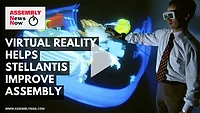
The best time to tweak assembly lines and identify potential issues is before actual production begins. That’s why engineers at Stellantis are using virtual reality tools to simulate workstations, optimize layouts and refine installation procedures. They’re using it to analyze hundreds of postures to find optimal configurations, tailored for a variety of physical requirements.
Unlike augmented reality, which is technology where objects in the real-world are “augmented” by computer-generated perceptual information, virtual reality “immerses” users in a computer-generated environment, allowing them to interact with and explore a virtual world.
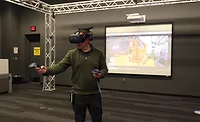
A state-of-the-art VR lab at Stellantis is located at the automaker’s tech center in Auburn Hills, MI. It is being used to provide a full-scale, immersive platform to proactively resolve manufacturing challenges, drive operational excellence, reduce downtime, and improve quality. The goal is to enable operators to assemble vehicles smarter, faster, and safer.
The facility is strategically located near the Chrysler Technology Center’s pilot production plant, where early builds of new vehicles are tested and validated. It is equipped with cutting-edge tools such as motion capture, physics-based part simulations, and digital twin integration that provide real-time visualization, data accuracy, and immersive problem-solving.
Virtual reality is used to evaluate the postures and movements of operators. Deploying this data in a digital environment that mirrors real-life assembly conditions helps engineers fine-tune platform heights, set “golden zones” for operators’ reach, and refine part-handling techniques for greater safety and efficiency.”
Stellantis engineers have identified and resolved hundreds of potential issues on their assembly lines before production begins. For example, virtual reality technology was used to help determine the optimal vehicle height for making underbody electrical connections at the Sterling Heights and Warren truck assembly plants.
Looking for quick answers on assembly and manufacturing topics? Try Ask ASM, our new smart AI search tool. Ask ASM
By simulating multiple line heights in a virtual environment, engineers ensured that operators would have the proper reach and access to perform these connections safely and efficiently, without ergonomic strain. Conducting these sessions early in the design process allowed them to establish accurate conveyor height requirements well before installation, supporting both worker safety and production readiness.

This is an excerpt from our July episode of Assembly News Now. Watch the full episode here!
Don't miss an episode!
Looking for a reprint of this article?
From high-res PDFs to custom plaques, order your copy today!