Volkswagen Group Opens State-of-the-Art EV Battery Assembly Plant
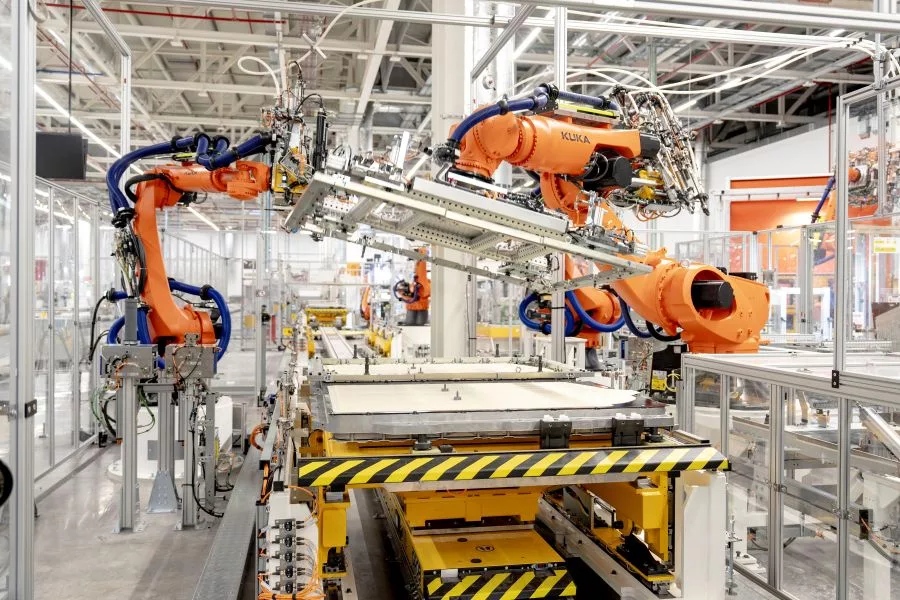
A state-of-the-art EV battery assembly plant recently opened in Martorell, Spain. Photo courtesy Volkswagen Group
MARTORELL, Spain—A state-of-the-art battery assembly plant recently opened here to support electric vehicles made by Cupra and Seat, two popular European brands owned by Volkswagen Group. It’s part of VW’s strategy to balance both in-house and third-party supply chains to achieve maximum flexibility with permanent access to innovations and technologies.
The Martorell factory is Volkswagen’s third largest facility in Europe. As the automaker’s “benchmark for sustainable mobility,” the flexible factory is capable of producing electric, hybrid and internal combustion engine models for different VW brands, offering “the best of both worlds to meet customer needs.”
“Right now, we are moving from the passenger seat to the driver’s seat in the core technology of the electric world,” says Günther Mendl, head of the Volkswagen Group’s Center of Battery Excellence. “The MEB+ battery system assembled at Martorell is fully competitive in all major aspects and a clear leap ahead as we introduce the unified cell, which is not just another battery cell but our global technology platform allowing unprecedented speed, scale and flexibility across brands, regions and segments.
“At the same time, we switch to compact cell-to-pack design and add lithium-iron phosphate as alternative cell chemistry,” explains Mendl. “As we contribute to building the long-needed battery industry in Europe, we achieve less dependency and more grip on tech innovation and cost, making e-mobility still more attractive and affordable.”
According to Mendl, the new battery system assembly plant is “a key facility in Martorell’s transformation towards electrification.” It has a capacity to assemble one battery system every 45 seconds or 1,200 per day. Batteries are automatically transported to the vehicle assembly lines via a 1,969-foot bridge.
“This unique solution, together with the 11,000 solar panels on the roof, which will provide 70 percent of the electricity required for the battery assembly process, helps reduce the carbon footprint and ensures more sustainable and competitive production,” claims Mendl. “In addition, a water collection system with a capacity equivalent to three Olympic swimming pools will reinforce the plant's commitment to resource efficiency and comprehensive sustainability.”
Looking for quick answers on assembly and manufacturing topics? Try Ask ASM, our new smart AI search tool. Ask ASM
Looking for a reprint of this article?
From high-res PDFs to custom plaques, order your copy today!