Skilled Labor Gap Reshapes How Manufacturers Invest for 2026 According to New Study
.webp?t=1769715119)
CHICAGO— After years of disruption-driven investment, manufacturers are entering 2026 with a narrower focus: stabilizing operations, extracting more value from existing assets and managing with fewer skilled workers, according to a new study examining the industry.
New research from CADDi, a company that builds a manufacturing AI data platform, signals three important takeaways for manufacturers as they head into 2026.
The Skilled Labor Shortage is the Operating Constraint
Manufacturers report that the skilled labor shortage is no longer a looming threat; it is the defining constraint on manufacturing operations heading into 2026. Nearly 80% of respondents identified labor availability as their biggest external challenge, and 71% said it is already directly impacting their business. Production floors are bearing the brunt, with 90% of manufacturers reporting that manufacturing departments are the most affected.
What’s changed is the scope of the problem. This is no longer confined to shop-floor operators. Shortages are spreading into maintenance, operations and even design and engineering. Retirements are accelerating faster than training pipelines can respond.
As a result, manufacturers are being forced to rethink how work gets done. Sixty-two percent are prioritizing recruitment, training and retention, but the study suggests workforce strategy alone may not be enough.
Data Access Has Become a Labor Strategy
One of the clearest shifts in the study is how manufacturers are using data to blunt the impact of labor shortages. Access to accurate, real-time parts and production data is emerging as one of the most effective ways to preserve productivity with smaller teams.
Manufacturers report that employees spend roughly an hour a day searching for parts data, an inefficiency that compounds across departments. More than half of respondents cited poor cross-department collaboration around data, while nearly 40% said fragmented or outdated systems are actively slowing decisions. These are not abstract digital problems; they translate directly into lost labor hours and avoidable downtime.
Looking for quick answers on assembly and manufacturing topics? Try Ask ASM, our new smart AI search tool. Ask ASM
In response, companies are investing in centralized data platforms and data lakes that connect parts, supplier and production information. Predictive maintenance, automated inventory tracking and AI-driven procurement tools are allowing teams to shift from reactive troubleshooting to planned execution.
The takeaway is that data infrastructure is no longer about visibility or reporting. It’s about labor efficiency. Manufacturers are using data to make fewer people more effective.
Capital Spending Is Shifting From Expansion to Extraction of Value
After years of volatility, manufacturers are entering 2026 with a markedly different capital mindset. Growth is no longer defined by adding capacity or new systems, but by extracting more value from what already exists.
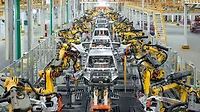
The study shows a clear pivot toward physical assets that deliver immediate, measurable returns on the shop floor. Sixty-nine percent of respondents plan to invest in robots and equipment in 2026, up from 60% the prior year. At the same time, respondents to the study say planned investment in broad operational systems like ERP and MES has dropped sharply.
This reflects a more disciplined approach to capital allocation. Manufacturers are prioritizing automation, machine monitoring, sensors and predictive analytics that directly improve uptime, quality and throughput. AI is moving upstream into forecasting and decision support, while cobots, advanced CNC equipment and smart machinery are becoming standard tools rather than experimental upgrades.
The broader signal is that manufacturers are done experimenting. Technology investments are now expected to justify themselves through clear ROI, with capital flowing toward tools that stabilize operations under labor, cost and supply chain pressure. The focus for 2026 is not transformation for its own sake, but resilience through targeted improvement.
The findings are based on a survey conducted by CADDi in partnership with SME and Mercury Research LLC in fall 2025. The independent study collected responses from 195 manufacturing professionals holding management-level positions or higher. Data was analyzed using SPSS statistical software, with results focused on workforce challenges, parts data management and digital transformation trends shaping the manufacturing sector.
Looking for a reprint of this article?
From high-res PDFs to custom plaques, order your copy today!