ASSEMBLY Audible: Nashay Naeve on Reframing Manufacturing to Attract and Retain New Talent
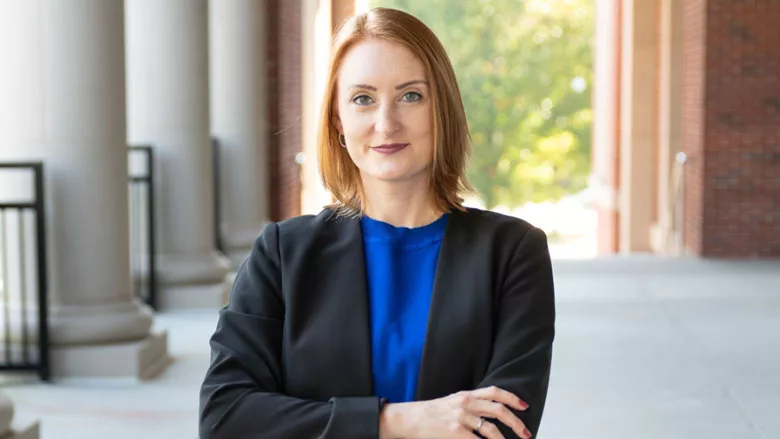
Nashay Naeve, president of the Engineered Plastic Components business unit at Tsubaki Nakashima, breaks down why manufacturers are still struggling to fill roles, what leaders can change immediately to reframe the industry and how modern operations are reshaping what manufacturing careers actually look like. She also shares practical insight on bringing more women into technical roles, building trust early on the plant floor and creating mentorship that’s real, not a “check-the-box” program.
ASSEMBLY: Share a bit about your background.
NAEVE: I started my career as an engineer. Before I began my career, I actually went to China and did my master’s degree in automotive engineering. It was there that I began working at Caterpillar, doing some marketing work. I continued my career at Caterpillar in the U.S., in Illinois, outside of Chicago. Then I went on to get an MBA. After my MBA, I joined DuPont and their management leadership program. I joined a startup called Redwood Materials. From there, I joined this company, Tsubaki Nakashima, in a global leadership role.
ASSEMBLY: Multiple master’s degrees, studying abroad… Why China?
NAEVE: Yeah, at the time there was a lot of discussion about the BRIC countries—Brazil, Russia, India, China. I always wanted to learn another language and master another language. And with all the manufacturing going to China at the time… In India, they speak a lot of English already. So I felt like China was really the location where, for me personally, it could have the most value. So I decided to jump in, learn the language, and then do my engineering degree taught in Chinese. It was a great experience.
ASSEMBLY: So you know a thing or two because you’ve seen a thing or two. Let’s dive in. U.S. manufacturers are facing a labor shortage, with hundreds of thousands of open roles across skill levels. Some companies say they simply can’t find enough people. From your perspective, why are manufacturers still struggling to fill roles, and where do you think they’re limiting themselves when it comes to recruiting talent?
NAEVE: Yeah, it’s an interesting question, and I think there are a few different dimensions to it. First, a lot of times a manufacturing location might be in a geography that’s semi-rural, and there’s just not a lot of talent available. That would be the first reason I would identify. In other cases, the geography isn’t an issue because it might be in a more centralized location or near a larger city, but then there are a lot of competing industries. So we’re all competing for the same talent, and that brings its own challenges, especially with other opportunities that might have more flexible hours.
Looking for quick answers on assembly and manufacturing topics? Try Ask ASM, our new smart AI search tool. Ask ASM
But the last one—which I think is most within our control as leaders—is framing. A lot of people think of manufacturing as the old, dirty, low-tech environment, like it was during the Industrial Revolution. And I would say that’s not true today. As an example, my business operates in a clean-room environment. So it’s extremely clean. It’s not dirty at all. We’re producing medical products. We’re also starting to use AI and more automated processes. So I think as business leaders, we can really start to change the narrative and reframe how people think about manufacturing.
ASSEMBLY: As you know, manufacturing has historically drawn from a pretty narrow talent pool. Women remain underrepresented on the plant floor and in technical roles, even as companies search harder than ever for workers. Why is that?
NAEVE: It’s interesting, because sometimes, as a woman, if you don’t see people who look like you, it might be more difficult to picture yourself in a job where you don’t see yourself represented. But shifts do happen. I think about when I was growing up and you think of the medical field: there were very few women doctors at that time. If you thought of a doctor, it would be a male doctor. But today, there’s a plethora of female doctors. So the shift does happen.
And I think that’s what we can do: really highlight the diversity that exists in our companies today and help bring in a more diverse talent pool. For women, I would say it’s an excellent career to jump into. It’s evolving very rapidly. There are opportunities to advance, as long as we’re passionate, adaptable to change, and willing to learn.
ASSEMBLY: Along the same lines, what are some misconceptions that manufacturers have about recruiting and retaining women? What changes can they make today that will have the biggest impact?
NAEVE: Yeah, I think the first misconception is that women aren’t interested in manufacturing. I would challenge that and say it’s possible that women aren’t interested in manufacturing as it looks today because of perception. But we can reframe the narrative in how we project manufacturing. It’s really about technology, problem solving, and the impact you can make. Those are all very attractive, I would say, to most women. So that’s one thing we can do: reframe the narrative.
The other misconception is around the physical requirement. Some manufacturers believe that to attract women, you need to lower the physical requirement for the job. And I would challenge that significantly. There are OSHA requirements and OSHA limitations already about how much workers can physically pick up. So that’s actually not a factor, and it shouldn’t be a limiting factor. A lot of roles today just don’t have the significant physical requirement that we might be picturing historically.
ASSEMBLY: Building on reframing the narrative: what are two changes manufacturers can make in the next 30 to 60 days to accomplish that?
NAEVE: I think, in order to help reframe the narrative, we can start pretty simply by taking a fresh look at your website—or, if you don’t have a website, building one. That’s the initial recommendation I would have. And then also correcting the perception around physically demanding jobs, or highlighting jobs that are making a big impact. So just highlighting those attributes of the jobs—showcasing the impact—not only for women, but for all younger generations. As AI evolves and we integrate it more, we need more younger generations entering our manufacturing facilities as well.
ASSEMBLY: What advice do you have for folks who are kind of on the fence about a manufacturing career?
There’s really nothing like [seeing] a part that you worked on ... in real life, like in a retail store, or, in my case, in a hospital, because we’re making medical devices. It’s really fun and rewarding to see things that you contributed to in real life.
NAEVE: First, I want to say: try it out. Manufacturing is fun. There’s really nothing like watching a part that you worked on go down the assembly line. One thing may be even more fun: seeing that part in real life, like in a retail store, or, in my case, in a hospital, because we’re making medical devices. It’s really fun and rewarding to see things that you contributed to in real life. So I think everyone should try it out.
ASSEMBLY: That right there, I think, is the key to the reframing. I think you’ve really hit the nail on the head with that description and describing those feelings. And I think that if manufacturers use that as their reframing device, they can change the narrative very quickly and get a lot of people—women, young people, folks who maybe were not considering manufacturing at all—interested. As a leader, what advice do you have for individuals on how they can earn trust and credibility on the plant floor, particularly early in their career?
NAEVE: First, take ownership of your career. Take ownership of a small project, take ownership of something, and really take a leadership role. Also, you can start to think beyond your current scope and think about how your actions affect the bigger picture. Raise that up, and have discussions with your leadership about how this process might affect the product or the marketplace.
And then the last one is to have a customer-centric mindset, similar to my previous point about looking at the bigger picture. If you’re making a product, understand how customers might use the product, what the unmet needs are, and how we might shift things to make it more liked by the customer.
ASSEMBLY: You oversee manufacturing operations across multiple countries. They all have different cultures, labor norms, and expectations of leadership. What lessons have you learned from managing global manufacturing teams, and how do you adapt your approach from plant to plant?
NAEVE: All operations are different, and all locations operate differently, even within the U.S. You look at different manufacturing plants, and they all have their own culture. They might have different idiosyncrasies. The first thing I learned is that it is really important to listen to your employees at the individual level, and tailor your approach and leadership style to the individuals themselves. What works in one region might not always work in another region, so it’s important to be flexible and adaptable.
ASSEMBLY: Mentorship is often discussed as a solution for developing talent, but many programs fail to deliver anything meaningful. What does effective mentorship look like in manufacturing, and how can leaders ensure it’s helping people grow rather than becoming a check-the-box exercise?
NAEVE: To me, effective mentorship means taking the time to listen and provide guidance based on the individual needs at that time. It also means providing visibility into different career tracks or roles, and in some cases, opportunities as well. These are things I encourage mentors—and even mentees—to really ask about: What are the career tracks? Also, sharing how you view success through your career, if you’re a mentor. And feedback on problem solving, and feedback on career moves.
The other thing is, mentorship doesn’t always go one way. There’s a lot of learning available, especially with AI and technology, so it can go both ways. I encourage mentors to learn from their mentees as well.
ASSEMBLY: Some mentorship programs just don’t feel very authentic. What are your thoughts?
NAEVE: One of the areas, I think, is providing projects. Instead of an official mentor program, we can provide a project and include people with diverse backgrounds, so it’s more natural. It’s not an official program where it feels forced. Sometimes the strongest mentors grow organically, not necessarily through a program.
ASSEMBLY: And what advice do you have for young people who may want to seek out a mentor that is not provided to them?
NAEVE: I do think it’s important to raise your hand. First, talk to your line leader. Volunteer on projects. Sometimes companies will have a culture initiative, or they might have things that are a little bit outside the job scope. But volunteering for extra things will help provide additional visibility within the company and additional connections across the company.
Sometimes we are our own worst enemy—we limit ourselves a little bit because we get in our head. But don’t be afraid to have the discussions. The worst that can happen is people aren’t receptive. But it never hurts, in my opinion, to step out of your comfort zone. Be willing to learn something new and just get out there.
ASSEMBLY: What role do leaders play in this?
NAEVE: It’s really up to all of us leaders to be the change agent—not just for women, young professionals, and even older generations. It really is up to us. So embrace it. We have a lot to learn. Experienced professionals can learn AI from the younger generation, and we can create opportunities through osmosis. Bringing in a diverse perspective is really important for our business, to keep innovation levels high and bring in different perspectives across the company.
Leaders need to speak and lead differently than we ever have before. Real changes in manufacturing are just starting to take place. We’re seeing AI-driven quality control, AI-driven marketing. Things are shifting, and they’re going to continue to shift. AI will help us be more effective and productive. So embrace the changes. Train the team so they’re ready to take on the challenges, keep an open mind, and embrace the shift.
ASSEMBLY: As a leader, what do you look for in new hires?
NAEVE: What I really look for is a growth mindset—people who want to grow and want to learn new things—because adaptability is one of the most important things right now. Specifically right now, as manufacturing evolves and we bring in AI tools, we’re going to need to change. I don’t know what the future exactly is going to look like, but I know it’s not going to look exactly like it does today. So the ability to be dynamic and grow with the company is going to be important.
Looking for a reprint of this article?
From high-res PDFs to custom plaques, order your copy today!