ASSEMBLY Audible: Linir Zamir on how the deviceWISE Intelligence Suite Brings AI to the Edge
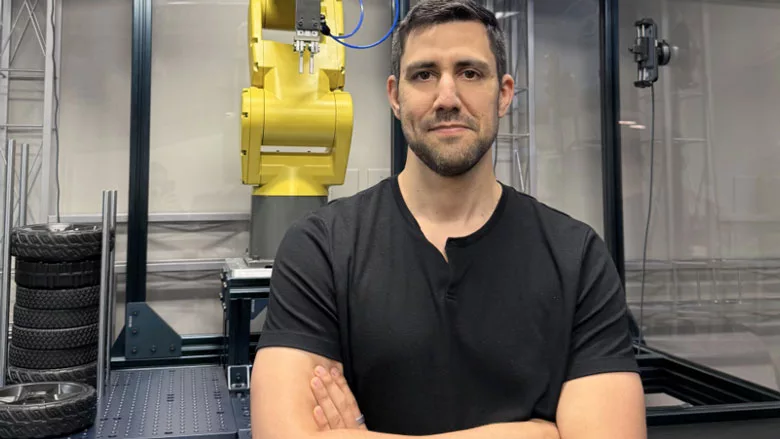
Telit Cinterion’s Dr. Linir Zamir discusses how Artificial Intelligence is moving closer to the factory floor through edge-based systems that keep data on site and enable faster decision-making. He explains how industrial IoT platforms can connect legacy equipment, normalize machine data and support AI “agents” that help detect early signs of failure, guide fault recovery and reduce downtime.
ASSEMBLY: Today we're talking about how Artificial Intelligence is moving closer to the factory floor. Telit Cinterion provides Internet of Things and edge-to-cloud solutions used across industrial, automotive, healthcare and infrastructure environments. At the center of that is deviceWISE, an industrial IoT platform designed to connect machines, normalize data from different types of equipment, and enable real-time decision making at the edge, rather than pushing everything to the cloud. Building on that foundation is the deviceWISE Intelligence Suite, which adds AI-driven inspection analytics and autonomous agent capabilities. The idea is to move beyond simply connecting assets to enabling factories to see problems earlier, make decisions locally and respond faster as conditions change. We're joined today by expert Dr. Linir Zamir. Welcome, Doctor.
ZAMIR: Thank you so much.
ASSEMBLY: Now, if you wouldn't mind, please introduce yourself to our audience. Tell us a bit about your computer science background, anything you'd like to share.
ZAMIR: So I have, like you mentioned, a Ph.D. in computer science focused mostly on autonomous systems, a lot of AI, even before it was cool. And yeah, I've been with Telit for the past five years now, and working on some of the exciting stuff we have that is designed for industrial settings and how to implement AI.
ASSEMBLY: Tell us a little bit about the deviceWISE Intelligence Suite.
ZAMIR: It basically allows us now, within Telit, to bring AI capabilities right down to the factory floor and to be able to do things that were never possible before. And now we can implement very sophisticated AI tools right on the edge, and everything is monitored and controlled by deviceWISE. And essentially, it connects the factory to a brain that can turn a connected factory into a more autonomous one, so that you have the view of the whole factory, and you can make decisions. You can understand what is happening via agents, which is a term that I think so many people understand nowadays. So you can bring the agents to the factory to assist the operators, the factory managers, any level of executive that you might have. Everybody can benefit from having such a layer, a fundamental layer, that can monitor and see everything in the factory, and also provide you with information and analysis and so much more. And this is essentially the deviceWISE Intelligence Suite, and as I mentioned, it's all controlled and goes through the deviceWISE core, so that you have this massive control over everything, or view over everything.
Looking for quick answers on assembly and manufacturing topics? Try Ask ASM, our new smart AI search tool. Ask ASM
ASSEMBLY: There's also NVIDIA integration, which, to my understanding, is actually quite a big deal for manufacturers on the assembly line.
ZAMIR: DeviceWISE integrates and speaks to so many OT devices, robots, PLCs, any assembly part that you might have in a factory. DeviceWISE can connect, can control, can read the data. So since AI essentially is powered by data, the natural next step of evolution for deviceWISE is this AI integration. And as I mentioned before, up until recently, the technology was not there in terms of the capability – the edge capabilities. Only recently, people are talking more and more about physical AI, meaning how you bring AI onto the edge, into robotics. Now it's much easier to enable that AI software and hardware—and we leverage it. We are partnered with NVIDIA, so we have a very close relationship with them, and we are discussing with NVIDIA the capabilities, some of the latest technologies that are available, and we are implementing those within our deviceWISE Intelligence Suite. There is a big benefit to using very sophisticated tools from NVIDIA, such as Cosmos that is specifically designed for industrial settings. We are implementing Omniverse (simulation/digital twin workflows), which is another concept that many factories are now starting to adopt. And yeah, it's been an amazing journey so far alongside NVIDIA, and it helps us bring our customers so much more value now that we have those capabilities, those edge capabilities. And for the hardware, we see the Spark DGX – which is the latest edge device. It is so powerful that we can now run so many agents, agentic AI, right there on the edge. And as you know, factories rarely want to release any data outside of their four walls, right? They want to keep everything contained. So having this capability now is a huge benefit that we can offer to our customers.
ASSEMBLY: Interesting point… Have you received feedback on that in particular?
ZAMIR: Yeah, definitely. No factory we work with wants to share any of the data outside, you know. So definitely, being able to provide it to the factories—they gave us great feedback, and it forces us to think much more about how can we leverage the edge. What can we bring to the edge that people have, in the past, had to rely on the cloud? So yeah, we heard great things so far from different factories.
ASSEMBLY: What sort of feedback are you getting regarding early signs of detection for quality issues on the CNC machines, robots, workstations… Give me some real-world examples that you're actually hearing from manufacturers, please.
ZAMIR: Yeah, great question. So, you know, factories need to be super accurate. When you have an assembly line, for example, even the slightest change with the location of a part can now cause a chain effect that can cause the whole line to stop. Now we read so much data through deviceWISE [that this can be avoided]. We also have what is called a time-series analysis, and we have agents monitor that data 24/7, and compare the data to the [conditions] on the line. And based on those, now we can understand and [the AI] can reason as to when a part is going to break and be able to detect small changes in temperature, in torque. The agents are fine-tuned by a massive amount of data that we have collected through the years—so you can now have those agents read the data and tell you, “Oh, this pin that you have, it might break within a week or so.” So instead of waiting for it to break, and then you need to stop the line, stop manufacturing, and you can lose so much money because of that, now you can just replace that small part in a matter of minutes, and there you have it. So you can go back to manufacturing very fast.
ASSEMBLY: Help me, if you would, wrap my brain around passive connectivity versus what deviceWISE brings to the factory floor.
ZAMIR: When you drive your car and you have some warning light, you would need to drive your car to the garage or get it fixed and have a person check it and tell you, “Oh, the issue is this and that.” [That’s passive connectivity.] So instead of having that, now you can think of [what we offer] as driving a car that can fix itself, or tell you exactly what steps you need to take in order to fix it. When you have so many different parts in a factory, and one of them faults for whatever reason, you can get some error code, and then the operator might need to go through pages and pages of documentation to understand the error, and then understand the cause. It can be so many different things, and then it would need to be fixed, which is downtime, cost… There's so many downsides of having this method of operation. So using the Intelligence Suite instead of going through this long process, now, when you have, for example, a fault in one of the robots, the agent already has the error code, and it can go through the documentation of that specific robot, or PLC, or whatever unit, and then can read exactly what might have caused the error. That's one thing. Another thing is we place a camera that can see the robot, and then, using, like I mentioned before, Cosmos, for example, or some sophisticated foundational model, we can now see what happened, and it can understand—it can see the error. So it can now understand what caused the issue. And now, once it knows those different inputs, it can also reason and act upon it and say, “Okay, now I can resolve it.” It knows the robot. It knows how to communicate. And this is the powerful part of deviceWISE, so that, with the help of deviceWISE, the agent can now understand and know what steps need to be taken in order to bring this operation back to normal as fast as possible. And this is a massive win for any manufacturer.
ASSEMBLY: So it's kind of like a puzzle, where before you had a bunch of scattered pieces, but now you're bringing them all together.
ZAMIR: Exactly. That's exactly right. Especially in manufacturing, and it is true for almost any industry. But if you think about manufacturing, where you have different robots from different companies, you have different components, you have different people, different types of factories. So all these different things are different pieces of this big puzzle. So now we have this single brain entity that can oversee everything and can combine some of those different puzzle pieces together, like you said. So that's very true.
[In] manufacturing, where you have different robots from different companies, you have different components, you have different people, different types of factories. So all these different things are different pieces of this big puzzle. So now we have this single brain entity that can oversee everything and can combine some of those different puzzle pieces together.
ASSEMBLY: You can put all the pieces together right there on the factory floor without having to take them somewhere else, assemble the puzzle and bring it back. That's really useful. Diving deeper into the discussion on agents, what are some tasks that agents can be used for on the factory floor and provide us with some real-world examples, if you would?
ZAMIR: Yeah, that's the core of what we do with the Intelligence Suite. I love that. So the first thing is, what I said earlier, with fault recovery. So when you have a faulty part in your factory, you can immediately understand what happened and how to fix it. That's one thing that I described. Another very compelling example is SOP—standard operating procedure—which can essentially help operators act in a certain way and build things in a certain order, one after the other. For example, step one, step two, step three. You need to take the bolt from the first location, put it in the second location, then you have to tighten it in a certain way, then you have to bring a third part. So you have those procedures that you need to follow. We can have a camera or an agent that can monitor and help the operator, but in a friendly way. It's not like 24/7 monitoring of the person, but it’s making sure that the operator is acting properly and in the proper order of things. And this is very important for manufacturers, because again, there’s a lot of human error that might happen, and now you have this agent that can make sure everything is fine.
Another example is if the operator is not sure about the right torque setting, then they can talk to an agent, talk to the AI, and it can tell them—it has the knowledge of all the factory components. It can tell them, “Oh, you need to set it to this.” Or it can even automatically do that. And one thing that I do want to emphasize is that the Intelligence Suite is designed to enhance the operator. So we are helping the operator make better decisions, helping them have access to so much more data. They can just ask a question to the agent, and the agent immediately can provide the operator with the information required. It can help with a set of procedures that the operator needs to take. So again, the key phrase is enhancing the operator.
ASSEMBLY: That's a very interesting topic you bring up, and I'm very excited to dive deeper into that on the next episode that we have you. And that's where we're going to talk about how AI and human operators can work together in manufacturing settings. But to wrap up this conversation today, I just want to understand how deviceWISE lines up with legacy systems that a lot of manufacturers have. How does deviceWISE work with systems that might have been around for a long, long time…
ZAMIR: I think you just pinpointed one of the most valuable benefits of deviceWISE, because deviceWISE has all the integrations and talks natively to so many components in the factory. It talks to all the different robots regardless of their AI capabilities. [The big takeaway is] being able to now talk on a native level [to the various parts of the factory] or get the data, and translate that, using deviceWISE, into smarter data, and run it through different agents that can now understand and reason. And we can basically bring AI very close to the robot or to the component, so you can get all the data. And it can be simple, it doesn’t have to be sophisticated, but we can still add this AI layer that is right on top of it, that can see, and then can understand. It doesn't have to be a smart device. And that's, again, what deviceWISE does. We are integrating all the different components that you have, and have all of them now run through this funnel of AI that can process and understand and find connections, like, “Oh, this robot moves in a certain way, and I have the PLC that shows me different data points, and I can see the temperature change.” So you have a higher-level understanding of the entire factory. And it doesn't matter if you have, I would say, “not-smart” components. So we've seen factories that have the same component for the past 20 years, right? The same parts for the past 20 years, even sometimes the same people for the past 20 years. So this sector of manufacturing has so much data, and it just makes so much sense to take all the information that a factory can have and now use that and enhance that factory with AI. It just makes so much sense for so many reasons. So yeah, it's very exciting, definitely in all the work with the factories that we've done.
Looking for a reprint of this article?
From high-res PDFs to custom plaques, order your copy today!


.webp?height=200&t=1754922079&width=200 "Simolo Customs.jpg")