Supreme Court Strikes Down Key Trump Tariffs
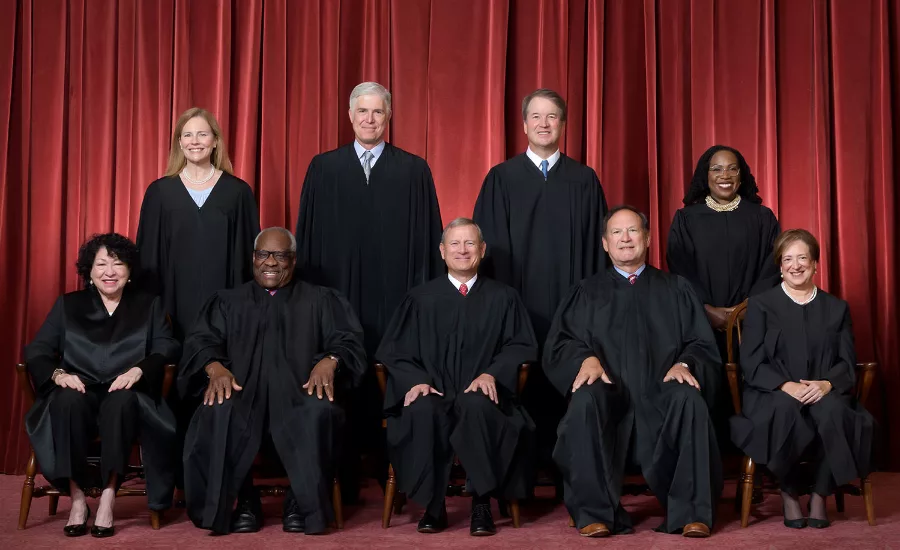
WASHINGTON — The Supreme Court on Friday struck down a significant portion of President Donald Trump’s tariff program, ruling that the federal law he relied on does not authorize the president to impose broad import duties without congressional approval.
In a 6-3 decision, the Court held that the International Emergency Economic Powers Act does not grant the president authority to levy tariffs. The majority concluded that Trump’s interpretation of the statute would amount to a major expansion of executive power over trade policy, an authority the Constitution assigns to Congress.
Chief Justice John Roberts wrote the opinion for the Court. Justices Clarence Thomas, Samuel Alito and Brett Kavanaugh dissented.
The decision did not address whether businesses that paid the higher tariff rates would be entitled to refunds. Estimates suggest the amount at issue could total more than $100 billion.
But Kavanaugh wrote in his dissent that the refund process “is likely to be a ‘mess,’” after predicting that the short-term impact of the Court’s tariff ruling “could be substantial.”
The ruling invalidates tariffs imposed under the 1977 emergency powers law, which the Trump administration used to justify near-global “reciprocal” duties and separate levies tied to allegations that foreign governments allowed fentanyl trafficking into the United States. These include a set of tariffs aimed at Mexico, Canada and China.
The law permits a president to regulate certain foreign economic transactions after declaring a national emergency but does not explicitly mention tariffs.
Looking for quick answers on assembly and manufacturing topics? Try Ask ASM, our new smart AI search tool. Ask ASM
Lower federal courts had previously found the tariffs unlawful before the Supreme Court agreed to hear the case.
The Court said that prior presidents had not used the statute to impose tariffs of similar magnitude or scope and that such authority would require clear congressional authorization.
The majority of U.S. tariff revenue last year came from duties imposed under the emergency powers law. Administration figures show roughly $129 billion in revenue from the IEEPA-specific tariffs as of early December, though outside estimates vary.
Trump has made tariffs a central feature of his economic and foreign policy, arguing they generate federal revenue and strengthen U.S. leverage in trade negotiations.
Despite the ruling, the president retains other statutory authorities to impose tariffs, including laws used during his first term and trade provisions dating to the Great Depression. Legal analysts say the administration could attempt to rebuild portions of its tariff program using those alternative tools, though such efforts could face additional legal challenges.
Industry groups responded quickly to the ruling. The National Electrical Manufacturers Association said the decision will influence how manufacturers assess risk, plan investments and structure supply chains in the United States. The group said electrical manufacturers have invested nearly $200 billion domestically since 2018.
“NEMA continues to support a predictable, targeted approach to tariffs that provides certainty for manufacturers and aligns trade policies with domestic manufacturing and infrastructure objectives,” said NEMA president and CEO Debra Phillips. “With a practical approach, tariffs can support onshoring, strengthen U.S. competitiveness and keep grid and energy projects on track to deliver benefits to American workers and communities.”
The Court’s decision represents a significant check on executive power over trade and reinforces Congress’ constitutional role in setting tariff policy.
Looking for a reprint of this article?
From high-res PDFs to custom plaques, order your copy today!