Assembly Lines
Humanoid Hype May Not Lead to Widescale Manufacturer Investment
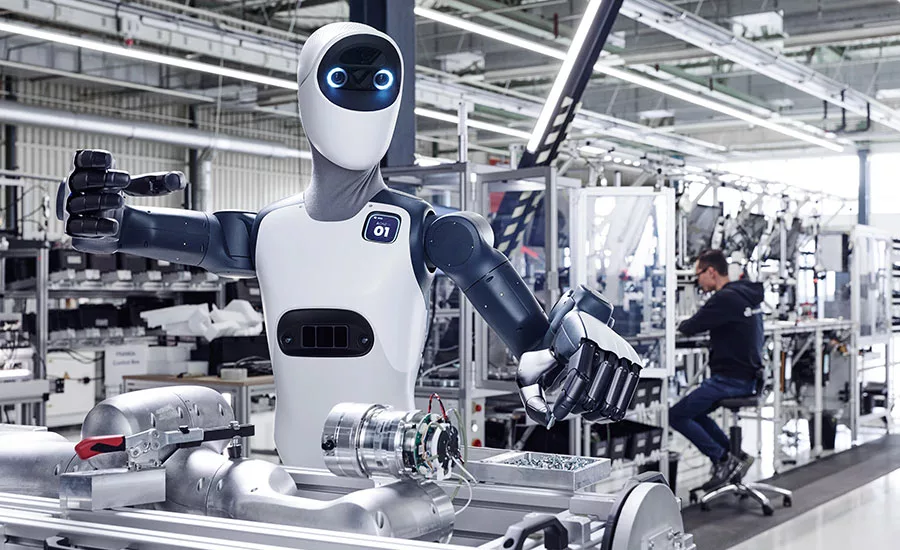
Despite their potential, humanoid robots face significant barriers to widescale deployment in the near future.
STAMFORD, CT—Humanoid robots are one of the hottest topics of 2026. Bipedal multi-purpose machines that mimic the human body in shape, function and locomotion have been garnering headlines and sparking debates.
However, despite all the hype, many manufacturers plan to cautiously approach the technology. In fact, a recent report by Gartner Inc. claims that humanoids face significant barriers to widescale deployment in the near future.
During the next two years, fewer than 20 manufacturers are expected to deploy humanoids in their factories or warehouses. And most applications will be limited to tightly controlled environments.
“The promise of humanoid robots is compelling, but the reality is that the technology remains immature and far from meeting expectations for versatility and cost-effectiveness,” says Abdil Tunca, senior principal analyst at Gartner. “[Manufacturers] must carefully evaluate readiness and avoid overcommitting resources to [machines] that cannot yet deliver on their potential.”
According to Tunca, the latest generation of humanoid robots feature AI-enabled systems, advanced sensors and machine learning algorithms intended to dynamically adapt to multiple tasks. “However, the hype surrounding humanoid robots is outpacing their readiness for large-scale deployment,” he points out.
“Humanoid robots replicate human form and movement, incorporating heads with sensors and cameras, arms and grippers for manipulation, and legs for locomotion,” explains Tunca. “While this form factor offers certain advantages, alternative designs, such as polyfunctional robots equipped with wheels or sensors, may provide superior performance and adaptability.”
Despite their potential, Tunca says humanoids currently face four significant barriers to widescale adoption:
- Technological limitations. “Current models lack the dexterity, intelligence and adaptability required for complex, unstructured environments,” claims Tunca.
- Integration complexity. Compatibility with existing systems and workflows remains a challenge.
- High costs. “Substantial upfront investment and ongoing maintenance expenses must be weighed against uncertain returns,” says Tunca. “With the current technology and costs, humanoids cost multiple times more than task-specific robots while delivering lower throughput and uptime.”
- Energy constraints. Limited battery life restricts operational time for high-mobility tasks.
Looking for quick answers on assembly and manufacturing topics? Try Ask ASM, our new smart AI search tool. Ask ASM
Looking for a reprint of this article?
From high-res PDFs to custom plaques, order your copy today!