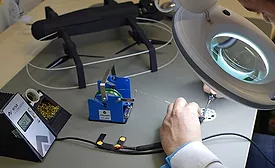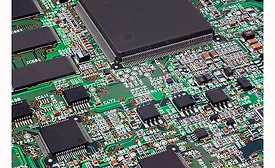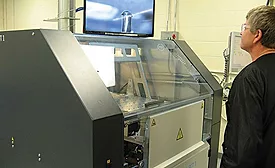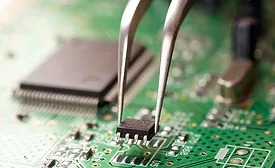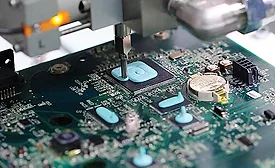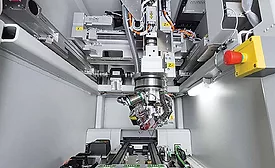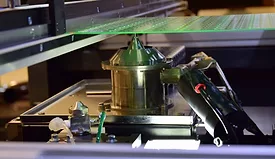
NEWMAN LAKE, WA—Hentec Industries/RPS Automation, a manufacturer of selective soldering and test equipment for electronics, has expanded its assembly and production workforce, and published an 8-page technical paper entitled “Techniques for Selective Soldering High Thermal Mass and Fine-Pitch Components.”
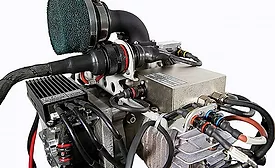
Most people know them as drones and believe they are strictly used in the sky. But, their official name is unmanned aerial vehicles (UAVs), and they can also be used in confined spaces inside or outside.
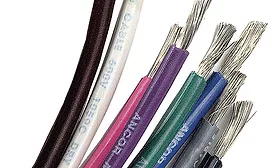
Like any assembly skill, manual soldering of wire can be learned through proper training. This training begins by teaching the person how to cleanly strip, tin and solder the wire to a connector, PCB or terminal.
The coronavirus pandemic is leading to shortages of more than test kits, ventilators and, um, toilet paper. Due to the huge increase in demand for hand sanitizer, there is a now shortage of isopropyl alcohol—a key ingredient in some fluxes.
Drones have come a long way in a fairly short time, commercially speaking. In less than 20 years, these unmanned aerial vehicles (UAVs) have gone from being used by the CIA to attack the Taliban in Afghanistan, to soon being used by Amazon to deliver a wide range of packages to homes.
As the miniaturization trend in electronics continues, rigid-flex PCBs grow in popularity. This is because they require up to 60 percent less space than standard PCBs.
The news about the 737 MAX has got me thinking about my own experience with the aerospace industry. There’s something cultural about the avionics and aerospace industries, the Defense Department and the FAA; they are impervious to ideas. The status quo cannot be unseated.
Comparative claims can be positive or negative, subjective or objective. But, in every instance, their main purpose is illustrative. A common example is when someone claims that a person or process is “as slow as molasses” (which, by the way, has a viscosity of only 5,000 to 10,000 centipoise [cps]).
Today’s typical automobile features nearly 100 exterior and interior sensors, with the number likely to increase in the near future. Those located on the outside (axle load, steering angle, blind spots, air temperature, etc.) require special protection from the elements and unique production methods.