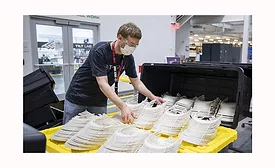
SAINT JOSEPH, MI—A pair of systems integrators in southwestern Michigan have come together to make sure local first responders have the personal protective equipment (PPE) they need.
Like the rest of the world, the factory is rapidly becoming more interconnected. In the factory of the future, data sharing occurs across a complex network of machines, parts, products and value chain participants, including machinery providers and logistics companies. As a result, today, more than ever, manufacturers face the challenge of securely sharing data within and outside the factory walls.
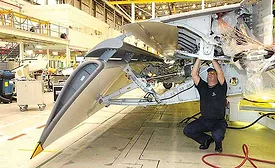
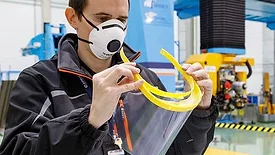
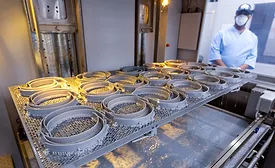
LEIDEN, Netherlands — Most Airbus sites in Spain have joined forces to produce 3D-printed visor frames, providing healthcare personnel with individual protection equipment in the fight against COVID-19.
DETROIT—With ventilators and face masks now in production, GM is expanding its manufacturing of personal protective equipment, including latex-free face shields, protective gowns and aerosol boxes. All of these supplies are being donated.
Production-ready, 3D-printed automotive parts have been slowly entering the market the past few years. Now, they’re as important as the thousands of metal and plastic parts produced using traditional casting, injection molding, stamping and machining processes.
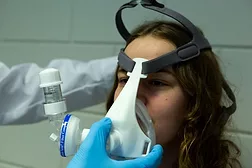
LEUVEN, Belgium — Materialise, a Belgium-based pioneer in 3D printing, has developed the Materialise NIP Connector, a device to convert standard equipment into a mask to facilitate breathing for patients by creating positive pressure in the lungs.
PALO ALTO, CA — HP Inc. and its global digital manufacturing community are mobilizing 3D printing teams, technology, experience and production capacity to help deliver critical parts in medical facilities treating patients with COVID-19.